 Opinion
Việt Nam, Belgium seek to deepen bilateral cooperation
1.
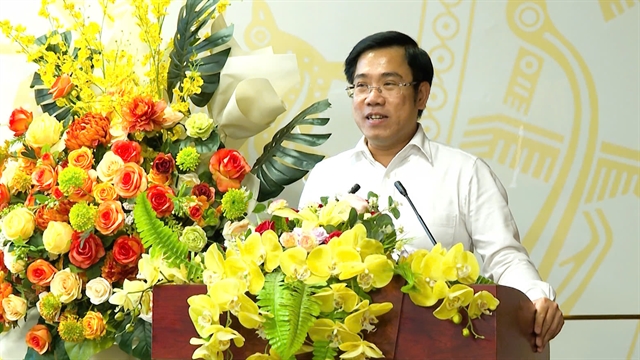 |
| Director of Hồ Chí Minh National Academy of Politics' Institute of Politics and International Relations Dr Đào Ngọc Báu. — VNA/VNS Photo |
Dr Đào Ngọc Báu, Director of the Institute of Politics and International Relations under the Hồ Chí Minh National Academy of Politics, spoke to The World & Vietnam Report about preparations for the 14th National Party Congress and the country’s development outlook in the new era.
What are your observations on the preparations for the 14th National Party Congress?
Preparations for the 14th National Party Congress have been carried out early and in a systematic manner, reflecting both strong continuity and a spirit of innovation in response to the new context. From my observations, I would highlight three key points.
First is the systematic approach and long-term vision. The sub-committees began work early and operated in close coordination, combining practical reviews with theoretical research. Notably, preparations are not confined to a review of the 13th Party Congress term but are placed within the broader trajectory of 40 years of Đổi mới (Renewal), enabling a more in-depth assessment of the opportunities and challenges facing the country in the period ahead.
Second is the upholding of democracy and collective intellect. The Party has expanded consultations on draft documents to the widest possible extent, engaging former leaders, intellectuals and the Vietnamese community at home and abroad. The open and receptive approach to diverse and critical feedback on new and complex issues has helped build a high level of social consensus from the policymaking stage.
Third is the rigorous and substantive personnel work. Identified as the key task of key tasks, strategic-level cadre planning has been conducted carefully, balancing ethical standards with implementation capacity. A notable highlight is the emphasis on developing personnel with innovative thinking and sufficient adaptability to navigate complex geopolitical and global economic fluctuations.
Overall, preparations are being carried out in a logical manner and on schedule. Thoroughness in both agenda and personnel provides a crucial foundation for the 14th National Party Congress to make sound decisions and guide the country into a new phase of development.
In your view, what are the new points of the upcoming Party Congress term?
The 14th National Party Congress takes place amid unpredictable global changes, requiring appropriate adjustments in thinking and action. In my view, the new points of this term are clearly reflected in shifts in development mindset and approaches.
First is the establishment of new growth drivers based on science, technology and innovation. Science and technology are regarded as decisive factors in enabling the country to escape the middle-income trap. What is new is the strong focus on digital transformation and green transition as two new pillars of development, aimed at optimising resources and enhancing competitiveness within global value chains.
Second is a breakthrough in thinking on development institutions, with a focus on removing institutional and policy bottlenecks to leverage internal strengths from the private sector and the people, while also building a flexible system capable of adapting to new economic models.
Third is a comprehensive approach to people and culture. A new point is the concretisation of the concept of people’s happiness into criteria for evaluating governance effectiveness, linking economic development with social equity and substantive environmental protection.
Fourth is the renewal of leadership and national governance methods, streamlining the apparatus and accelerating decentralisation and delegation of authority alongside effective power control. In particular, the policy of encouraging and protecting proactive and accountable officials has become an important foundation for creating an environment conducive to breakthroughs within public administration.
How do you assess Việt Nam’s development goals in the new era under the leadership of the Communist Party of Việt Nam?
From an expert perspective, I believe the development goals for the upcoming period are strategic in scale, driven by strong aspirations and grounded in a solid practical foundation. They reflect the spirit of self-reliance of a nation standing at the threshold of major breakthroughs. Confidence in their success rests on three core aspects.
First is the alignment between goals and national capacity. After 40 years of Đổi mới, Việt Nam has accumulated considerable internal strength in terms of economic scale and human resources. Current governance thinking has kept pace with global trends by placing science, technology and innovation as primary growth drivers.
The shift towards a digital and green economy not only supports rapid growth but also ensures sustainability, helping the country overcome the middle-income trap.
The next factor is the strength derived from political stability and social consensus. In an increasingly unstable world, political stability under the Party’s leadership is a decisive factor in maintaining consistency in long-term policies and building confidence among international investors.
When the Party’s objectives resonate with the aspirations of the people, when the Party’s will meets the people’s will, we generate an inexhaustible source of intrinsic strength to realise the goal of national prosperity.
Third is international standing, which creates a favourable space for development. Việt Nam now enjoys high international stature. The upgrading of relations to comprehensive strategic partnerships with many countries, including all five permanent members of the United Nations Security Council, carries not only diplomatic significance but also opens access to capital and technology.
Proactive international integration enables the country to effectively leverage external resources to strengthen internal capacities, positioning Việt Nam as a bridge connecting different economic regions.
I am confident that, under the Party’s leadership, Việt Nam is entering an era of strong development grounded in its cultural identity, human intellect and aspirations for peace.
Although significant challenges remain in pursuing the goals set for 2030 and 2045, with a logical roadmap and the unity of the entire nation, we have a solid foundation to transform Việt Nam into a developed country in the years ahead. — VNS
Opinion
 Opinion
.jpg) Opinion
Opinion
 Opinion
 Opinion
 Opinion
 Opinion
 Opinion
 Opinion
 Opinion
 Opinion
 Opinion
 Opinion
 Opinion
 Opinion