 Opinion
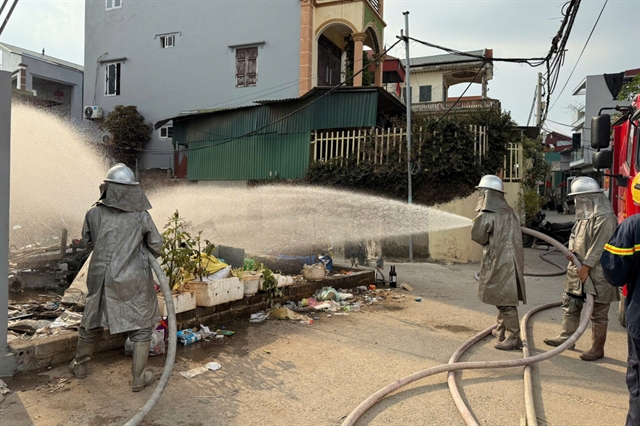
42 people hospitalised over suspected gas leak in Hà Nội
1.
 |
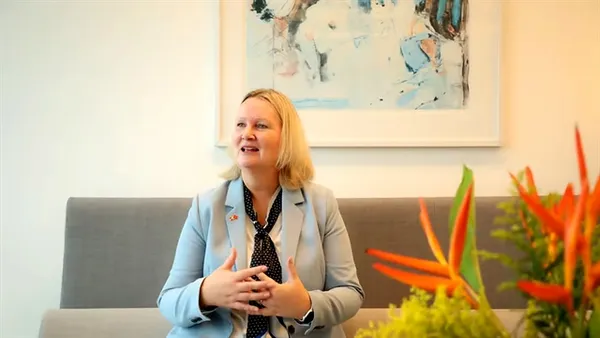
| Piper Campbell, inaugural chair of the Department of Foreign Policy and Global Security at American University’s School of International Service. — VNA/VNS Photo |
WASHINGTON — Piper Campbell, inaugural chair of the Department of Foreign Policy and Global Security at American University’s School of International Service, has expressed her strong impression of Việt Nam’s economic growth and rising prestige, while offering a number of recommendations aimed at promoting sustainable growth in the coming period.
In an interview with Vietnam News Agency (VNA) correspondents in Washington ahead of the 14th National Congress of the Communist Party of Việt Nam, Campbell said that as a former diplomat and a specialist in Southeast Asian geopolitics, she found Việt Nam’s economic growth and international standing in recent years to be highly impressive and interconnected.
With GDP growth last year reported to be around eight per cent and solid industrial output, retail sales, trade and foreign investment, the measures of Việt Nam’s strong economic growth were clear, including in comparison with its peers, she noted.
“This economic growth is particularly notable when one considers that 2025 globally has been a year marked by significant disruption and unpredictability, including because of actions of the current US administration,” she said.
On the diplomatic front, Campbell observed that Việt Nam continued to pursue its approach of “multilateralisation and diversification of foreign relations”, adding that developments in recent years had shown this to be a clever strategy.
“Looking back to 2020, when Việt Nam served admirably as ASEAN Chair during a particularly challenging year, Việt Nam has expanded and deepened its high-level engagement and partnerships. In doing so, it enhanced its role on the global stage,” she stressed.
Referring to Việt Nam – US relations, Campbell noted that the bilateral relationship was elevated to a Comprehensive Strategic Partnership in 2023, signalling expectations for a higher level of cooperation across many fields, including technology, supply chain diversification, climate and energy, and education.
The former ambassador, who has more than 30 years of experience working in the Asia–Pacific region, remarked that while the path since 2023 had not been without challenges, officials of the Trump administration continued to regard Việt Nam as one of the US’s most important partners in the region. They had affirmed that a strong, independent and resilient Việt Nam was in the US interest and had maintained their interest in advancing a framework for a reciprocal, fair and balanced trade agreement.
According to Campbell, the diplomatic and economic efforts by Việt Nam have increased Vietnamese export competitiveness, helped improve infrastructure and logistics, proven Việt Nam’s ability to attract global firms, and demonstrated agile diplomacy.
Commenting on priorities set out at the 14th National Party Congress, she said the congress was not only setting goals for the next five years but also developing a long-run roadmap beyond 2030. That was not easy in a volatile and rapidly changing world. Aiming for durable (not fragile or too fast) growth would make tremendous sense.
She added that Việt Nam needed to continue focusing on moving up the value chain in terms of productivity and industrial upgrading. Today’s rapid pace of change would present both new opportunities and new pressures to enhance capacities and raise standards, particularly in sophisticated sectors such as electronics, precision manufacturing and digital services.
“I am very interested in the Government’s commitment to becoming a technology-driven economy and its decision to triple spending on science and technology by 2026. Advances in this area will also require improvements in infrastructure, including energy, as well as investment in human capital to train the necessary workforce,” said Campbell, who also leads the ASEAN and Indo-Pacific Studies Initiative at American University.
Emphasising the importance of the private sector, she noted that Việt Nam continued to attract strong interest from the US private sector. However, she stressed that sustainable private investment would depend on an enabling business environment, including clear and fair regulations and consistent anti-corruption efforts. — VNA/VNS
Opinion
 Opinion
 Opinion
 Opinion
 Opinion
 Opinion
 Opinion
 Opinion
 Opinion
 Opinion
 Opinion
 Opinion
.jpg) Opinion
Opinion
 Opinion
 Opinion