.jpg) Opinion
Opinion

TokenPulse Opens Singapore APAC Operating Hub
1.
|
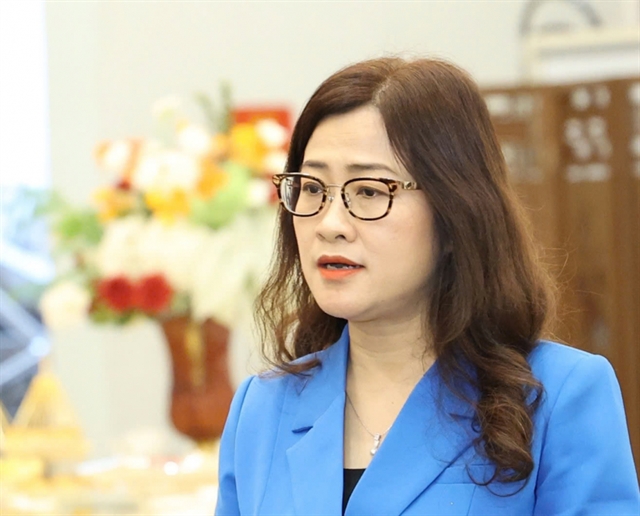
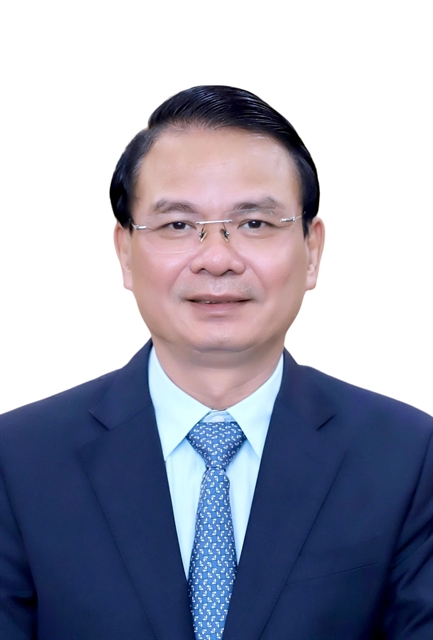
| Trần Thị Trang, Director of the Health Insurance Department.— Photo cand.com.vn |
Trần Thị Trang, Director of the Health Insurance Department under the Ministry of Health, spoke to Công An Nhân Dân (People’s Police) online newspaper about the resources, spending mechanisms and a roadmap required to realise universal free hospital care in line with the Politburo's Resolution 72-NQ/TW on breakthrough solutions to strengthen the protection, care and improvement of public health.
The Government has tasked the Ministry of Health with drafting a roadmap to gradually introduce free hospital care. How has this proposal been developed?
This is a profoundly challenging mandate entrusted to the Ministry of Health. We have now developed a policy framework for free hospital care and held an initial consultation workshop with stakeholders and experts to shape the direction of the proposal.
The proposal is built around five key goals: gradually expanding entitlements and improving the quality and effectiveness of health care services; reducing the burden of medical expenses particularly for vulnerable groups such as low-income households, near-poor households and other social policy beneficiaries; enhancing equity and opportunities in access to health care; shifting the focus to early intervention and prevention through screening, thereby reducing the cost of late-stage treatment; and ensuring long-term sustainable financing.
Defining the scope of free hospital care is one of the most complex issues. It took us five months to develop a feasible policy framework. We determined that the policy must be built on the foundation of universal health insurance while progressively reducing and ultimately eliminating co-payments. The basic health care package covered under free hospital care will include a defined list of services, diseases, medicines and medical devices. It will focus first on common illnesses and prioritise necessary diseases with gradual expansion based on professional requirements and the fiscal capacity of the State budget and the Health Insurance Fund combined with social mobilisation.
The policy will also set maximum expenditure levels per treatment episode based on national averages for inpatient and outpatient costs, adjusted annually or periodically, excluding high-cost diseases and procedures. Initially, implementation will focus on primary-level facilities, both public and private. Rollout will follow a phased timeline with clear priorities aligned with contribution levels, the capacity of the Health Insurance Fund and socio-economic conditions. Official payments, funded by health insurance, the State budget, preventive health funds, and social contributions, are expected to commence in 2030 .
Estimates show that universal free hospital care will require enormous financial resources with significant additional pressure on the Health Insurance Fund. What solutions has the ministry proposed?
Impact assessments estimate that from 2027 coverage for near-poor households and people aged 75 will range from VNĐ455 billion to VNĐ2.79 trillion (US$105.7 million) per year. By 2030, when basic free hospital care is extended to the entire population, the increase could reach VNĐ21.5 trillion ($815.3 million) annually.
To address this, the ministry has proposed five groups of solutions, foremost of which is financing. To secure sustainable funding, we propose increasing State budget allocations and using part of the National Target Programme on Health and Population for 2026-35 in line with Resolution 72; diversifying financial sources including supplementary health insurance, commercial health insurance, patient support funds and pilot taxes on products harmful to health; reforming provider payment methods, improving efficiency in managing the Health Insurance Fund and ensuring prudent use of resources.
Alongside financial measures, we must strengthen the capacity of the health system, improving service quality, investing in lower-level facilities so that free services meet or even exceed the standards of regular care; expanding digital health and data sharing to reduce testing costs. Monitoring and evaluation are also critical. With such substantial financial investment, spending must be efficient and transparent. Comprehensive data collection is essential to assess the quality of free health care services, prevent new inequalities between population groups, and curb abuse or waste.

|
| Doctors measure blood pressure for residents in the northern mountainous province of Điện Biên.— VNA/VNS Photo Xuân Tư |
Out-of-pocket spending currently accounts for more than 40 per cent of total health expenditure. As health insurance will be the backbone of free hospital care and universal coverage is targeted for 2030, how sustainable is the Health Insurance Fund under the roadmap?
The Health Insurance Fund currently provides broad coverage for medical treatment. However, free hospital care will extend beyond treatment to include preventive services such as screening and basic health care packages. Over the coming years, in addition to the Health Insurance Fund, financing will come partly from target programmes and partly from the State budget. These will be the primary pillars underpinning the policy.
Countries offering free hospital care still require a certain degree of co-payment to ensure responsible and efficient use of services. The ministry is studying global models to identify best practices for delivering free essential health care in ways suited to Việt Nam’s economic context, cost structure, service-use patterns and system capacity. This is a complex proposal requiring extensive consultation and detailed analysis, and we are still in the early stages.
What is the projected timeline for the introduction of free hospital care?
The ministry proposes a three-phase roadmap. From 2026, all citizens will receive at least one free annual health check or screening, depending on priority groups and the phased approach. Health insurance beneficiaries from near-poor households and those aged 75 and above receiving social pension benefits will receive 100 per cent coverage for all services within their entitlement.
In the period 2026-27, increased health insurance coverage for medicines, equipment and diagnostic-treatment procedures will be implemented.
During 2028-30, the ministry will reduce out-of-pocket costs below 30 per cent; expand the list of medicines, equipment and procedures covered by health insurance; pilot screening for two to three cost-effective diseases; use the Health Insurance Fund to cover preventive services; raise population coverage to over 95 per cent.
From 2030, the ministry will pilot supplementary health insurance and broaden benefit packages; implement progress towards universal health insurance and free hospital care for basic services, including screening for three to five common diseases. From 2032, the ministry will complete reforms of primary health care and develop a smart multi-tiered multi-package health insurance payment system.
With 2026 less than a month away, when can people expect to start receiving free check-ups?
The ministry is preparing technical guidelines and implementation documents for free health checks starting in 2026. We do not expect services to begin on January 1; instead, there will be a year-long roll-out. This is the first nationwide policy of its kind requiring careful preparation to ensure adequate resources and readiness.
The ministry aims to begin periodic health checks for the public during 2026, as mandated by Resolution 72, and to establish initial electronic health records for all citizens. We are drafting indicators and criteria for periodic health checks and developing an overall plan detailing target groups, screening criteria and responsibilities, with local authorities playing the lead role.
The benefit package will initially focus on primary and basic-level services, rolled out in phases and prioritised groups, depending on the financial capacity of the Health Insurance Fund, the State budget and other social resources. In the first phase, priority will be given to social- policy groups including poor and near-poor households, low-income and vulnerable groups and the elderly. Over time, coverage will be expanded as fiscal capacity grows.
Free check-ups are estimated to cost around VNĐ300,000 ($13) per person depending on the target group. Initially, the State budget will cover these costs, with employers contributing for employees. The Health Insurance Fund will gradually cover part of the cost, starting with pupils and students. Each province will issue its own implementation plan. Commune-level health stations will schedule free check-ups on designated days with support from higher-level facilities. Information campaigns will ensure the public knows when and where to attend, avoiding resource wastage.
Two funding methods are being considered for health care providers. The State budget will directly pay to medical facilities or transfer to the Health Insurance Fund, which will then reimburse facilities when citizens undergo periodic check-ups, streamlining administrative processes. The ministry will submit the national implementation plan to the Prime Minister as soon as possible. Once approved, it will be published widely so citizens understand their entitlements, where to access services and how the policy will be delivered in line with Resolution 72. — VNS
Opinion
 Opinion
 Opinion
 Opinion
.jpg) Opinion
Opinion
 Opinion
 Opinion
 Opinion
 Opinion
 Opinion
 Opinion
 Opinion
 Opinion
 Opinion
 Opinion