 Life & Style
84 individuals investigated for transnational online frauds
1.

|
| Visitors explore Mũi Điện, one of the scenic coastal destinations in eastern Đắk Lắk. — VNA/VNS Photo Tường Quân |
ĐẮK LẮK — With its beautiful coastline, pristine landscapes and rich cultural heritage, eastern Đắk Lắk is seeing positive changes in tourism development.
Stronger links among destinations, businesses, traditional craft villages and local communities are opening up new opportunities for sustainable tourism in the province.
A vibrant coastal tourism season
From May to September, when many cities are experiencing the intense heat of summer, the eastern coastal area of Đắk Lắk offers a more refreshing destination, with clear blue waters, strong sea breezes and calm seas.
The province's coastal tourism route stretches for nearly 190km, covering destinations such as Xuân Đài Bay, Gành Đá Đĩa, Hòn Yến, Tuy Hòa Beach and Mũi Điện.
Nguyễn Thị Thu Hà, a visitor from Hà Nội, said she had travelled to many beaches in central Việt Nam, but Tuy Hòa Beach and Bãi Xép had particularly impressed her family this summer.
The cool seawater, clean sandy beaches, lively night-time food scene and reasonable prices were among the attractions. She also appreciated the clear price listings and the absence of aggressive solicitation of tourists.
Eastern Đắk Lắk is becoming a popular destination on the summer travel map, while visitors are increasingly demanding higher-quality services.
In response to the strong summer travel demand, the provincial tourism sector is focusing not on rapid growth at all costs, but on service quality and visitor safety.
Nghinh Phong Tower Square and Phú Yên Square in Tuy Hòa Ward hosted a range of cultural, sporting and tourism events during the recent National Day holiday on September 2.
Visitors were able to enjoy recreational activities along Tuy Hòa Beach while exploring local culture and cuisine. Hotels, resorts and homestays in the area also actively introduced local heritage to tourists.
Trần Thị Thu Huệ, a visitor from Đà Nẵng, said she had a wonderful experience travelling to Tuy Hòa and joining cultural, artistic and sporting activities during the National Day holiday.
She was impressed by the clean tourism environment and the good security and order, as well as the beautiful coastal destinations, which she found distinctive from those in other places.
She said she would return to the area many more times.
Lê Duy Long, Sales Director of Rosa Alba & Villas Tuy Hòa, said coastal tourism products in eastern Đắk Lắk had sold well this summer thanks to flexible combinations of leisure and local cultural experiences, such as travelling by basket boat and enjoying seafood from Ô Loan Lagoon.
However, he said the tourism sector needed to add larger-scale water sports complexes and develop a more systematic night-time entertainment service chain to encourage visitors to stay for more than three days.
|
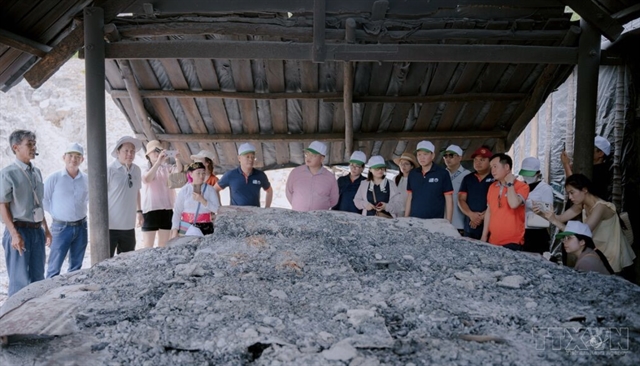
| Visitors learn about salt-making at Tuyết Diêm salt-making village in Đắk Lắk Province. — VNA/VNS Photo Tường Quân |
Craft villages join the tourism chain
Eastern Đắk Lắk is also home to diverse cultural values, ranging from natural landscapes to traditional craft villages.
Despite facing various difficulties, linking craft villages with tourism is creating new momentum for local development and giving visitors opportunities to explore and experience traditional crafts.
A number of businesses have connected tourists with villages specialising in sedge mat weaving, brocade weaving and bamboo and rattan weaving, helping create additional livelihoods for local residents.
The Xí Thoại Brocade Weaving Craft Village in Xuân Lãnh Commune is a notable example. After being connected with tourism activities, the village has operated more effectively, with the number of products sold increasing by 50-70 per cent compared with the past.
The cooperation has not only helped local residents sell their products but also enabled them to learn new weaving techniques, patterns and designs, improving their skills and diversifying products for tourists.
Nguyễn Thị Ri, a resident of Xuân Lãnh Commune, said connecting Xí Thoại brocade products with tourism activities had helped the village expand its market, gradually establish its position and increase the value of its products.
Each product is actively promoted by tourism businesses, helping more people learn about the village's handicrafts. Through social media, local residents can also better understand tourists' preferences and adjust designs and diversify their products.
As a result, incomes have increased while the traditional craft has been preserved.
Nguyễn Anh Quân, Director of the An Cư Sedge Mat Production-Service-Tourism Cooperative in Ô Loan Commune, said the cooperative had recorded significant growth after connecting its sedge mat craft with tourism.
Its products have become better known and sold more widely, while the cooperative has actively promoted them on social media and worked with travel companies and local schools to develop craft-village experience tours.
Beyond promoting handicrafts, many localities have taken the initiative to introduce traditional craft experiences to visitors. Building tourism tours around craft villages is emerging as a promising direction and has received positive feedback from tourists.
The approach has also helped revive a number of craft villages after periods of difficulty. Support from businesses is helping preserve and promote the value of traditional crafts in eastern Đắk Lắk's coastal communities.
Trình Quang Bảo, Chairman of the Đắk Lắk Tourism Association, said the association would continue to act as a bridge between businesses, craft villages and local residents to develop more sightseeing, accommodation and experiential tourism products.
The focus would be on improving the quality of leisure, sightseeing and coastal experience products, while developing community-based tourism based on respect for local culture and ensuring that communities participate in and benefit from tourism development.
The association would also encourage the preservation of traditional crafts, cuisine, folk performances and local knowledge in connection with tourism activities.
Such cooperation among businesses, communities and destinations is expected to create a more diverse tourism ecosystem, while ensuring that tourism development contributes to the preservation of local cultural and natural values and provides sustainable benefits for residents. — VNS
Life & Style
 Life & Style
 Life & Style
 Life & Style
 Life & Style
 Life & Style
 Life & Style
 Life & Style
 Life & Style
 Life & Style
 Life & Style
 Life & Style
 Life & Style
 Life & Style
 Life & Style