 Life & Style

Winners of the 2026 INPD Awards Announced, C-Beauty Takes Home Multiple Prestigious Honors
1.
|
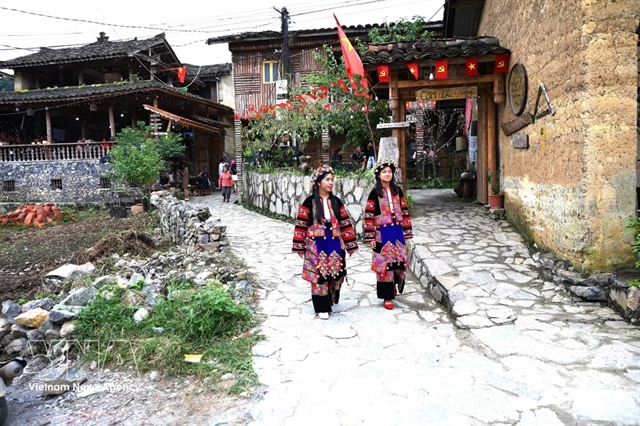
| Houses in the Lo Lo Chai Community Tourism Village. — Photo VNA/VNS |
TUYÊN QUANG — Tuyên Quang’s rich cultural heritage, from rammed-earth houses beneath the Lũng Cú Flag Tower and Hoàng Su Phì’s terraced fields to Then singing, Cọi folk melodies, traditional linen weaving and ethnic festivals, is emerging as a new driver of tourism, job creation and local economic growth when properly preserved and developed into market-oriented products.
Since the beginning of this year, the province has welcomed more than 2.093 million visitors, including 406,368 international arrivals and over 1.686 million domestic tourists.
Tourist spending topped VNĐ5.8 trillion (US$222 million), highlighting the growing economic value of cultural and natural assets, particularly in rural, mountainous and ethnic minority areas.
Turning cultural values into livelihoods
Lô Lô Chải Village, beneath the Lũng Cú Flag Tower, is a vivid example of how cultural preservation can support tourism development. Traditional rammed-earth houses, costumes, festivals, cuisine and the daily life of the Lô Lô ethnic community have become key elements of the village’s tourism appeal.
Residents have turned their homes into accommodations while retaining traditional architecture, serving locally produced food and showcasing handicrafts, folk songs, dances and customs.
Tourism has created additional income from accommodation, food services, souvenirs, transport and local tours, while opening markets for products such as mint honey, smoked meat, vegetables and brocade.
Chairman of the People’s Committee of Lũng Cú Commune Trần Đức Chung said culture is the core of the area’s tourism identity. The commune encourages residents to preserve traditional architecture, costumes, festivals and crafts, protect the landscape and improve services so that tourism benefits return to the community.
In Lâm Bình Commune, Tày stilt houses, the tính lute (a traditional music instrument), then (folk) singing, the Lồng Tồng Festival, traditional cuisine and mountain and lake landscapes are being developed into eco- and community-based tourism products.
Local people provide accommodation, perform folk arts, prepare traditional dishes, guide visitors and sell farm and handicraft products, creating more employment opportunities.
In Hoàng Su Phì, ancient tea-growing areas and local knowledge of cultivating and processing Shan Tuyết tea are being linked with experiential tourism. Tea hills, terraced fields, traditional markets and community spaces form integrated experiences that add value to agricultural products while showcasing local culture.
Lê Quang Huy, manager of Panhou Retreat, said visitors are increasingly interested in experiences associated with nature and local culture. Using local labour, sourcing farm products and working with traditional artisans can enrich tourism products while ensuring that economic benefits are more widely shared.
The One Commune, One Product (OCOP) programme is also helping connect tourism with local production. In the first seven months of 2026, the province had 357 OCOP products rated three stars or higher. Improving quality, packaging and traceability and linking these products with tourist destinations are helping expand markets and create additional livelihoods.
Balancing development and preservation
Tuyên Quang has abundant cultural resources, including historical sites, scenic landscapes, festivals, craft villages and diverse intangible heritage. However, turning these assets into sustainable economic resources requires quality tourism products and stronger market connections.
Some destinations still lack adequate accommodation, parking areas, public toilets, signposts and local guides, while experiential products and distinctive souvenirs remain limited. Weak links among destinations, tourism businesses, cooperatives and residents can also limit visitors’ stays and spending.
Nguyễn Trung Ngọc, Director of the provincial Department of Culture, Sports and Tourism, said the province is developing tourism products based on the distinctive values of each area, focusing on historical, cultural, ecological, community-based and agricultural experiences. It is also strengthening links among tourism stakeholders, improving human resources and applying digital technology to promotion.
Tuyên Quang currently has 1,478 accommodation establishments with more than 14,200 rooms and 52 travel service enterprises, providing a foundation for developing tourism routes linking Tân Trào historical site, the Na Hang-Lâm Bình Nature Reserve, Hoàng Su Phì terraced fields, the Đồng Văn Karst Plateau UNESCO Global Geopark, cultural villages and agricultural production areas.
When each destination has its own story, product and experience, tourism can generate markets for accommodation, food, transport and local products.
For Tuyên Quang, bringing heritage into daily life and placing communities at the centre of tourism development can turn cultural identity into a sustainable economic resource while ensuring that cultural values are preserved and promoted for future generations. — VNA/VNS
Life & Style
 Life & Style
 Life & Style
 Life & Style
 Life & Style
 Life & Style
 Life & Style
 Life & Style
 Life & Style
 Life & Style
 Life & Style
 Life & Style
 Life & Style
 Life & Style
 Life & Style