 Life & Style

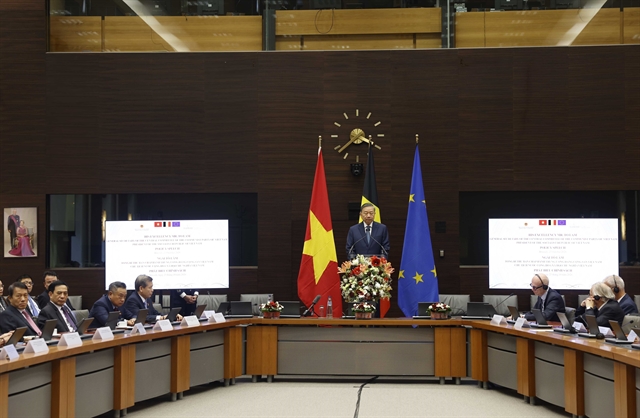
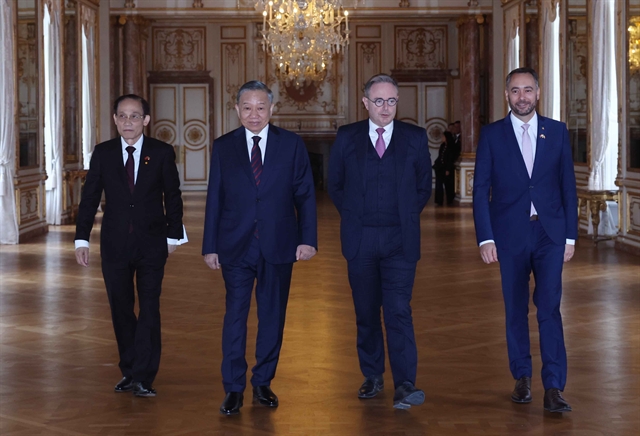
Top Vietnamese leader meets with Belgian Senate Speaker, House President
1.
|
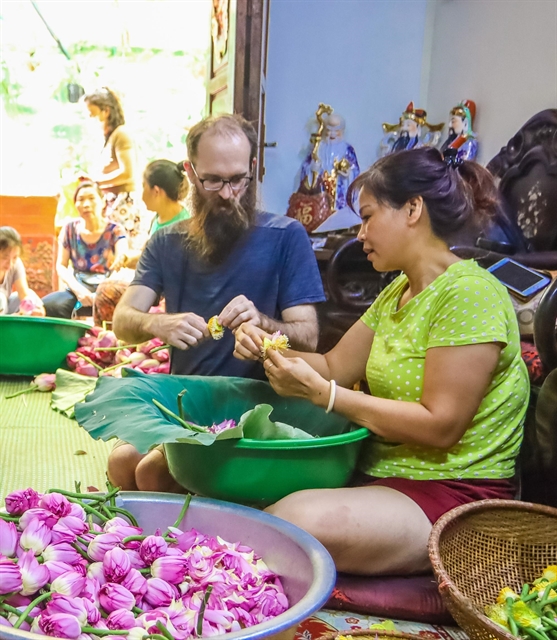
| An international visitor learns how tea is infused with lotus flowers during a hands-on experience in Quảng An Ward, Tây Hồ District, Hà Nội. — Photo cafef.vn |
HÀ NỘI — After sustaining strong growth in the first half of 2026, Hà Nội’s tourism sector is stepping up efforts to improve destination quality, develop new products, accelerate digital transformation and attract investment, with a focus on meeting the capital’s tourism growth targets for the year.
Tourism maintains strong momentum
According to the Hà Nội Department of Tourism, the capital welcomed an estimated 18.01 million visitors in the first six months of 2026, up 15.7 per cent year-on-year. International arrivals reached 4.64 million, an increase of 26.8 per cent, while domestic visitors totalled 13.37 million, up 12.3 per cent.
Total tourism revenue was estimated at VNĐ74.2 trillion (US$2.8 billion), representing a 19.1 per cent increase from the same period last year.
International arrivals have emerged as a particularly bright spot, recording the strongest growth among the sector’s key indicators. Average hotel occupancy stood at around 65.6 per cent, more than two percentage points higher than a year earlier.
|
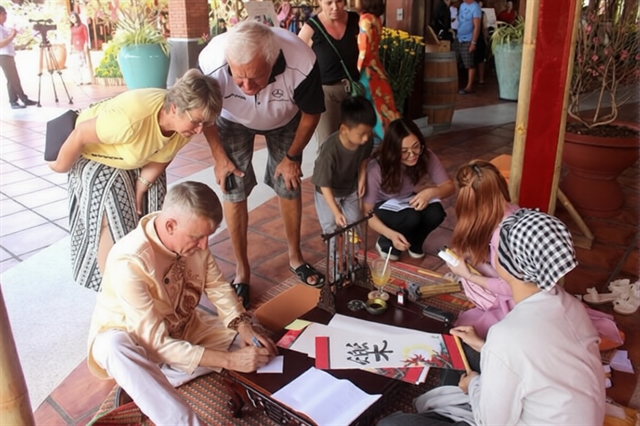
| Foreign tourists experience traditional Vietnamese customs and cultural activities during the Tết (Lunar New Year) holiday. — Photo bvhttdl.gov.vn |
The capital currently has nearly 3,800 accommodation establishments offering more than 71,000 rooms, alongside an increasingly diverse tourism service network.
The department said the results reflected the strong recovery of Hà Nội’s tourism sector and its role as a major economic driver with spillover effects on trade, services, transport and consumer spending. The capital’s tourism image and position have also continued to strengthen in international markets, while the growing preference for safe destinations in the region has created favourable conditions for attracting more overseas visitors.
Hà Nội’s tourism brand has become increasingly well established in traditional markets while gaining traction in new and promising destinations.
Despite the positive performance, however, the sector still faces a number of challenges.
Tourism resources have yet to be fully leveraged, while many cultural and craft village products lack in-depth, hands-on experiences. Tourism infrastructure remains uneven, with some major attractions (including the Old Quarter, Hoàn Kiếm Lake and the Temple of Literature) still facing shortages of parking facilities and standard public toilets.
Signage in some areas is also limited and does not always provide information in multiple languages, while public transport has yet to fully meet demand for convenient connections between attractions.
Tourism promotion has been enhanced, but remains in need of more professional coordination to create seamless service chains linking destinations, localities, craft villages and businesses. Cooperation in tourism development between domestic and international partners also has room for improvement.
Investment to create new tourism magnets
|
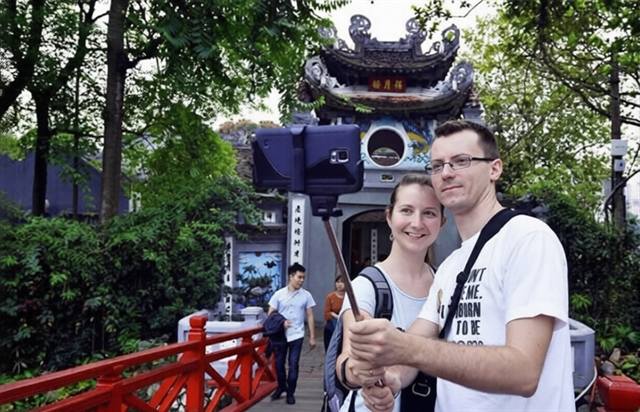
| International visitors explore Ngọc Sơn Temple in Hà Nội. — VNA/VNS Photo Thanh Hà |
The second half of 2026 has thus been identified as a period of acceleration, as Hà Nội seeks to welcome over nine million international visitors and 27.3 million domestic tourists for the full year, with total tourism revenue projected at approximately VNĐ160 trillion ($6.1 billion).
Developing new tourism products and creating fresh attractions is among the sector’s key priorities.
Hà Nội plans to introduce five new tourism models, including the Mường Cốc community-based tourism model in Mỹ Đức Village; a nighttime tourism product Hào khí Thánh Gióng (The Spirit of Saint Gióng) at Sóc Temple in Sóc Sơn Village; and the Hồn tre Đống Vũ (Soul of Đống Vũ Bamboo) community tourism model in Ứng Thiên Village.
The remaining two are an agricultural and rural tourism experience linking the traditional Kim Lan ceramics village and Văn Đức vegetable growing area in Bát Tràng Village; and a community tourism product offering visitors first-hand experiences of the traditional cultural values of ethnic communities in Yên Xuân Village.
The capital city will also continue developing promising tourism segments, such as river and railway tourism, community-based tourism, agricultural tourism and sports tourism.
Walking streets, food streets and night-time economic activities will be expanded to encourage longer stays and higher visitor spending.
Investment attraction is expected to play an increasingly important role in this development.
The tourism sector will work with the Hanoi Support Center for Enterprise and Investment Promotion (SCE) and relevant departments and agencies to step up investment promotion and attract major investors to develop modern, branded tourism complexes in the capital’s key tourism areas.
City authorities aim to put two to three additional four- and five-star hotels, accommodation and resort complexes into operation by the end of the year, helping strengthen the capital’s high-end tourism infrastructure and diversify its accommodation offering.
The sector is also continuing to prepare dossiers proposing the recognition of national tourism areas in and around Hoàn Kiếm Lake, Hà Nội’s Old Quarter, Hương Sơn and Ba Vì.
Digital transformation for smarter travel
Alongside investment in physical infrastructure and new products, digital transformation is being positioned as another key driver of tourism development.
Hà Nội plans to build a centralised tourism database and introduce e-ticketing systems at eligible tourism sites and attractions. The city will also upgrade the Hà Nội Department of Tourism’s promotional website to make it more professional, distinctive, attractive and accessible to visitors.
The Hà Nội Digital Tourism Culinary Map will continue to be developed, with a focus on connecting it with the iHanoi app, allowing visitors to access information about culinary destinations and experiences more conveniently.
These efforts are also aligned with the direction of the Politburo’s Resolution 57-NQ/TW, which identifies science, technology, innovation and digital transformation as key drivers of national development. For Hà Nội’s tourism sector, this means using digital technology not only to improve visitor services, but also to build smarter destinations, strengthen connectivity and create new opportunities for businesses and investors.
Digital transformation is expected to help create a more integrated tourism ecosystem, in which shared databases, digital platforms and smart services connect visitors with destinations and businesses more effectively. By accelerating digitalisation, Hà Nội is also working to improve the efficiency and transparency of tourism management while encouraging enterprises to develop new products and services that respond more closely to changing visitor demand.
Personnel will also remain a priority, with further training for managers, tour guides and front line tourism workers. The sector will strengthen inspections of tourism businesses to ensure a civilised, safe and welcoming environment for visitors.
Building a more competitive tourism ecosystem
For Hà Nội, investment attraction, digital transformation and product development are increasingly interconnected. New tourism infrastructure can create destinations capable of attracting larger visitor flows, while digital technology can improve the way those destinations are managed and experienced.
The combination also creates new opportunities for businesses in accommodation, entertainment, transportation, culinary services, community tourism and digital tourism solutions to participate in the capital’s tourism development.
With coordinated measures covering products, infrastructure, investment, promotion and digital transformation, Hà Nội aims to maintain its strong tourism momentum in the second half of the year while advancing the goals set out in the Politburo’s Resolution 57-NQ/TW.
The broader goal is to build a smarter, more competitive and sustainable tourism ecosystem, strengthening tourism’s role as a key economic sector of the capital in the new development period. — VNS
Life & Style
 Life & Style
 Life & Style
 Life & Style
.jpg) Life & Style
Life & Style
 Life & Style
 Life & Style
 Life & Style
 Life & Style
 Life & Style
 Life & Style
 Life & Style
 Life & Style
 Life & Style
 Life & Style