 Economy

Thầy Thím Temple Festival honours coastal heritage
1.
|
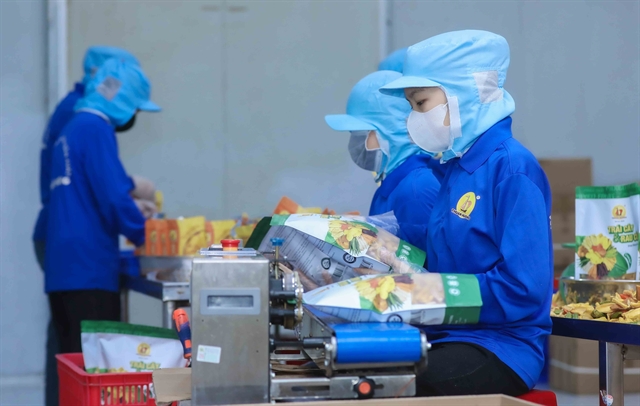
| Workers packaging fruit products at a plant in Đồng Nai Province. — VNA/VNS Photo |
ROME — A dialogue on agricultural cooperation between Việt Nam and Italy was held in Rome on October 23, bringing together businesses and industry representatives to explore practical cooperation in agricultural products and spices.
The event was jointly organised by the Vietnam Trade Office in Italy, the Italy-Việt Nam Chamber of Commerce (CCIV), the Italian Farmers Association (AIC) and the Vietnam Pepper and Spice Association (VPSA).
Việt Nam is Italy’s largest trading partner in ASEAN, while Italy is Việt Nam’s third-largest trading partner in the European Union (EU). Bilateral trade reached approximately US$5.9 billion in the first nine months of 2026, up 8.8 per cent year-on-year.
Agricultural products, particularly pepper, cashew nuts, coffee, cinnamon, star anise and other spices, remain important items connecting the two economies.
Italy imports around 3,800–5,000 tonnes of pepper annually. In the first seven months of 2026, Việt Nam remained Italy’s largest pepper supplier, shipping 662 tonnes and accounting for 23.6 per cent of the market. However, this represented a decline from the same period last year.
The decrease reflects not only a slowdown in the European market but also a shift among Italian businesses towards indirect imports through intermediaries in Germany and the Netherlands rather than direct purchases from Việt Nam.
VPSA Chairwoman Hoàng Thị Liên said this trend poses a challenge for Việt Namese businesses, making it necessary to strengthen direct market access, trade promotion and brand recognition in Italy.
Although Italy is an extremely demanding market, she said, gaining a foothold there will enhance Việt Namese businesses’ reputations and help them enter other markets.
Participants agreed that compliance with food safety standards, sustainability and transparency is essential for Việt Namese suppliers seeking deeper access to Italy’s food processing and retail sectors.
AIC Secretary Marco Mabritto highlighted the complementary strengths of the two economies, stressing the importance of mutual understanding. He also said sustainability requires respect for workers throughout the agricultural and food supply chains in both countries, supported by appropriate certification.
CCIV Chairman Phạm Văn Hồng shared the view that building lasting business links is essential. He said the biggest obstacles facing Việt Namese businesses are not technology or capital, but a limited understanding of the Italian market.
Building trust and understanding local business rules are key to success, he noted, adding that the Việt Nam Trade Office and CCIV can provide further support.
At the dialogue, Phạm Thị Văn Thanh, First Secretary of the Việt Nam Trade Office in Italy, said Việt Nam’s agricultural sector is shifting from exporting raw products towards deeper processing, standardised growing areas and GPS-based traceability systems to meet stringent requirements, including the EU Deforestation Regulation (EUDR).
The trade office pledged to work closely with VPSA and CCIV to help Việt Namese businesses verify partners and obtain contract advice to reduce legal risks. — VNA/VNS.
Economy
 Economy
 Economy
 Economy
 Economy
 Economy
 Economy
 Economy
 Economy
 Economy
 Economy
.jpg) Economy
 Economy
 Economy
 Economy