 Life & Style
PM pledges continued support for Vietnamese community in Cambodia
1.
|
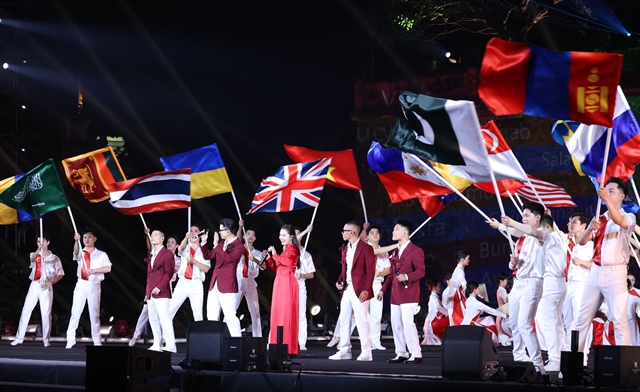
| The first Cultures of the World Festival took place in Hà Nội last October. — VNA/VNS Photo Quốc Khánh |
HÀ NỘI — Việt Nam will proactively deepen international integration to promote the nation's cultural values globally while embracing the best of world cultures.
That is the overarching goal of Việt Nam's Cultural Diplomacy Strategy to 2030, with a Vision to 2045, approved by Deputy Prime Minister Phạm Thị Thanh Trà.
Under the strategy, Việt Nam aims to build an advanced culture rooted in national identity, harness cultural soft power to drive rapid and sustainable development, enhance its standing, reputation and influence on the international stage, and contribute meaningfully to the diversity of human civilisation.
World-class destinations
Between 2026 and 2030, Việt Nam will expand and strengthen international cultural cooperation with countries, territories, organisations and partners worldwide, creating new momentum for the development of its cultural and creative industries.
Priority will be given to sectors in which the country has particular strengths, including film, performing arts, cultural tourism and heritage.
The strategy targets winning at least five prestigious international awards in culture and the arts, with a focus on music, film and literature.
It also aims to establish and sustainably operate five international arts festivals with distinctive local identities in key provinces and cities, positioning them as leading cultural destinations in the region.
Another goal is to secure international recognition for at least five additional heritage elements or cultural titles from UNESCO and other specialised international organisations.
It targets the development of at least 10 cultural and heritage tourism destinations into nationally branded attractions with global competitiveness and international recognition, while establishing one to three new Việt Nam Culture Centres in strategically important overseas locations.
International recognition
By 2045, Việt Nam aims to become one of the region's leading centres for culture and creativity, while making a breakthrough in harnessing cultural soft power on the foundation of a robust digital economy and digital society.
The country also seeks to cement its reputation as a nation with a rich cultural heritage and the capacity and credibility to host and organise major regional and international events, while playing a proactive role in shaping global cultural development in the new era.
Specific targets include winning at least 15 additional prestigious international awards in culture, the arts and the cultural and creative industries, and successfully hosting at least one global event, such as a World Expo, a specialised Expo, or a world-class sporting or cultural event.
The strategy also calls for the establishment of at least five additional Việt Nam Culture Centres in countries that are comprehensive strategic partners, in line with the Party's and the State's foreign affairs priorities.
It aims to secure international recognition or inscription for 15 more heritage elements and cultural titles by UNESCO and other specialised international organisations, while striving to place Việt Nam among the top three countries in ASEAN and the world's top 30 in the Global Soft Power Index.
|
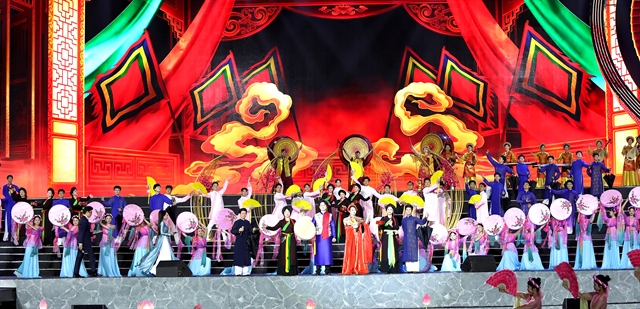
| An artistic performance at the ceremony marking UNESCO heritage recognition in Bắc Ninh Province. — VNA/VNS Photo Danh Lam |
Highly skilled workforce
To achieve these goals, the strategy identifies the development of a highly skilled cultural diplomacy workforce, both at home and abroad, as one of its key tasks and solutions.
The strategy calls for assigning officials to undertake cultural affairs on a concurrent basis at Việt Nam's overseas representative missions, in line with operational requirements and local conditions.
The arrangement must comply with the Party's and the State's policy of streamlining the public sector to improve efficiency and effectiveness, without creating new organisational units or increasing the number of civil servants posted abroad.
It also envisions the gradual deployment of cultural counsellors or cultural attaches at Vietnamese diplomatic missions in strategic partner countries. By 2030, priority will be given to comprehensive strategic partners, with deployment expanded by 2045 to strategic partner countries and above.
The strategy calls for proactive planning, training and professional development of cultural diplomacy officials at both central and local levels. It aims to build a workforce with a deep understanding of Việt Nam's cultural heritage and broad knowledge of world cultures.
Priority will be given to strengthening expertise in international negotiations, international law and intellectual property, as well as skills in event management, multimedia communications, digital cultural governance and the use of advanced technologies such as artificial intelligence (AI), big data and virtual and augmented reality (VR/AR).
The strategy emphasises assigning qualified officials to positions in regional and international cultural organisations.
It also calls for enhanced training and updated knowledge of Việt Nam's history and culture, along with communication and promotional skills, for students, postgraduate researchers, workers and experts before they go abroad to study or work.
At the same time, it emphasises strengthening aesthetic education, fostering political awareness and nurturing pride in the nation's cultural heritage among young people. The goal is to cultivate a generation of global citizens equipped to navigate the challenges of international integration and globalisation while remaining grounded in their national identity.
Expanding global outreach
The strategy calls for a renewed approach to cultural diplomacy by enhancing its effectiveness and diversifying the ways in which Việt Nam's national cultural brand is promoted and communicated worldwide.
It also calls for greater investment in improving the quality of cultural diplomacy and external cultural activities, while continuously innovating their content and formats during overseas visits by senior Vietnamese Party and State leaders, as well as visits to Việt Nam by foreign leaders.
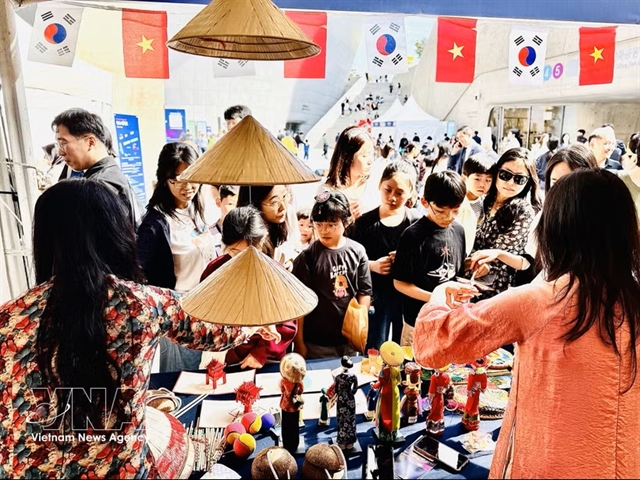
It seeks to renew and enhance the effectiveness of Việt Nam Culture Weeks and Culture Days abroad through stronger collaboration and joint performances with host countries, broader audience outreach, and increased media coverage of the events.
It also encourages the integration of demonstrations, competitions and interactive experiences showcasing traditional sports, traditional martial arts and folk games that embody Việt Nam's distinctive cultural identity.
The strategy calls for strengthening Việt Nam's presence at major international cultural and artistic events, including international exhibitions, prestigious and long-established film festivals, art exhibitions and international book fairs.
It also encourages the promotion of Vietnamese culture and the country's image through themed cultural events held alongside major international economic and political gatherings.
It further seeks to enhance cultural and sports diplomacy by hosting, proactively organising and participating in major international sporting competitions, as well as regional and continental multi-sport events.
Meanwhile, Việt Nam's distinctive traditional sports and art forms will be introduced to global audiences through cultural exchanges, festivals, trade fairs and exhibitions. — VNS
Life & Style
 Life & Style
 Life & Style
 Life & Style
 Life & Style
 Life & Style
 Life & Style
 Life & Style
 Life & Style
 Life & Style
 Life & Style
 Life & Style
 Life & Style
 Life & Style
 Life & Style