 Life & Style

PM attends memorial service for 731 fallen soldiers in Hồ Chí Minh City
1.
|
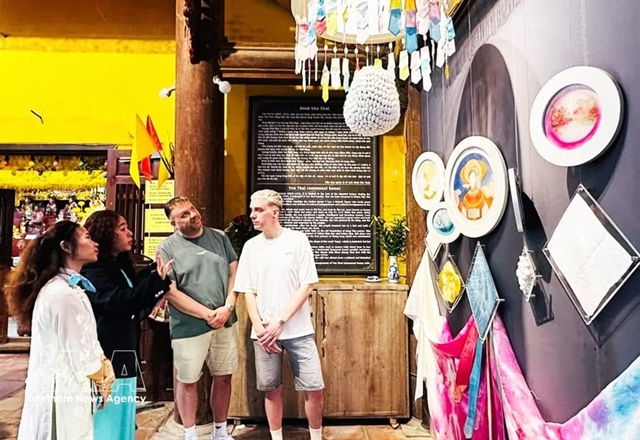
| Foreigners explore Vietnamese silk at the Yên Thái communal house in Hà Nội. Photo VNA/VNS |
HÀ NỘI — At the entrance of the Yên Thái communal house in Hà Nội’s Hoàn Kiếm District, glossy and high-end silk products from Việt Nam’s craft villages are arranged with care, injecting a fresh, contemporary feel into an ancient setting.
The display is part of a series of cultural events run by the Hoàn Kiếm Lake and Old Quarter management board, open through June 30.
Inside the historic space, visitors get hands-on experience in traditional silk production, from reeling to handloom weaving, and also learn the distinct traits of Việt Nam’s silk varieties.
While Nha Xá silk of Ninh Bình Province is prized for rich woven patterns, softness, and colourfastness, Vạn Phúc from Hà Nội is known for fine weaving and was once a royal tribute textile. Bảo Lộc silk from Lâm Đồng Province is valued for its thicker yarns and natural sheen, making it ideal for premium fashion.
Alongside traditional silk products such as fabric, scarves, and long dresses, creative items like fashion accessories and interior décor are also on display, showing how Vietnamese silk adapts to modern life.
The Yên Thái communal house, a national historical and cultural site since 1995, honours Empress Dowager and Royal Consort Ỷ Lan. She twice served as regent, governed on behalf of the King, led successful resistance against foreign invaders, and is revered as the village’s tutelary deity. Having lived in the area, she is credited with teaching silk weaving to palace attendants and locals, building the craft’s reputation in the ancient capital of Thăng Long.
Dr. Hoàng Hải Yến, founder of the social enterprise Suncraft, said business experts advocate presenting craft village products accompanied by their deeper cultural and historical stories through a contemporary lens. Vietnamese silk is loved for its identity, and foreigners are impressed by its craftsmanship and quality.
Storytelling about preserving traditional crafts, paired with experiential activities within heritage spaces, is seen as an effective way for Vietnamese craft village products to continue to shine and claim their place in contemporary life, she added. — VNA/VNS
Life & Style
 Life & Style
 Life & Style
 Life & Style
 Life & Style
 Life & Style
 Life & Style
 Life & Style
 Life & Style
 Life & Style
 Life & Style
 Life & Style
 Life & Style
 Life & Style
 Life & Style