 Life & Style
Hà Nội adorned in red ahead of Liberation Day
1.
HÀ NỘI — The rapid growth of social media has become a powerful gateway connecting destinations with travellers, helping promote community-based tourism, boost local economic growth and preserve cultural identities.
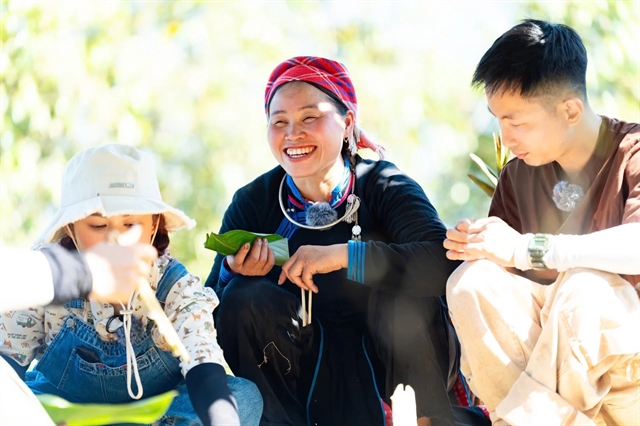 |
| Vàng Thị Thông (centre) and her family have been developing community-based tourism in the mountainous region. — Photo courtesy of Vàng Thị Thông |
Among the success stories is Vàng Thị Thông, a Tày ethnic woman from Bản Liền Commune in Lào Cai Province. Long before gaining attention through a reality television programme, she and her family had been developing community-based tourism in the mountainous region.
Through short videos shared on platforms such as TikTok and Facebook, Thông showcases daily life in her village, including preparing meals for guests, harvesting Shan Tuyết tea, cooking in a traditional stilt house and guiding visitors through mist-covered tea hills.
The authenticity of these videos has sparked growing interest in Bản Liền, once a little-known destination among mainstream tourists.
Thông said she began sharing photos of her village on social media in 2021 before gradually moving on to short videos as her digital skills improved. She described the experience of introducing local customs and traditions to a wider audience as both meaningful and rewarding.
The impact of social media has been evident.
Homestays in Bản Liền have attracted more visitors, while local residents have become increasingly aware of the need to preserve landscapes, cultural values and community-based tourism activities. The destination now features regularly in travel groups and online discussions among young travelers.
Meanwhile, TikTok channel 'Khoai Lang Thang' has emerged as an example of how young content creators are telling the story of Việt Nam's tourism through authentic and emotionally engaging content. Rather than focusing on luxury destinations, the channel features local lifestyles, traditional cuisine, rural markets, craft villages and lesser-known locations across the country.
According to Nguyễn Tiến Đạt, director of AZA Travel Company and vice chairman of the Hanoi Tourism Association, social media has become an especially effective marketing tool for the tourism industry. Young people not only promote destinations but also help create a distinctive digital identity for them in the technology era.
Đạt noted that travel firms have benefited directly from the trend, with demand for tours to destinations such as Hà Giang increasing significantly. Many travelers now contact tour operators with screenshots or videos seen on TikTok and ask whether tours are available to those locations.
Meanwhile, Phùng Quang Thắng, chairman of the Vietnam Green Tourism Association, said social media promotion by young people has helped create livelihoods for local communities, benefiting homestay owners, local guides, transport providers and sellers of regional specialties, particularly in remote areas with limited promotional resources but rich tourism potential.
Experts, however, stressed the need to ensure tourism-related content remains responsible, authentic and respectful of local cultures, while avoiding sensationalism and supporting the transition towards greener tourism development. — VNA/VNS
Life & Style
 Life & Style
 Life & Style
 Life & Style
 Life & Style
 Life & Style
 Life & Style
 Life & Style
 Life & Style
 Life & Style
 Life & Style
 Life & Style
 Life & Style
 Life & Style
 Life & Style



