 Life & Style
Sơn La holds second coffee festival, targeting stronger businesses in future
1.
|
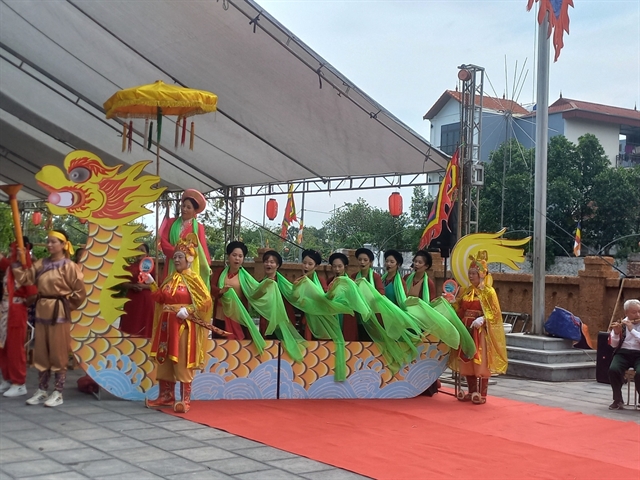
| Local artists perform their national intangible heritage chèo tàu (traditional opera singing on boat) which is believed a product to push Ô Diên Commune's tourism. — VNS Photos Khiếu Thanh Hà |
HÀ NỘI — Home to numerous historic and spiritual sites as well as a variety of cultural activities, Ô Diên Commune is expected to attract more visitors in the coming years as its tourism development programme is implemented alongside expert recommendations.
The commune, formed by merging several communes of the former Đan Phượng District in Hà Nội under the recent local government reform, sought support through a conference titled “Upgrading the Quality of Services and Connecting Tourism Destinations in Ô Diên Commune with Travel Businesses in 2026,” held on April 24.
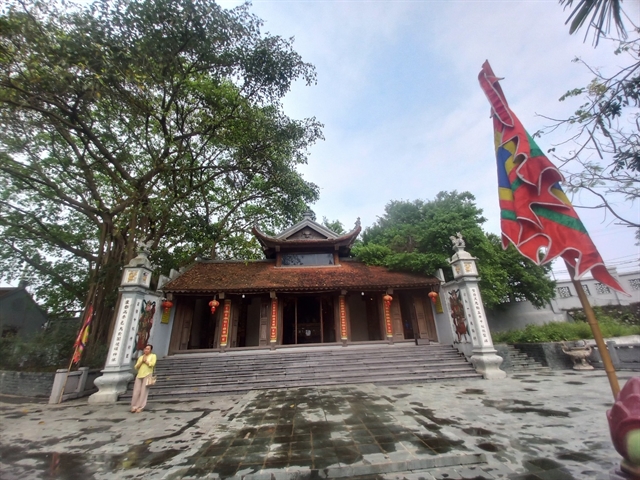
"Ô Diên is an ancient land deeply marked by the culture of the Đoài region. Currently, we have 67 historical relics, notably the Văn Hiến and Hàm Rồng temples, Vạn Xuân Communal House, Hải Giác Pagoda and Voi Phục Shrine," said Bùi Thị Thu Hằng, Vice Chairwoman of the Ô Diên People's Committee.
"In particular, it still preserves the remains of the ancient Ô Diên Citadel – considered the capital of the Vạn Xuân State in the sixth century – and the birthplace of the famous figure Tô Hiến Thành."
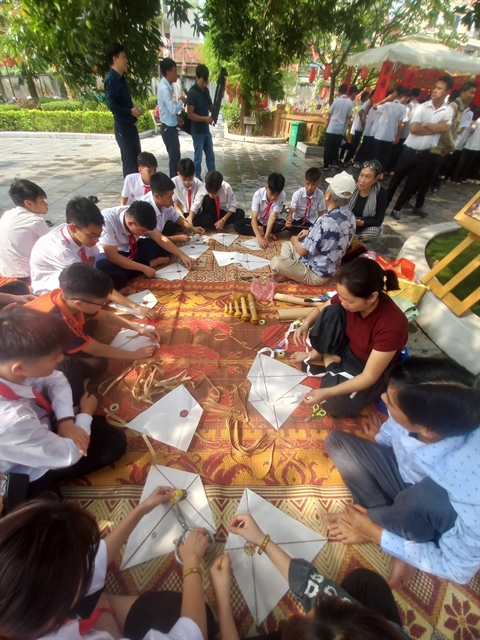
"Ô Diên also has special intangible cultural heritage of chèo tàu (traditional opera singing on boat), traditional flute kite making and lace craft as well as OCOP products, which are really potential for further tourism development," she said.
|
| Hàm Rồng Temple is one of best known spiritual site in Ô Diên. |
However, tourism has yet to develop significantly, attracting only around 25,000 visitors per year, most of whom come to visit historical sites. This is largely due to a lack of services, amenities, and visitor conveniences, as well as a shortage of activities and experiential spaces to engage tourists and weak connectivity between local destinations. Hằng noted these challenges and invited delegates to offer their recommendations.
"Each locality has tourism products that showcase its unique value and serve as a means of promoting the local image. However, if these products remain fragmented, all effort is worthless," said Nguyễn Trần Quang, Deputy Director of the Hà Nội Department of Tourism.
He asked delegates to assess the advantages and potential of tourist destinations in the area as a basis for proposing appropriate development directions; and, at the same time, to exchange ideas and provide feedback on building distinctive tourism products, proposing solutions to improve service quality and strengthen connections between destinations.
In addition, he said Ô Diên people needed to promote linkages with businesses through coordination mechanisms, information sharing, and effective cooperation methods, contributing to completing the orientation of sustainable tourism development and maximising existing potential.
Travel agency representatives note that Ô Diên, situated just 20km from central Hà Nội, benefits from abundant cultural resources, a peaceful rural setting, and relatively well-developed infrastructure. These advantages position it well for day tours, as well as for linking with nearby areas to develop Red River routes and cultural itineraries in the western region, creating more engaging travel experiences.
However, to fully capitalise on this potential, the locality must continue to refine its tourism offerings, upgrade attractions, and improve the tourism skills of local residents.
|
| Students learn to make kites, a traditional craft of Ô Diên people. |
Nguyễn Tiến Đạt, Vice Chairman of the Hà Nội Tourism Association, suggested that special attention should be paid to improving the quality of tour guiding at destinations, focusing on direct, lively, and people-centred approaches instead of relying solely on technology. At the same time, Ô Diên should concentrate on developing tourism products linked to authentic cultural experiences, tailored to different groups of visitors.
It is necessary to systematically organise cultural activities and programmes to create highlights, enhance attractiveness, and retain tourists who would love to share their experiences on social media, contributing to promoting the image of local tourism.
Đặng Thị Thọ, representative of Phoenix Travel, suggested Ô Diên focus on selecting one to two outstanding products to invest in and develop into flagship tourism products and, at the same time, transform heritage into assets by linking them with cultural and educational experiences to generate revenue.
In addition, a synchronised infrastructure and accompanying services such as parking, food and beverage, sanitation, and experiential spaces were necessary while expanding products beyond spiritual tourism to include cuisine, traditional crafts, and experiences to increase attractiveness. This would help gradually build a unique brand for the destination, create complete tour packages, and attract tourists.
Responding to delegates, Vice Chairwoman Hằng affirmed that Ô Diên would pay attention to developing cultural and experiential tourism and craft village tourism associated with cuisine and OCOP products. Digital transformation and tourism organisation and management improvement would be keys to help the commune reach targets. — VNS
Life & Style
 Life & Style
 Life & Style
 Life & Style
 Life & Style
 Life & Style
 Life & Style
 Life & Style
 Life & Style
 Life & Style
 Life & Style
 Life & Style
 Life & Style
 Life & Style
 Life & Style