 Life & Style
French experts share digital administrative experience with Vietnamese public servants
1.
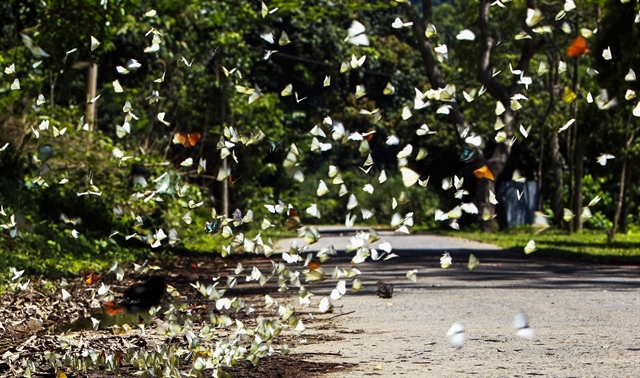 |
| At the slightest sound or a step nearby, thousands of resting wings rise together, unfurling into delicate, shimmering displays that drift through the air in a mesmerising show. — Photos baoninhbinh.org.vn |
NINH BÌNH — In early April, Cúc Phương National Park in Ninh Bình Province bursts into life as millions of butterflies in dazzling colours blanket forest trails and tree canopies, creating a rare and vibrant spectacle.
This year, the season has arrived two to three weeks earlier than usual, coinciding with the start of the tourism season and drawing a surge of visitors eager to witness the extraordinary display.
According to the Centre for Environmental Education and Services, favourable weather conditions – particularly sunny days following rainfall – have provided a perfect environment for butterflies to thrive and gather in large flocks.
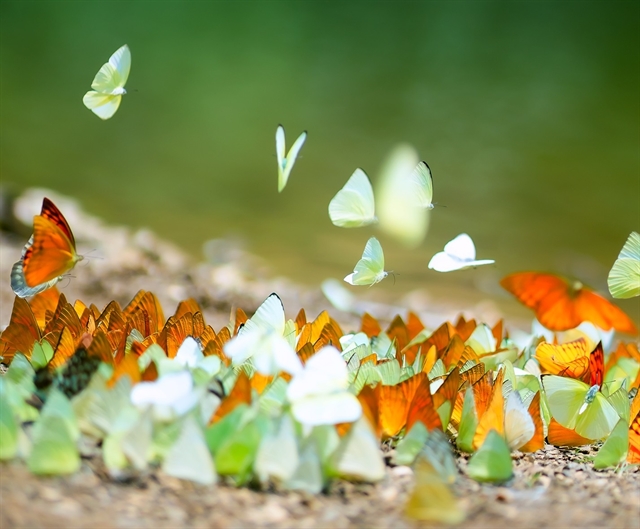 |
| While white butterflies dominate the scene, visitors may also spot species with striking patterns such as swallowtails, lemon butterflies or golden varieties, adding vibrant touches to the forest’s natural canvas. |
Along the trails, clusters of white, yellow and orange butterflies shimmer in the sunlight, covering damp patches of earth or hovering by streams.
At the slightest disturbance, thousands take flight, producing a scene both enchanting and dynamic. For photographers, this season is considered a golden opportunity to capture striking images of nature.
The spectacle does not end with daylight. At night, millions of fireflies illuminate the forest canopy, transforming Cúc Phương into a shimmering miniature universe.
Recognising the early arrival of this natural phenomenon, the National Park Management Board quickly adjusted its annual plans, launching experiential tours ahead of schedule to serve visitors.
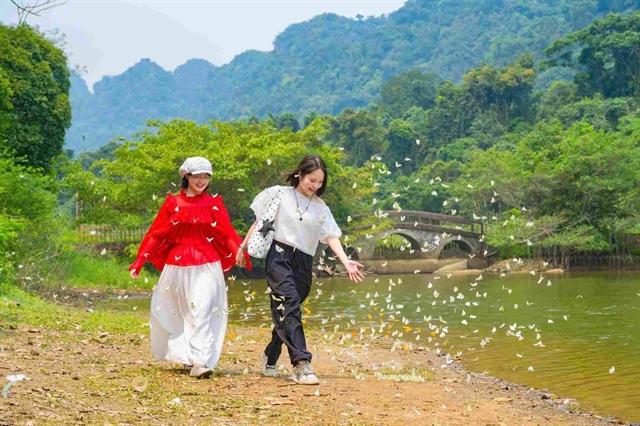 |
| Tourists, including many young visitors, flock to Cúc Phương National Park to marvel at the striking spectacle of butterfly season. |
Among the most popular offerings are the daytime butterfly-watching tour and the nighttime firefly experience.
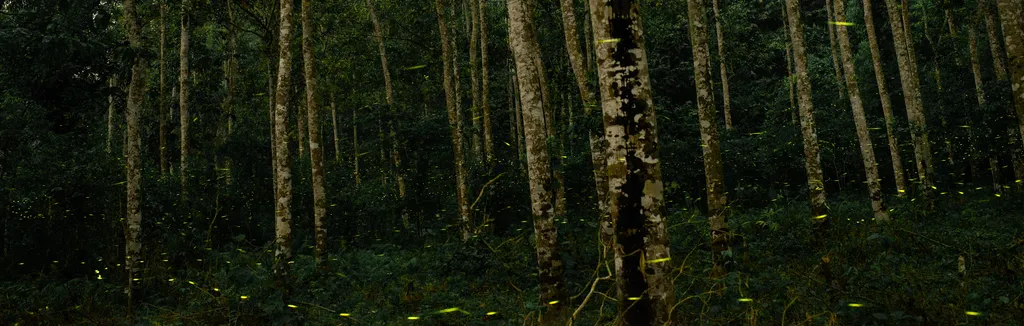 |
| At night, guests move through the stillness of the forest, listening to natural sounds while thousands of glowing lights flicker like a terrestrial galaxy. |
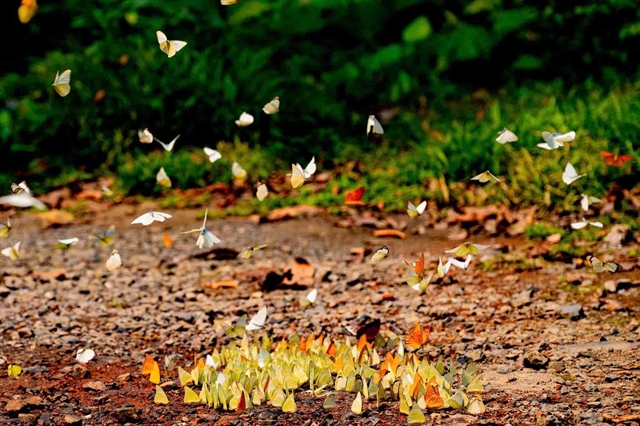 |
| Butterflies often gather in large clusters around stream banks or damp forest floors. |
He stressed that the butterfly and firefly seasons are not human-made tourism products, but the result of millions of years of evolution and a fragile ecological balance.
“If we disrupt that balance, even slightly, these seasons will vanish – and there will be no way to recreate them," he said.
"That is why our goal is not to attract as many visitors as possible, but to ensure that each person who comes leaves with greater understanding, deeper love and stronger responsibility towards the forest.”
Bùi Văn Mạnh, director of the Ninh Bình Department of Tourism, agreed.
Mạnh noted that harnessing natural phenomena to create experiential products helps diversify tourism, extend visitor stays and increase spending.
Yet, he cautioned that butterflies and fireflies are highly sensitive to environmental changes. Even minor disruptions – such as strong artificial lighting or human interference – can reduce their populations.
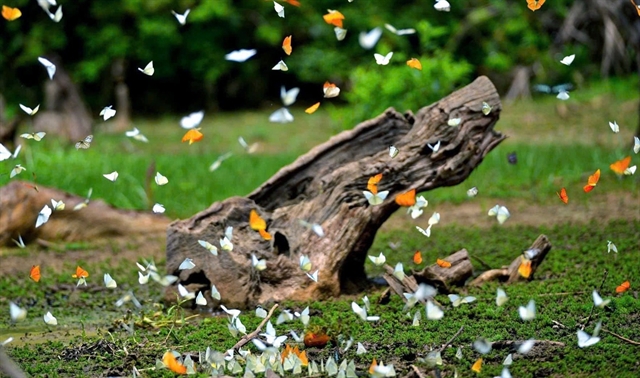 |
| The best time to admire butterflies in Cúc Phương National Park is on warm, sunny days right after a rain shower. Butterflies often emerge from the foliage in great numbers to bask in the sunlight and search for food. |
For this reason, tours are strictly regulated in terms of visitor numbers, timing and designated routes. Guests are advised not to use bright lights, capture insects or create excessive noise, ensuring minimal impact on these delicate habitats.
Before or after the butterfly season, visitors to Cúc Phương can enjoy a wealth of ecologically friendly activities: trekking through ancient forests, exploring rich biodiversity, visiting the thousand-year-old chò tree, or discovering prehistoric caves.
This blend of striking landscapes and diverse experiences is helping Cúc Phương emerge as one of northern Việt Nam’s standout destinations in early summer.
Travellers like Thu Hà from Hà Nội are captivated by the spectacle.
Hà said: “I had seen photos of the butterfly season before, but witnessing it in person was overwhelming. On some paths, just stepping closer would send entire flocks into the air, filling the space with incredible beauty.”
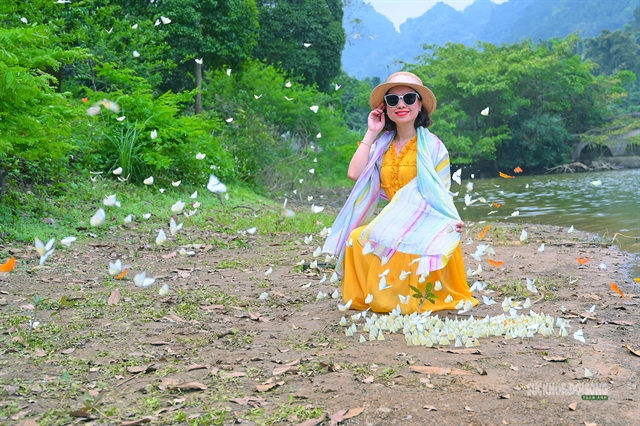 |
| This year’s early season offers an ideal opportunity for photographers and travellers to capture breathtaking images. |
She added that mornings are an ideal time to watch butterflies, when gentle sunlight and lingering moisture draw them into large clusters on damp patches or in sunlit clearings, creating a scene both tranquil and vibrant.
Experts note that the butterfly season typically lasts from late March until the end of April, depending on weather conditions. Visitors are encouraged to come in the morning or early afternoon, when butterfly activity peaks, while maintaining environmental awareness to minimise impact on the ecosystem.
With pristine beauty and shimmering displays across the ancient forest, this year’s early butterfly season is both a fascinating natural phenomenon and a powerful symbol of green and sustainable tourism.
It highlights Ninh Bình’s commitment to eco-friendly travel and strengthens its image as a destination where nature, culture and responsibility converge. — VNS
Life & Style
 Life & Style
 Life & Style
 Life & Style
 Life & Style
 Life & Style
 Life & Style
 Life & Style
 Life & Style
 Life & Style
 Life & Style
 Life & Style
 Life & Style
 Life & Style
 Life & Style