 Life & Style
Việt Nam, Switzerland to turn education, sci-tech, innovation into cooperation focus
1.
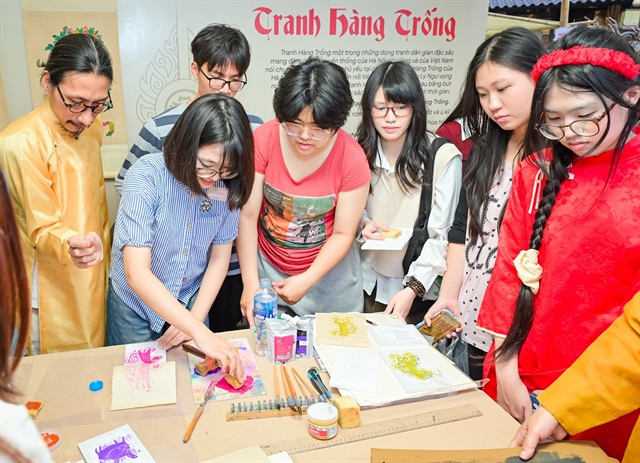 |
| Young people experience Hàng Trống folk painting at the event. Photo hanoi.gov.vn |
HÀ NỘI — As creativity takes root ahead of the Hà Nội Creative Design Festival 2026, a series of art events is quietly turning heads while marking the 950th anniversary of Văn Miếu Temple, blending heritage with a forward-looking spark.
Through these artistic activities, the public can experience a wide range of art forms that bridge the past and future.
A highlight of the programme is the display of nearly 200 artworks and creative products by students of Hà Nội College of Arts, presented in diverse formats such as paintings and handcrafted items.
According to Phạm Tuấn Long, Director of the Hà Nội Department of Culture and Sports, the event has created a vibrant artistic space where Hà Nội’s traditional values are seamlessly interwoven with the spirit of contemporary art through works by the students.
"Beyond serving as a distinctive cultural highlight attracting both residents and visitors, the event also makes a tangible contribution to preserving, promoting and inspiring the creation of new cultural products that enrich spiritual life in the Hồ Văn area – an emerging cultural and creative hub of the capital," Long said at the opening ceremony.
The displayed works are expressed through a wide variety of materials, including sơn mài (lacquer), silk, oil on canvas, acrylic and watercolour. They are accompanied by applied art products with strong practical value, such as áo dài, embroidered scarves and handmade accessories.
Each piece is not only the result of a dedicated process of study and artistic creation but also reflects the fresh and distinctive perspective of a new generation of artists as they engage with and reinterpret national cultural identity.
Trịnh Quỳnh Anh, an event-goer, expressed her impression of how young artists incorporate familiar images from everyday Vietnamese life into their works.
“They are still young, yet they already bring fresh perspectives to traditional materials," Anh said. "Familiar motifs are reinterpreted in remarkably different ways, making them feel both intimate and intriguing.”
Each product is the result of a rigorous creative process blending ideas, materials and craftsmanship. Efforts to incorporate traditional elements into applied products reflect how young people revive heritage, allowing time-honoured values to emerge from the dust of time and become familiar, accessible parts of contemporary life.
Alongside the creative space of the young artists, the event also features a dedicated area honouring two traditional folk paintings, Hàng Trống and Kim Hoàng.
These distinctive genres exemplify Vietnamese folk art, embodying rich aesthetic values as well as the spiritual life and beliefs of people in the former imperial capital.
Each genre is distinguished by its own materials and techniques. Hàng Trống painting is typically made on dó (poonah), shuen paper or even newsprint, with outlines printed first and then hand-coloured, resulting in a soft yet lively aesthetic.
Meanwhile, Kim Hoàng painting is notable for its coloured paper backgrounds, often pink, orange-red or vermilion, and a distinctive printing technique that creates a beauty that is both rustic and refined.
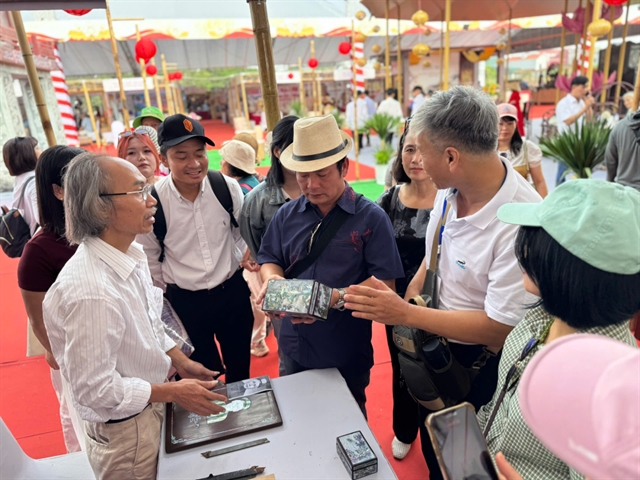
According to Kim Hoàng painting artisan Nguyễn Bá Tôn, the event allows visitors to take part in hands-on experiences, an effective way to bring folk paintings closer to the public and younger generations.
“When people create each stage themselves, they come to better understand and appreciate the value of these art forms," Tôn said.
Through the event, the organisers aim to create a comprehensive meeting ground between tradition and creativity as well as between arts education and community life.
As Hà Nội continues its efforts to strengthen its standing as a Creative City in design, the works by the younger generation are emerging as vital resources, enriching the cultural landscape, deepening public engagement with the arts and driving the growth of cultural industries.
In turn, these contributions play a significant role in preserving, promoting and enhancing the capital’s cultural and artistic values. — VNS
Life & Style
 Life & Style
 Life & Style
 Life & Style
 Life & Style
 Life & Style
 Life & Style
 Life & Style
 Life & Style
 Life & Style
 Life & Style
 Life & Style
 Life & Style
 Life & Style
 Life & Style