 Life & Style
Ministry proposes allowing foreign investors to participate in market infrastructure
1.
|
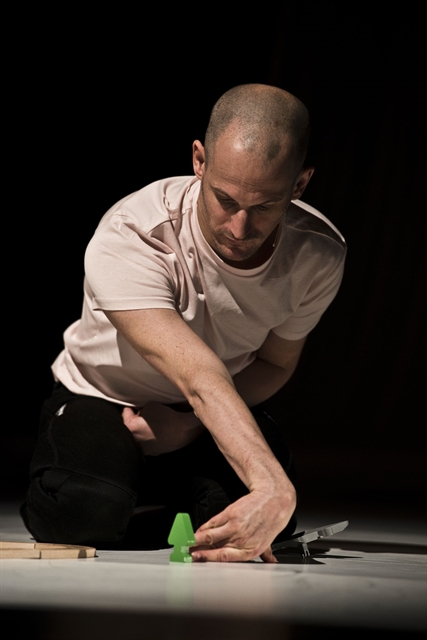
| Precarious Moves performed by Michael Turinsky will be shown in Hà Nội. Photo michaelturinsky.org |
HÀ NỘI — Vietnamese and international speakers will jointly lead a discussion called Bodyscapes: Art, Disability, and the World We Share on March 24 in Hà Nội.
It aims to open up conversations around questions often raised — yet at the same time often overlooked when discussing art in and inclusive arts in particular.
The speakers including choreographer, performer and theorist Michael Turinsky; producer Anna Grasel; dancer and choreographer Minh Hải and chairman of the Hoàn Kiếm District Association of the Blind in Hà Nội Văn Lý Hoàng.
They will talk about who art is really for and which bodies and abilities it opens its doors to. Aesthetics of standards of beauty and how those standards shape the way whether as artists or audiences approach art.
The panel discussion is the closing event of Turinsky's short residency in Hà Nội, as part of the series 'Bodyscapes: A Programme Series on Dance and Inclusive Performance Arts with Michael Turinsky' with supported by Hanoi Goethe Insitute.
He collaborates with Kinergie Studio and local artists to develop performances and reflect on the different possibilities of inclusive arts. The performances are scheduled to take place on March 23 as part of his residency.
Turinsky is an artist and theoretician with a physical disability working at the intersection of contemporary dance and performance, disability and political as well as aesthetic theory.
On March 24, his performance Precarious Moves that won the Nestroy Award in 2021, one of Austria’s most prestigious theatre honours, often compared to the Tony Awards will be shown before the discussion.
In Precarious Moves Turinsky continues his investigation of resistant choreographic gestures through designing choreo-political aesthetics.
At the centre of the solo, which is as much biographical as conceptual, lies the questioning of both his very own personal as well as urgent collective needs and necessities with regard to mobility and mobilisation, pertinent as they are especially within in the tension between movement and environment, gesture and surroundings.
Recently, he has also become interested in what fellow disabled artists have termed the 'aesthetics of access,' as well as in exploring the intricate relationship between dance and ecology. — VNS
Life & Style
 Life & Style
 Life & Style
 Life & Style
 Life & Style
 Life & Style
 Life & Style
 Life & Style
 Life & Style
 Life & Style
 Life & Style
 Life & Style
 Life & Style
 Life & Style
 Life & Style