 Politics & Law
HCM City, Mekong Delta face highest tides of 2026
1.
|
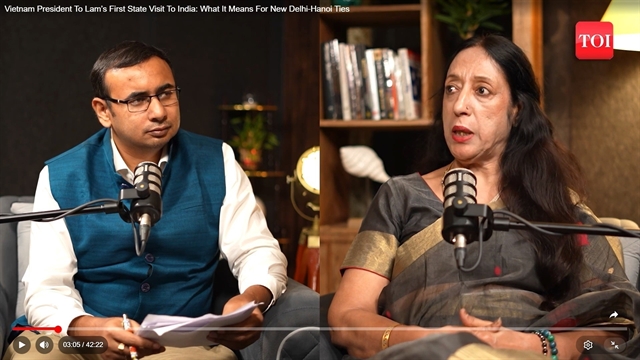
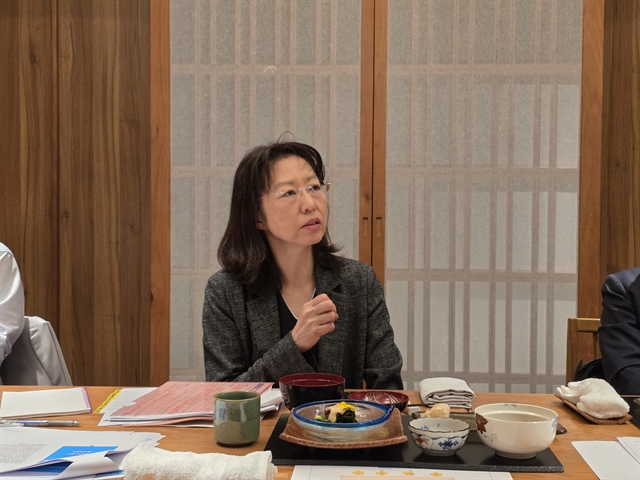
| Journalist Ghosh Rudroneel interviews Professor Reena Marwah. VNA/VNS Photo |
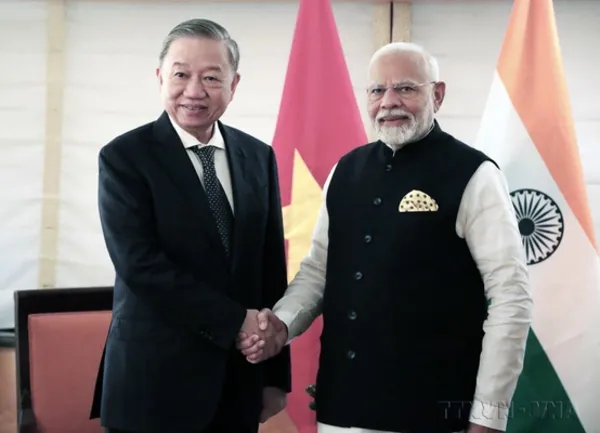
HÀ NỘI — General Secretary of the Communist Party of Việt Nam Central Committee and State President Tô Lâm's decision to choose India as one of his first overseas destinations following the 14th National Party Congress underscores Việt Nam's continued view of India as a priority partner in its foreign policy, said Professor Reena Marwah of India.
In an interview with the Times of India, he said the May 5-7 visit is particularly meaningful as it coincides with the 10th anniversary of the Việt Nam–India Comprehensive Strategic Partnership, established during Prime Minister Narendra Modi’s visit to Việt Nam in 2016.
She noted that over the past decade, bilateral ties have expanded steadily on the basis of strong political trust, which will provide a foundation for further development toward key milestones such as the 55th anniversary of diplomatic relations in 2027 and the realisation of the 2030 joint vision.
She said the visit comes at a time of growing complexity in the international environment, marked by shifting geopolitical and geoeconomic dynamics. Challenges such as supply chain disruptions, maritime security risks, bottlenecks along key trade routes and mounting pressure on freedom of navigation are prompting many countries to recalibrate their development and security strategies. Against this backdrop, Việt Nam and India are seen as strategic partners with converging interests, both pursuing independent, self-reliant foreign policies and diversified international partnerships.
One of the key pillars of the bilateral relationship remains defence and security cooperation. Professor Marwah pointed to Indian Defence Minister Rajnath Singh’s 2022 visit to Việt Nam, during which 12 high-speed patrol boats were handed over to the Vietnam Coast Guard, as evidence of deepening ties in this area.
At the regional level, Việt Nam holds a pivotal position in India’s Act East policy and Indo-Pacific strategy. The two countries established a Strategic Partnership in 2007, predating New Delhi’s formal launch of the Act East policy in 2014. According to Marwah, this underscores Vietnam’s long-standing importance in India’s strategic calculus.
Both countries see significant room for cooperation within the expanded frameworks of the Association of Southeast Asian Nations (ASEAN), including the ASEAN Defence Ministers’ Meeting-Plus (ADMM+) and ASEAN–India maritime initiatives.
Beyond defence, economic cooperation is viewed as a key driver of the next phase in bilateral ties. According to Professor Marwah, Việt Nam’s open foreign direct investment policies and business-friendly environment have been instrumental in attracting global capital. Despite its relatively modest domestic market size, the country has leveraged its advantages to become a manufacturing and export hub in sectors such as electronics, textiles, footwear and logistics, drawing strong interest from multinational corporations.
The professor also highlighted potential cooperation in rare earth mining and processing, noting that Việt Nam holds some of the world’s largest reserves. Defence technology collaboration, including Việt Nam’s possible interest in the BrahMos missile system, was cited as another promising area.
Bilateral trade, currently exceeding US$16 billion, remains below potential and could reach $30 billion after 2030, she said. Two-way investment, at around $2 billion, also has significant room for growth if both sides better leverage the complementarity of their economies.
Besides, people-to-people exchanges are emerging as an increasingly important pillar. Expanded direct flight connectivity - now totaling around 88 weekly flights - has provided a strong boost to tourism and social links. Long-standing cultural and historical connections, from Buddhist heritage sites such as Bodh Gaya and Nalanda University to the Champa civilisation and the preservation of Mỹ Sơn Sanctuary, continue to reinforce the social foundations of bilateral relations.
To further strengthen Việt Nam–India ties, Marwah said both countries should step up exchanges among universities, scholars, journalists, youth and diplomats, helping deepen mutual understanding and support long-term engagement.
With strong political trust, converging strategic interests and broad cooperation potential, the visit by Party General Secretary and President Tô Lâm is expected to inject fresh momentum into Việt Nam–India relations, both bilaterally and within the evolving Indo-Pacific regional architecture, she concluded. — VNA/VNS
Politics & Law
 Politics & Law
 Politics & Law
 Politics & Law
 Politics & Law
 Politics & Law
 Politics & Law
 Politics & Law
 Politics & Law
 Politics & Law
 Politics & Law
 Politics & Law
 Politics & Law
 Politics & Law
 Politics & Law