 Politics & Law
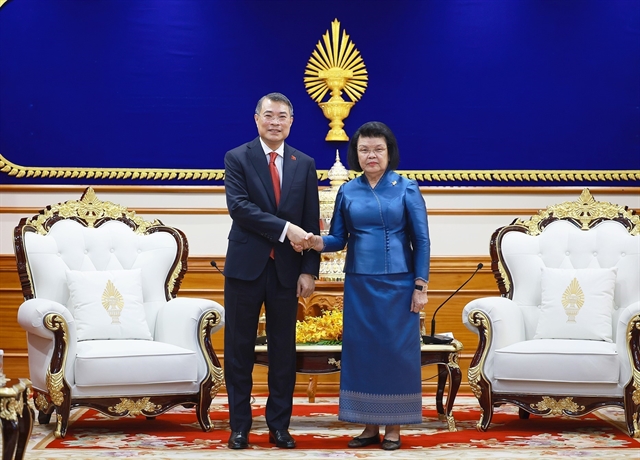
Vietnamese Prime Minister meets Cambodian National Assembly President
1.
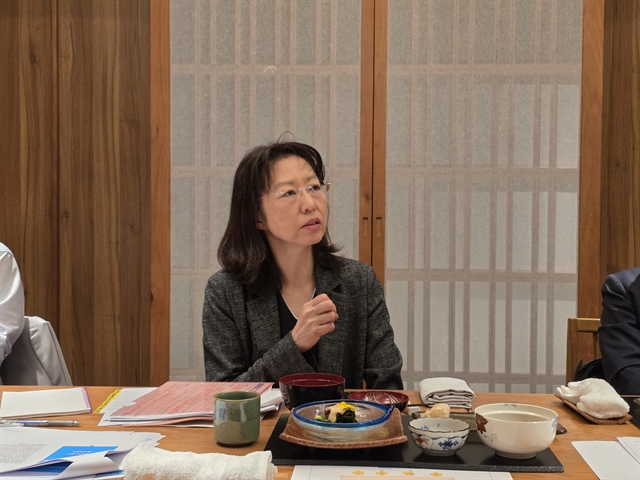 |
| Deputy Press Secretary and spokesperson for the Ministry of Foreign Affairs of Japan in a meeting with Vietnamese media on the occasion of PM Takaichi Sanae's visit to Việt Nam. — VNS Photo Trọng Kiên |
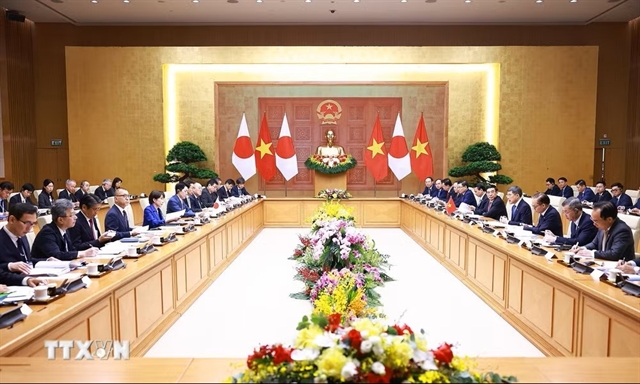
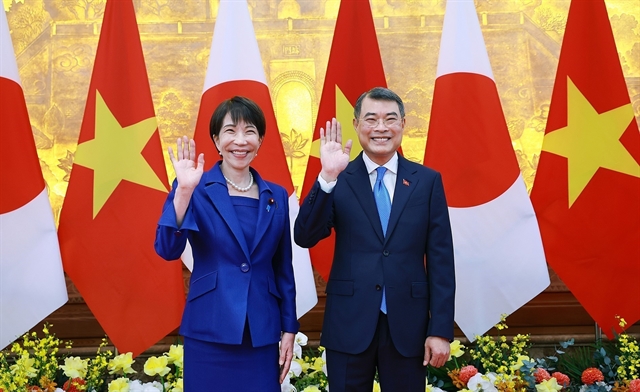
HÀ NỘI — Japan and Việt Nam have agreed to deepen cooperation across a range of emerging and strategic sectors from artificial intelligence (AI) to energy security, as Prime Minister Takaichi Sanae made a high-profile visit aimed at reinforcing ties with Việt Nam’s newly refreshed leadership.
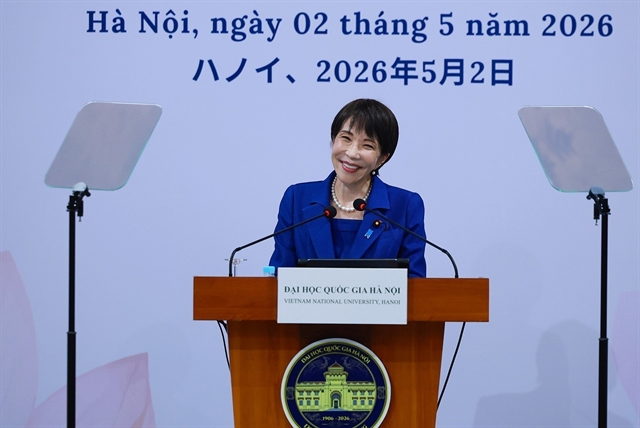
Speaking at a briefing with the local press, Japanese foreign ministry spokesperson Natsuko Sakata described the atmosphere as “very warm, very candid”, reflecting what she said was a shared sense of opportunity at a time of leadership renewal in Hà Nội.
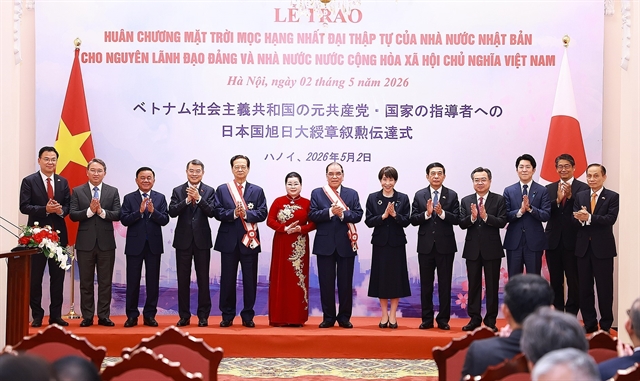
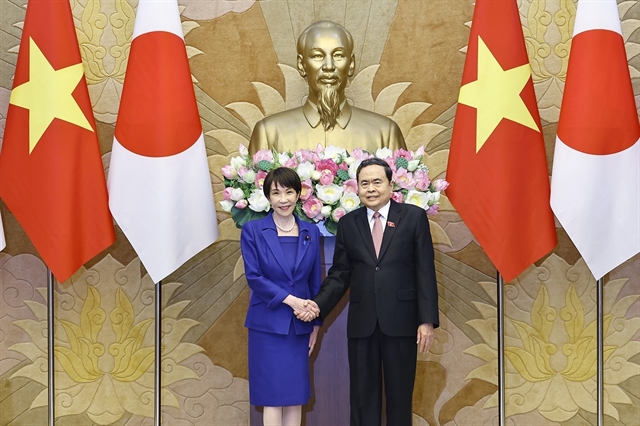
One of the objectives of the visit is to build relationships of mutual trust with Việt Nam’s new leadership, including General Secretary and President Tô Lâm, Prime Minister Lê Minh Hưng and National Assembly Chairman Trần Thanh Mẫn, and to reaffirm the strengthening of the Japan–Việt Nam Comprehensive Strategic Partnership.
At the centre of the visit was an agreement to elevate cooperation into new priority areas, including energy, critical minerals, semiconductors, AI and space, the spokesperson noted.
“These were added to the previous fields of cooperation. We took this opportunity to clarify this is really the new frontier that we can further deepen collaboration,” Sakata said.
On AI, the two countries agreed to pursue joint research and development, including building AI models tailored to Vietnamese language and cultural contexts.
“We agreed upon the joint study, joint development on the AI models that reflect Vietnamese language, as well as cultural elements,” she said, adding that the effort could support both Việt Nam’s technological ambitions and Japan’s competitiveness in the field.
The initiative builds on broader ASEAN–Japan cooperation but will be advanced further at the bilateral level in what officials described as a win-win situation.
Energy security, heightened by global instability and tensions in the Middle East, featured prominently in discussions, with both sides supporting Japan’s Asia Zero Emission Community (AZEC) framework.
Sakata highlighted Việt Nam’s growing role in regional supply chains, particularly in sectors linked to medical materials derived from petroleum products.
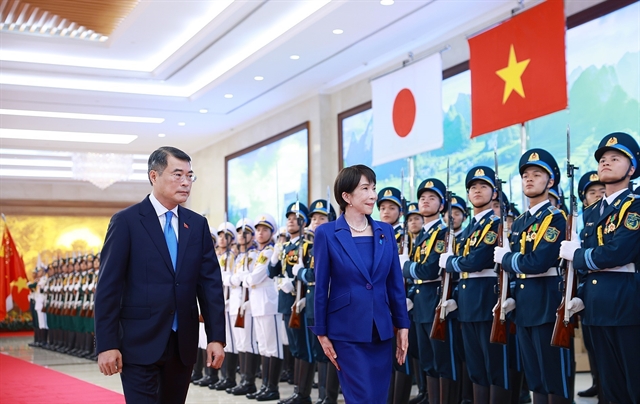 |
| PM Lê Minh Hưng and PM Takaichi Sanae reviewed the guards of honour during the welcome ceremony for the latter at the Government headquarters on May 2 in Hà Nội. — VNA/VNS Photo Dương Giang |
“Việt Nam is located in a very important position in the supply chain [of products] directly linked to people’s lives,” she said, citing products such as dialysis tubes and blood collection needles manufactured in Việt Nam using imported oil inputs, the production of which could be hit as oil supply is disrupted.
A key outcome of discussions was Japan’s support for Việt Nam’s biggest refinery Nghi Sơn, described as the first concrete initiative under the energy cooperation framework, aimed at stabilising supply by facilitating financing for crude oil imports.
This support is not just benefiting the refinery but also the Japanese companies here and the broader supply chain, the Japanese diplomat said.
Beyond immediate measures, both sides discussed longer-term energy transitions, including renewables, biofuels and even nuclear options, with Sakata stressing the need for a “realistic transition” that does not undermine economic growth.
Economic security emerged as a central theme, with Japan viewing Việt Nam as a key partner in strengthening resilient supply chains.
Việt Nam’s abundant reserves of critical minerals, essential for semiconductors and high-tech manufacturing, were identified as an area of significant potential, though concrete projects have yet to be defined.
The visit also carried strategic significance, with Việt Nam expressing support for Japan’s updated Free and Open Indo-Pacific (FOIP), a vision renewed to better reflect changes in the international environment in the 10 years since late PM Abe Shinzo first espoused the initiative.
Spokesperson Sakata described Việt Nam–Japan cooperation as “symbolic” of the FOIP concept, particularly in advancing resilience and maintaining the freedom to decide for ourselves in an increasingly uncertain geopolitical environment.
“No single country can survive on their own, we need some collaboration, some joint work,” she said.
On security, both sides agreed to deepen practical cooperation, building on recent defence dialogues and maritime collaboration.
Japan has already supported Việt Nam in enhancing maritime law enforcement capacity, and officials indicated that further materialisation of conventional security cooperation is expected.
Regional issues, including the Middle East, the Korean Peninsula and broader Southeast Asian security, were also discussed, alongside commitments to uphold rules-based trade through frameworks such as the CPTPP, which Việt Nam chairs this year.
The growing presence of Vietnamese nationals in Japan, now around 680,000, was also highlighted as a cornerstone of bilateral relations.
Sakata said both governments were looking at how to improve orderly and harmonious co-living, including through enhanced consular cooperation and reforms to immigration-related systems.
Meanwhile, cultural and educational exchanges continue to expand under initiatives such as youth exchange programmes and Japanese language partnerships.
“We see more and more presence [of Việt Nam] in our society, Việt Nam is getting very much important… quite reliable, full of possibility,” she said.
Japan has invited Việt Nam’s leadership to visit Tokyo later this year, signalling an intent to maintain high-level momentum.
Sakata said both sides were committed to translating the agreements into concrete outcomes, with ministries tasked to follow up.
“We move forward based on the agreement we reached today,” she said, adding that the goal is for “the fruit of the diplomacy [to] be felt by everybody.” — VNS
Politics & Law
 Politics & Law
 Politics & Law
 Politics & Law
 Politics & Law
 Politics & Law
 Politics & Law
 Politics & Law
 Politics & Law
 Politics & Law
 Politics & Law
 Politics & Law
 Politics & Law
 Politics & Law
 Politics & Law