 Life & Style
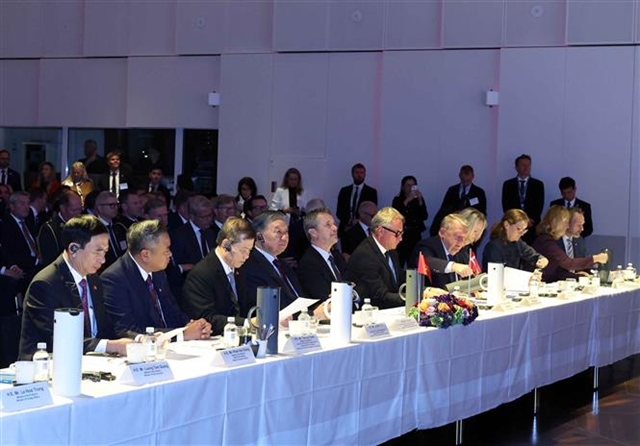
General Secretary and President Tô Lâm witnesses exchange of Việt Nam-Denmark cooperation agreements
1.
|
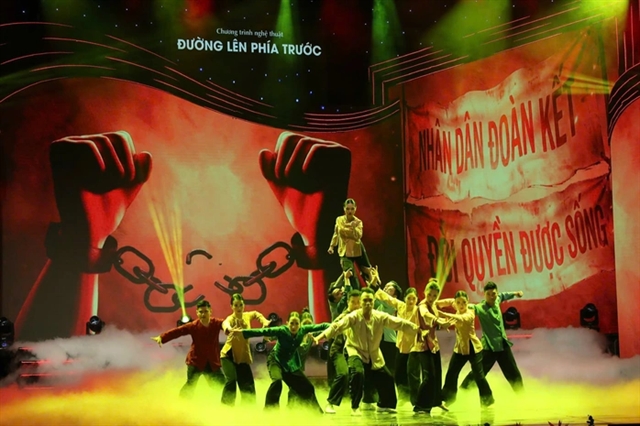
| Artists perform at the recent 'Road Ahead' art programme in Hà Nội. — Photo nld.com.vn |
HÀ NỘI — Resolution 80 opens up a path for developing Việt Nam’s cultural industry and creating a new cultural ecosystem that contributes to economic growth, according to experts.
The Government has issued Resolution No 30/NQ-CP to implement Politburo Resolution No 80-NQ/TW (dated January 7, 2026).
One of eight priority tasks is promoting cultural industries, expanding the cultural market and positioning national cultural brands linked with tourism.
Resolution 80 targets key cultural sectors - film, music, fine arts, cultural tourism, design, fashion, traditional crafts, video games, cuisine and digital content - while encouraging research and pilots to apply high technology across the value chain: creation, production, distribution, consumption and copyright protection.
It calls for building infrastructure and competitive markets, forming creative clusters and complexes, nurturing national and international cultural corporations, and operating trading platforms for cultural and artistic products, particularly digital assets. The goal is to make Việt Nam an attractive destination for regional and global cultural events.
Associate Professor Phạm Quang Long, former director of Hà Nội’s Department of Culture and Sports, said the Politburo’s resolution and the Government’s action plan provide momentum to build a new cultural-industry ecosystem.
For the first time, culture is treated as a strategic force - people-centred, expanding space for creativity and competition, and closely linked with market development.
Long noted that the state’s role as facilitator, combined with investor and enterprise efforts, is driving the emergence of a new cultural economy.
Former Central Theoretical Council vice chairman Associate Professor Nguyễn Thế Kỷ emphasised that culture is both a spiritual resource and a material one, enriching the nation while generating economic benefits.
Recent events show this potential. In 2025, national-level political and artistic programmes and contemporary entertainment concerts proliferated. In Hà Nội, nearly ten major events marked the 80th anniversary of the August Revolution and National Day, drawing tens of thousands to venues such as Mỹ Đình National Stadium and the Thăng Long Imperial Citadel.
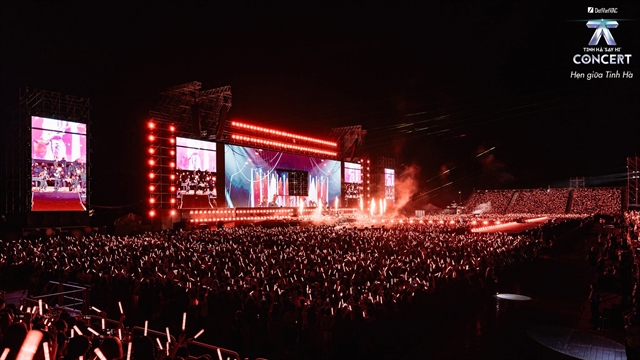
Large-scale music festivals and youth-oriented programmes created a dynamic performing-arts market. Singer Mỹ Tâm’s See the Light concert at Mỹ Đình drew about 40,000 spectators, a record for a solo show in Việt Nam. G-Dragon’s November 2025 tour attracted roughly 100,000 attendees, enhancing Hà Nội’s profile as an emerging Asian entertainment hub.
These events boost tourism and related services - hotels, transport, catering - and prompt businesses to offer combined concert-and-city experience packages. Livestreaming and digital distribution of performances generate valuable content and new revenue streams, while events create thousands of jobs in technical, logistical, creative, and media sectors.
Experts say Resolution 80 and the recent vibrancy of artistic life are coalescing into a linked structure connecting creativity, market, technology, and modern management - the backbone of a new cultural ecosystem.
Long highlighted Việt Nam’s advantages: a rich history, diverse cultural identity, and a talented generation of young artists. Recognising the cultural industry as a key sector is a necessary step toward sustainable national development. — VNS
Life & Style
 Life & Style
 Life & Style
 Life & Style
 Life & Style
 Life & Style
 Life & Style
 Life & Style
 Life & Style
 Life & Style
 Life & Style
 Life & Style
 Life & Style
 Life & Style
 Life & Style