 Life & Style

Lotte, Phát Đạt combine strengths in Thu Thiem project
1.
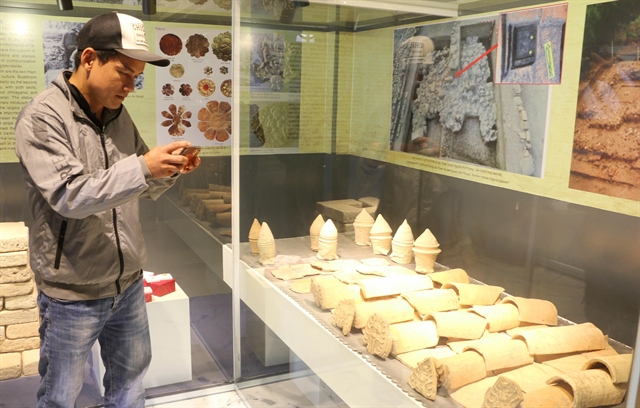 |
| A visitor learns about artefacts by scanning QR codes at the exhibition hall of the Óc Eo Cultural Relics Management Board in An Giang Province. — VNA/VNS Photo Công Mạo |
AN GIANG — The Cửu Long (Mekong) Delta province of An Giang is adopting emerging technologies at Óc Eo cultural relics to enhance visitors’ experiences and promote the value of the culture.
The province has applied 3D and virtual reality (VR) technology at the exhibition hall of the Óc Eo Cultural Relics Management Board and seven relics in the Óc Eo - Ba Thê archaeological complex in Óc Eo Commune, including the Linh Sở, Linh Sơn Nam and Linh Sơn Bắc pagodas, and the Sáu Thuận, Út Trạch, Cây Thị and Giồng Cát mounds.
The work offers visitors an immersive experience, allowing them to virtually explore the sites and artefacts from any angle by scanning QR codes. Visitors can also access information in Vietnamese, English, Japanese and Korean.
This is also part of the province's policies to follow the Politburo's Resolution No. 57-NQ/TW on promoting digital transformation and application of modern technology.
Ichira Shimoda from Japan said he enjoyed his trip to the Óc Eo cultural relic sites due to the artefacts' historical values and unique characteristics.
He shared that he had interesting experiences through digital services and believed that there would be more tourists from Japan and other countries who want to visit the relics to learn more about the culture.
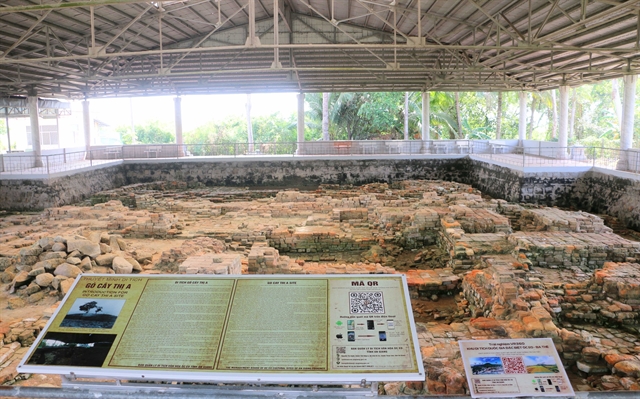 |
| 3D and virtual reality (VR) technology is applied at the Cây Thị Mound Relic at the Óc Eo - Ba Thê archaeological complex. — VNA/VNS Photo Công Mạo |
Nguyễn Xuân Bằng, deputy director of the Óc Eo Cultural Relics Management Board, said the technology adoption will be ongoing in 2026 to enhance visitors’ engagement with the Óc Eo culture and help them have a deep understanding of its heritage values.
Bằng emphasised that it is not only about technology, but the most important matter is the content, which must be attractive to visitors and reflect key characteristics of the Óc Eo culture.
He said the board is developing the content in more languages to serve tourists from different countries and expand the number of visitors.
The civilisation, which flourished in southern Việt Nam from the 1st to the 7th century, was first discovered in 1944 by French archaeologist Louis Malleret through artefacts unearthed in the Ba Thê Mountain area, now part of Óc Eo Commune.
An Giang is currently home to more than 80 Óc Eo cultural archaeological relics, with the Óc Eo – Ba Thê archaeological complex covering a designated conservation area of just over 433ha. Historically, the site served as a major urban centre, port and economic and cultural hub for the ancient Phù Nam kingdom.
The Óc Eo – Ba Thê was recognised as a special national relic site in 2012.
UNESCO included it in its tentative list for potential world cultural heritage inclusion on January 4, 2022. — VNS
Life & Style
 Life & Style
 Life & Style
 Life & Style
 Life & Style
 Life & Style
 Life & Style
 Life & Style
 Life & Style
 Life & Style
 Life & Style
 Life & Style
 Life & Style
 Life & Style
 Life & Style