 Life & Style
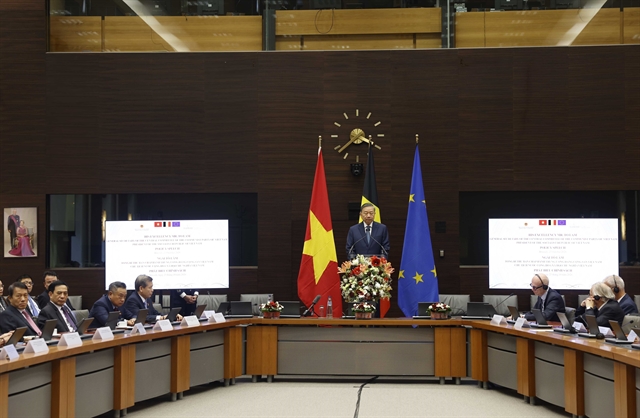
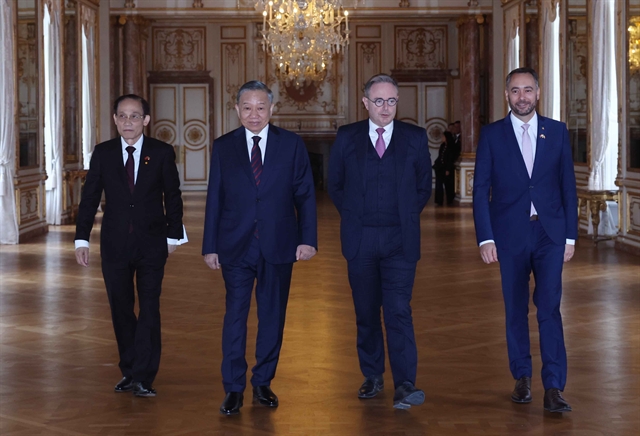
Top Vietnamese leader meets with Belgian Senate Speaker, House President
1.
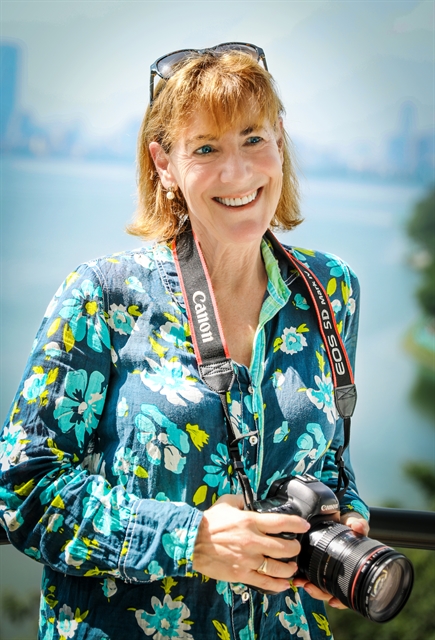 |
| American photographer Catherine Karnow is pictured in Hà Nội in September. VNS Photo Đoàn Tùng |
by Lương Thu Hương
American photographer Catherine Karnow has been renowned for her works for National Geographic covering the globe over the last three decades, but her photographs taken in Việt Nam are the ones she cherishes most.
Karnow has dedicated 35 years – what she describes as “over half of my life” – to her lifelong project of photographing Việt Nam. Her works trace the country’s opening in the early 1990s, the đổi mới (Renewal) years of reform and economic liberalisation, the legacies of war embodied in the stories of Amerasians and Agent Orange victims, and the arrival of a vibrant 'New Việt Nam' confident and global in outlook.
Particularly, her long-term documentation of families affected by Agent Orange led to the award-winning film A Terrible Legacy and spurred concrete change on the ground.
Born and raised in Hong Kong, Karnow has been significantly influenced by her parents, both of whom were artists. Her father, Stanley Karnow – the renowned journalist and author of the seminal book and Emmy Award-winning documentary Vietnam: A History – helped spark her passion for photography.
Karnow first arrived in Việt Nam in March 1990, embarking on what became a destined journey of return visits and ongoing documentation.
"Chance came to me when three things happened at the same time. My father was sent there by the New York Times to do a cover story on General Võ Nguyên Giáp. A friend of mine, a very experienced photographer, encouraged me, and I needed to do my own project. That's the story of how it came to happen," she recalled.
Her first impression of Việt Nam was overwhelmingly shaped by the senses, particularly the acrid smell of coal that filled the air, which she would have for many years afterwards.
"It was just in the air and the humidity but it was also quiet, grey, without colour. It was without any comfort or it was harsh and very hot," she said.
But those gloomy days were instantly brightened by the radiance of the open warm and welcoming local people, especially the children who were very curious and easy to photograph.
“Somehow within me I realised that Việt Nam was fulfilling this sense of loss in me from leaving Hong Kong. When I left Hong Kong, I was filled with loss and grief that has never gone away. And in Việt Nam, I found to some degree what I was missing," she said.
"The Vietnamese honour and accept a sense of sorrow recognising the beauty in those feelings. In fact there is beauty in all emotions. Throughout my first trip and beyond this understanding made me feel that Việt Nam is a place that welcomes me for who I am and where I feel free to be myself. I always feel comfortable supported and encouraged in Việt Nam. This environment allows me to be my best self and in turn, I can extend compassion and care to those around me who seek it.
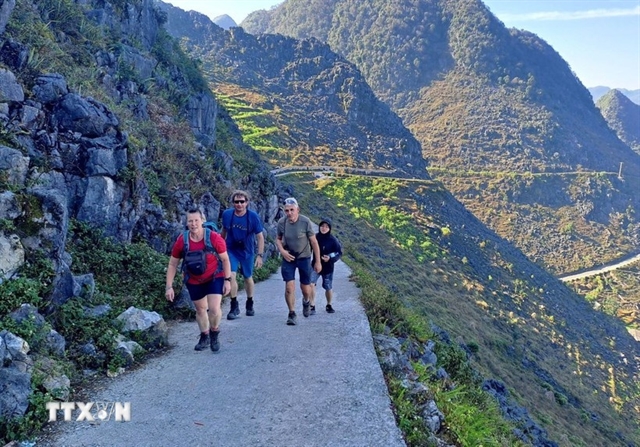
“My Việt Nam is not the Việt Nam of picture postcards of going to Sapa and going to Hà Giang and photographing all these pictures these drone shots you see of looking down at. These are cliches. They're often staged set up photographs. My photographs have never been about that kind of beauty. They've been about another kind of beauty - the beauty that's underneath the surface.”
General Giáp memories
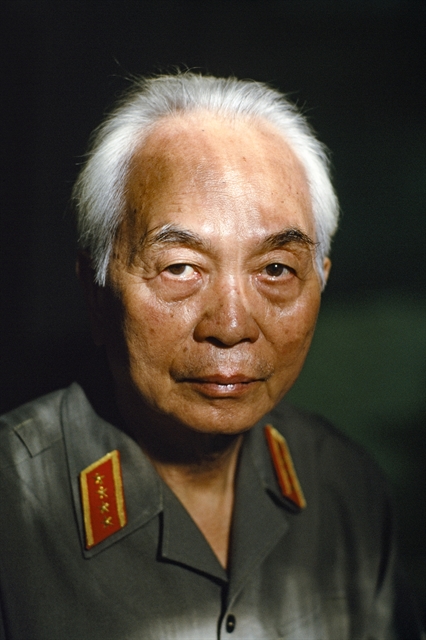 |
| GENERAL GIÁP, “SNOW-COVERED VOLCANO,” 1990. Photo courtesy of Catherine Karnow |
Catherine’s Việt Nam reporting includes compelling portraits of some of the country’s most significant figures – among them Phạm Xuân Ẩn, the legendary double agent; Diệp Minh Châu, Hồ Chí Minh’s personal sculptor; and the last of the closest living relatives to Emperor Bảo Đại.
Her rare access to General Võ Nguyên Giáp – from a 1994 private trip to Điện Biên Phủ to her close coverage of his 2013 funeral – gives the work distinctive historical resonance.
One of her most famous works captures the Vietnamese legend General Võ Nguyên Giáp – The Snow-covered Volcano which has been featured in many prestigious publications. The French called him the “snow-covered volcano,” because of his icy exterior and explosive temperament.
“If you notice this photograph, this side of the face shows him as somebody who's very caring. He was very caring about his troops, especially about his female troops. He took good care of them. He was a grandfather, a father, and a family man. He was also somebody who meditated who believed deeply in meditation and spirituality.
"And then if you look at this side you see the general the strategist who would fight for the independence of his country at all costs. A fierce look,” Karnow said about her famous portrait.
In 1994, the photographer was the only western journalist to be invited to accompany General Giáp to Điện Biên Phủ for the 40th anniversary of the battle. The trip was his return for the first time in 40 years to Mường Phăng, the secret encampment in the forest where he had hidden out during the months that led up to the battle and from where he plotted the now-famous strategy of Điện Biên Phủ.
“He was already pretty old but he had so much energy even though Mường Phăng is located deep in the forest and it was just not like it is today. We visited the tribal minorities like the Black Thái and he would sit down and he would listen and he would smile and laugh with them. He always took time for people. People loved him. And yet there was a strength and a persistence that I noticed when I listened,” she recalled.
Exhibition
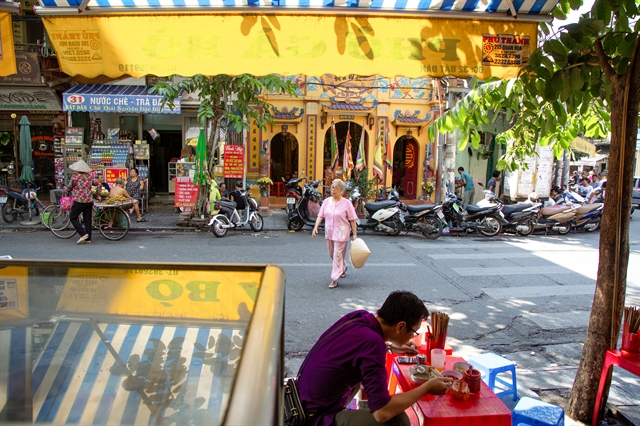 |
| A street scene in the Old Quarter in Hà Nội, taken in 2016. Photo courtesy of Catherine Karnow |
Karnow’s most outstanding photos capturing Việt Nam’s extraordinary transformation from 1990 through 2015 will be presented at Photo Hanoi’25, the International Photography Biennial from November 21 to December 5.
Entitled Vietnam — Documenting a Changing Country 1990-2015, the exhibition reveals not only a nation in flux but also the photographer’s own evolving relationship with a land that has become profoundly meaningful to her. Behind the photographs lie compelling stories of friendships and connections that seem destined – what Vietnamese call gặp duyên: it is meant to be.
The event also includes a new section which is called Timelessness – Karnow’s new collection of meditative photos that capture the serenity and peacefulness in everyday life and also the evolution of who she is as a person.
According to the artist, another significant aspect of this exhibition is its accessibility. Anyone can walk into the gallery and connect with these photographs; they are not high art or overly conceptual. People of all ages – from the youngest to the oldest – can be moved by what they see. They can learn about the changes captured in the photographs feel the emotions conveyed and relate to the stories being told.
“I feel that Việt Nam has given me maybe the greatest gift of my life, besides my parents and family. It’s strange but I know I’m blessed in some way – there’s a sense of luck that goes beyond mere chance. I truly believe I was born under a lucky star," she said.
"My connection to Việt Nam isn’t just about a decade or two; it spans 35 years – over half my life. This isn’t just a country I’ve come to photograph; it’s the place where my most cherished photographs have been taken, the ones I care about the most.
“This gift from Việt Nam compels me to give back. These photographs need to be seen and shared; they don’t serve any purpose sitting on my hard drive. This is my way of expressing gratitude to the Vietnamese people.
“I can share my work, engage with others, and bring my guests to foster people-to-people diplomacy showing them the real Việt Nam. It’s about bridging cultures in a very human direct and personal way. I want to truly connect with people and photography allows me to deepen that connection even further.” VNS
Life & Style
 Life & Style
 Life & Style
 Life & Style
.jpg) Life & Style
Life & Style
 Life & Style
.jpg) Life & Style
Life & Style
 Life & Style
 Life & Style
 Life & Style
 Life & Style
 Life & Style
 Life & Style
 Life & Style