 Life & Style

ONYX Hospitality Group Wins Best Local Hotel Brand – Thailand for the Second Consecutive Year at the TTG Travel Awards 2026
1.
HÀ NỘI Nestled along the banks of the Red River, Bát Tràng is widely known for its centuries-old pottery tradition. But beyond its kilns and clay, this village holds another legacy simmering in its kitchens and steaming at its communal feasts.
Bát Tràng’s culinary heritage, deeply rooted in ritual and family tradition, has quietly evolved into one of the most distinctive cultural assets in northern Việt Nam.
|
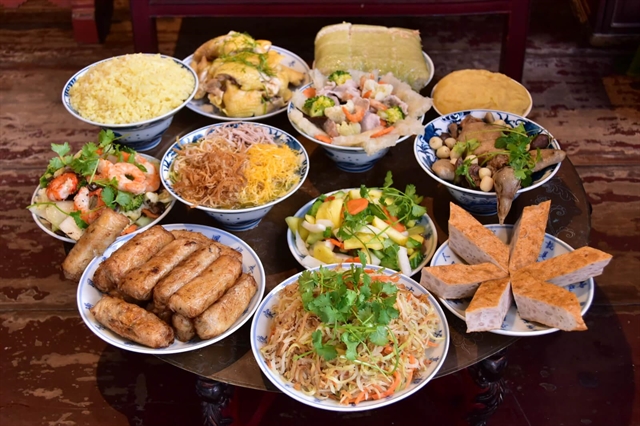
| Bát Tràng’s ceremonial meals reflect a level of refinement comparable to royal cuisine. This culinary tradition was recognised as a National Intangible Cultural Heritage by the Ministry of Culture, Sports and Tourism. Photo tinhhoalangnghe.vn |
While many rural communities pride themselves on one or two signature dishes, Bát Tràng’s repertoire is extensive. Its ceremonial meals – served during Tết, village festivals and ancestral commemorations – are marked by a level of refinement that rivals royal cuisine.
This depth of culinary knowledge was formally recognised when the Ministry of Culture, Sports and Tourism listed Bát Tràng’s feast preparation practices as National Intangible Cultural Heritage.
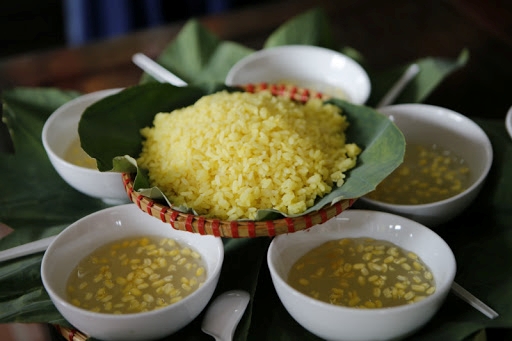
Among the standout dishes are canh măng mực (bamboo shoot and dried squid soup), stir-fried kohlrabi with dried squid, canh bóng (pork skin soup), canh cá lành canh (lành canh fish soup), pigeon spring rolls and xôi chè (sticky rice with sweet soup).
|
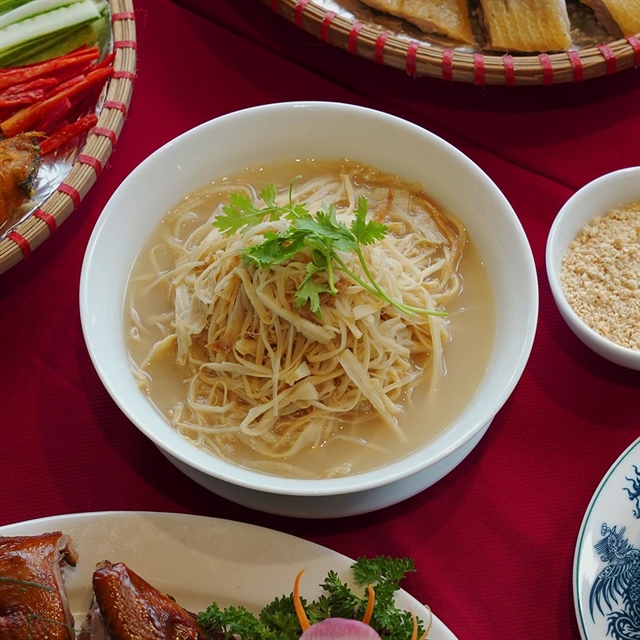
| Bamboo shoot and dried squid soup – a distinctive dish found only in Bát Tràng Village. Photo tinhhoalangnghe.vn |
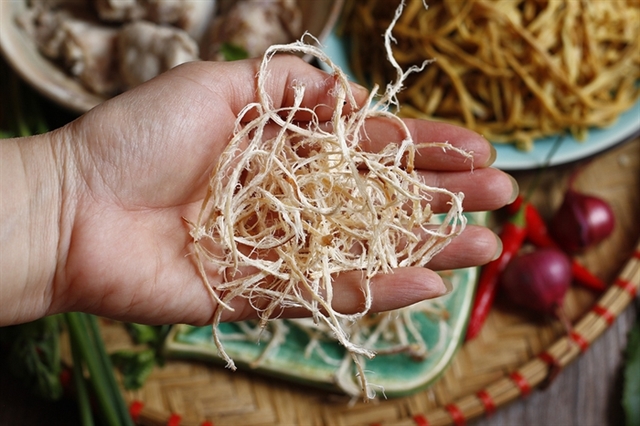
Preparation of these dishes is anything but routine. Take the bamboo shoot and squid soup, for instance. The bamboo shoots – specifically the vầu variety from Tuyên Quang – are meticulously shredded into fine threads, a process requiring both precision and patience.
The squid, sourced from Thanh Hóa, must be female and freshly dried. Grilled, pounded and stir fried separately, the squid and bamboo shoots are later combined and simmered in a broth made from chicken or dried shrimp. The result is a dish that balances texture, aroma and subtlety – one that is rarely found outside Bát Tràng.
|
| To unlock the full flavour of Bát Tràng’s bamboo shoot and squid soup, the dried squid must be shredded into delicate threads. Photo phunuvietnam.vn |
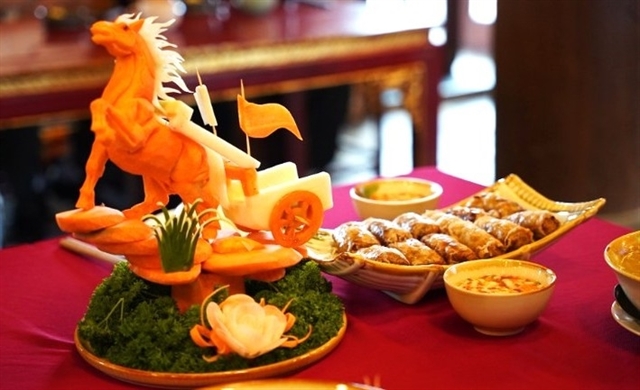
Even spring rolls, a familiar staple in Vietnamese cuisine, take on a new form here. In Bát Tràng, the filling is made from minced pigeon meat, stir fried with shallots and wrapped in rice paper before being deep fried. It’s a dish that demands skill and care, and its elevated flavour has earned it a place among Hà Nội’s culinary highlights.
Such finesse is not confined to a few individuals. In Bát Tràng, cooking is a communal craft. Most households have someone who is not only adept in the kitchen, but also discerning in taste. Generations of women have passed down recipes and techniques, often through hands-on experience during village feasts.
|
| Spring rolls filled with minced pigeon meat, presented at the first Traditional Bát Tràng Culinary Contest in March. Photo tinhhoalangnghe.vn |
Hà Thị Vinh, one of the village’s most prominent businesswomen, is also a respected cook.
“The unique dishes of Bát Tràng have been passed down from one generation to the next,” she said. “Ever since I was little, I was inspired by my grandparents and parents while helping with family cooking, especially during feasts.”
Her elder sister, Hà Thị Linh, now 85, is considered a living repository of Bát Tràng’s culinary tradition. Together, they represent the older generation of cooks whose knowledge continues to shape the village’s food culture.
The next wave includes artisans like Nguyễn Thị Minh Hưng, Phạm Thị Thu, Nguyễn Thị Lý and Phùng Thị Hê – women whose days revolve around cooking and storytelling. Representing the younger generation is Phạm Thị Thu Hoài, who, like many others, learned not from formal institutions, but from family kitchens and village gatherings.
This intergenerational transmission of culinary knowledge is part of what makes Bát Tràng’s food culture so resilient. During village festivals, a 'feast guild' naturally forms, bringing together neighbours to prepare offerings for the village’s guardian deity and honour ancestors.
|
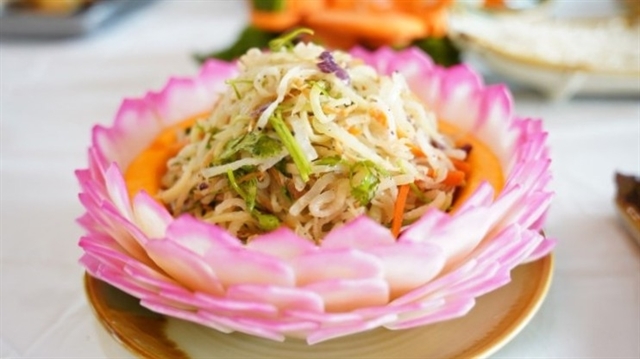
| Stir-fried kohlrabi with dried squid, a signature dish, showcased at the first Traditional Bát Tràng Culinary Contest in March. Photo tinhhoalangnghe.vn |
“People work together with joy, camaraderie and pride in their homeland,” said Bùi Thị Hương Thủy, deputy head of the Heritage Management Unit. “These traditions, passed down from ancient times and still practised today, are incredibly valuable.”
The roots of this culinary richness lie in Bát Tràng’s broader cultural identity. It is not only a pottery village, but also a scholarly one.
Historically, many villagers served as officials in the royal court, bringing back the refined tastes of palace cuisine. Its longstanding trade connections exposed it to culinary influences from across regions, enriching its local practices.
Earlier this year, the village held its first Traditional Bát Tràng Culinary Contest, a public celebration of its gastronomic heritage. Local authorities and the city of Hà Nội are now working to promote Bát Tràng’s cultural strengths more broadly.
A proposed development zone spanning 300 hectares aims to integrate heritage with commerce and tourism. At its centre is the 50-hectare ancient village, home to historic architecture and three aspects of recognised intangible cultural heritage: pottery-making, village festivals and cuisine. The surrounding area will extend to include two other pottery villages, Giang Cao and Kim Lan.
|
| Xôi chè (sticky rice with sweet soup) is a popular dessert often served during ceremonial feasts. Photo courtesy of Bát Tràng Authentic |
The plan envisions a vibrant community space for exhibitions, workshops and culinary experiences. With an estimated investment of VNĐ456 billion (around US$17.3 million), the initiative seeks to elevate Bát Tràng’s cultural assets within the creative economy.
Locals are ready to embrace the model, recognising that their culinary traditions are not just about food, but about identity, memory and shared pride.
Visitors to Bát Tràng often find themselves wandering through winding, reddish-brown alleys, encountering stories embedded in each dish.
Guided through the proper sequence of tasting – first this, then that – they begin to understand that the flavour of Bát Tràng’s cuisine lies not only in its ingredients, but in its setting, its people and its history. It is a full sensory experience, one that speaks to the enduring legacy of a thousand-year-old village. VNS
Life & Style
 Life & Style
 Life & Style
 Life & Style
 Life & Style
 Life & Style
 Life & Style
 Life & Style
 Life & Style
 Life & Style
 Life & Style
 Life & Style
 Life & Style
 Life & Style
 Life & Style