 Environment
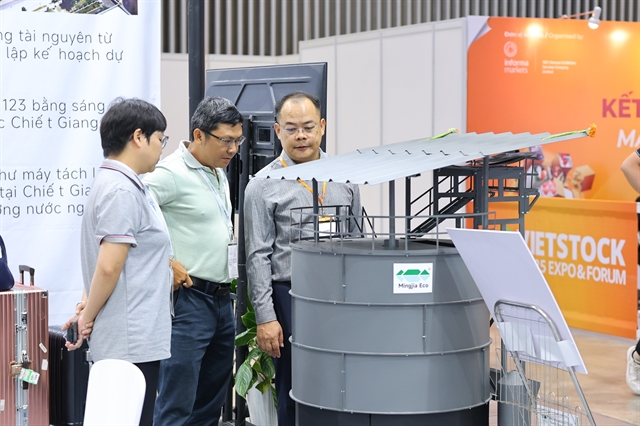
HCM City to host international feed, livestock & meat industry expo
1.
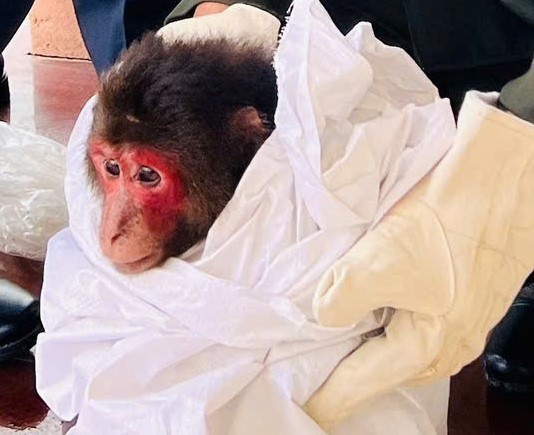 |
| A stump-tailed macaque (Macaca arctoides) is handed over to the Cam Lộ–Đông Hà forest ranger station in Quảng Trị province on January 27. — VNA/VNS Photo |
QUẢNG TRỊ — A stump-tailed macaque (Macaca arctoides) was handed over to the Centre for Rescue, Conservation, and Development of Creatures under the Management Board of Phong Nha - Kẻ Bàng National Park in the central province of Quảng Trị on Monday, for rehabilitation and eventual release into the wild.
According to the centre, the male animal, weighing about 3.5kg, was found in the garden of Phan Văn Hiển, a resident of Phúc Tự Đông hamlet, Hoàn Lão Commune. Recognising it as protected wildlife, Hiển voluntarily reported the case to local authorities.
The communal People’s Committee subsequently coordinated with relevant agencies to complete the necessary procedures and transfer the animal to the centre.
Under Circular No. 85/2025/TT-BNNMT, issued by the Ministry of Agriculture and Environment, the stump-tailed macaque is classified in Group IIB, comprising endangered, precious and rare forest animals subject to strict protection.
An initial examination found that the animal is underweight and in poor health. The centre's veterinarians have conducted a clinical examination, placed it in quarantine and drawn up a suitable care and rehabilitation regime to restore its physical condition and natural behaviours before its release when conditions permit.
The centre said it rescued 84 wild animals of various species in the first six months of 2026, including 61 individuals carried over from 2025 and 23 newly received individuals. It is currently caring for 60 wild animals.
Most of the animals were voluntarily handed over by local residents after being found outside their natural habitats. The centre said this reflected growing public awareness of wildlife protection and effective coordination between local authorities and rescue agencies.
All rescued animals undergo veterinary examinations and receive care in line with professional procedures. Injured or debilitated animals receive treatment, while healthy ones are quarantined, monitored and rehabilitated before release.
In the first half of 2026, the centre achieved a 100 per cent rescue success rate and conducted three wildlife release programmes, returning 190 animals to the wild. — VNA/VNS
Environment
 Environment
 Environment
 Environment
 Environment
 Environment
 Environment
 Environment
 Environment
 Environment
 Environment
 Environment
 Environment
 Environment
 Environment