 Environment

Tighter controls on livestream sales
1.
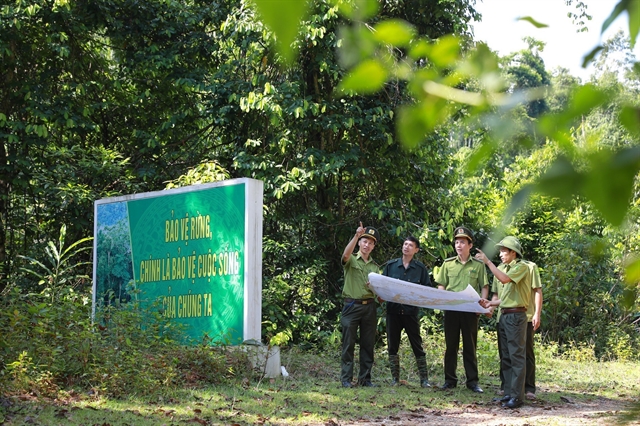 |
| Forest rangers in Thanh Hóa patrol to ensure forest growers comply with FSC standards. — VNA/VNS Photo |
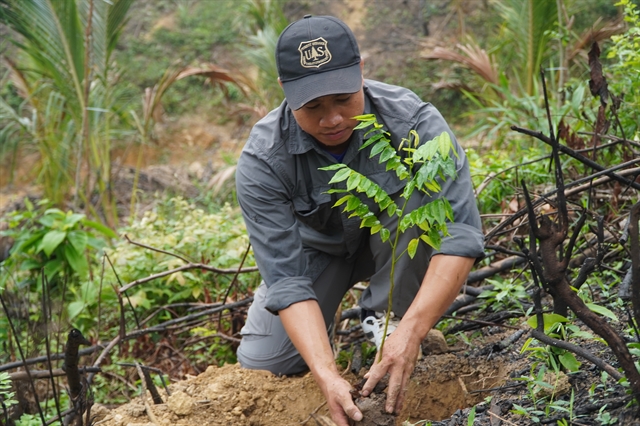
THANH HÓA — When Lê Anh Tuấn first began planting acacia trees nearly two decades ago, forestry was a matter of habit rather than standards.
Trees were planted by experience, harvested early when prices looked favourable and sold into a market that offered little certainty.
That changed in 2023, when Tuấn’s 10-hectare forest in the northern province of Thanh Hóa became certified under the sustainable forestry standards of the Forest Stewardship Council (FSC).
Today, he is planning harvests years ahead, earning higher prices for certified timber and treating his forest not as a short-term income source but as a long-term asset.
Across Việt Nam, thousands of forest growers are making a similar shift – one driven not by ideology, but by global markets.
As environmental, social and governance (ESG) standards harden into requirements across international supply chains, forestry has emerged as one of Việt Nam’s most promising points of alignment.
FSC certification, once niche, is now becoming a gateway for Vietnamese timber to access Europe, Japan and North America.
Thanh Hóa alone now has more than 42,000 hectares of FSC-certified forest. Nationally, certified areas are expanding rapidly, as provinces and companies reposition forestry to meet rising expectations around traceability, sustainability and labour standards.
For growers like Tuấn, the difference is practical.
FSC standards require careful seed selection, longer cultivation cycles, controlled harvesting and strict environmental safeguards.
In return, certified timber is typically purchased at prices equal to or higher than market rates, with buyers often offering guaranteed off-take for export processing.
Under the canopy of Tuấn’s natural forest, his family supplements income through livestock and medicinal plants – an arrangement encouraged by FSC’s emphasis on biodiversity and mixed land use.
“The benefit isn’t immediate, but it’s stable and it lasts,” Tuấn said.
That stability is precisely what international buyers are seeking.
In the northern province of Thái Nguyên, FSC certification has accelerated even faster, driven largely by private investment.
By the end of 2025, the certified forest area there exceeded 37,000 hectares – far surpassing official targets.
What distinguishes Thái Nguyên’s model is the role of enterprises.
Rather than simply purchasing timber, several companies have paid the full cost of certification – from land surveys and management plans to international audits – without requiring growers to sell exclusively to them.
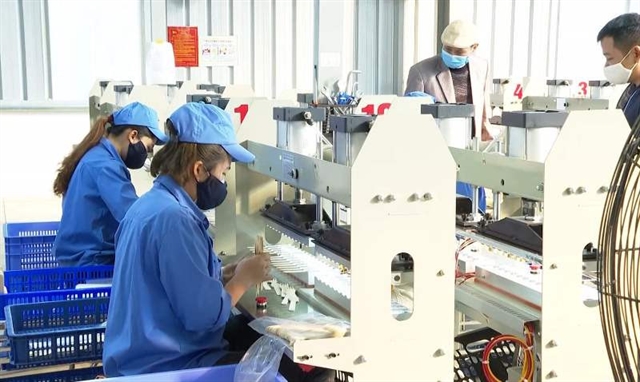 |
| Workers manufacture wood products at a Kẻ Gỗ factory. — Photo nhandan.vn |
Kẻ Gỗ Ltd. Co., a manufacturer of single-use wooden products for export markets, has invested more than VNĐ4 billion (US$153,000) in FSC projects across northern communes.
Forest owners retain full freedom to choose buyers, a condition that has helped build trust and widespread participation.
“For Europe, FSC is not optional,” said Trịnh Đức Kiên, the company’s deputy director.
“But this is not just about securing raw material. It’s about raising the value of forests for local people.”
The impact is visible at the village level.
In Nghĩa Tá Commune, where every household owns forest land, growers once sold small-diameter logs to traders at volatile prices.
Under FSC programmes, they now receive training in forest management, fire prevention, biodiversity protection and workplace safety. Harvest cycles have lengthened, timber quality has improved and incomes have become more predictable.
The shift is not only economic. Authorities say FSC standards align closely with all three pillars of ESG.
Environmental requirements limit chemical use, ban slash-and-burn practices and protect natural habitats. Social criteria emphasise labour rights and community benefit-sharing.
Governance standards demand traceability and legal compliance across the supply chain – a critical concern as importing countries tighten rules on deforestation and illegal timber.
Nowhere is the economic case clearer than in the central province of Quảng Trị, where the transition from short-cycle plantation forestry to FSC-certified large-timber forests has transformed returns.
Harvest cycles have extended from five years to a decade or more, but yields tell the story. FSC-certified acacia forests now produce timber with diameters exceeding 20 centimetres, fetching prices two to three times higher than previous models.
For many rural households, large-timber forestry has become a form of long-term savings rather than subsistence income.
“Before, we harvested early just to make ends meet,” said Hồ Văn Tài, a grower from the Vân Kiều ethnic group.
“Now we invest for the future. My family escaped poverty thanks to these forests.”
Beyond timber, FSC-managed forests are also generating secondary income – from bamboo and non-timber forest products to early exploration of carbon credits and ecotourism.
Provincial authorities see this as the next phase. With more than half a million hectares of forestry land, Thái Nguyên alone is positioning FSC certification as a foundation for multi-purpose forest economies linked to carbon markets and green finance.
The lesson emerging across Việt Nam is a simple one: sustainable forestry cannot rest on smallholders alone. It requires capital, technical expertise and market access – roles increasingly filled by private enterprises – alongside State planning and local stewardship.
From forests once sold as raw logs, Việt Nam is now building internationally recognised 'green assets'. And as ESG reshapes global trade, those forests may prove to be among the country’s most durable exports. — VNS
Environment
 Environment
 Environment
 Environment
 Environment
 Environment
 Environment
 Environment
 Environment
 Environment
 Environment
 Environment
 Environment
 Environment
 Environment