 Talking Shop
Việt Nam, Russia share experience in human resource training
1.
|
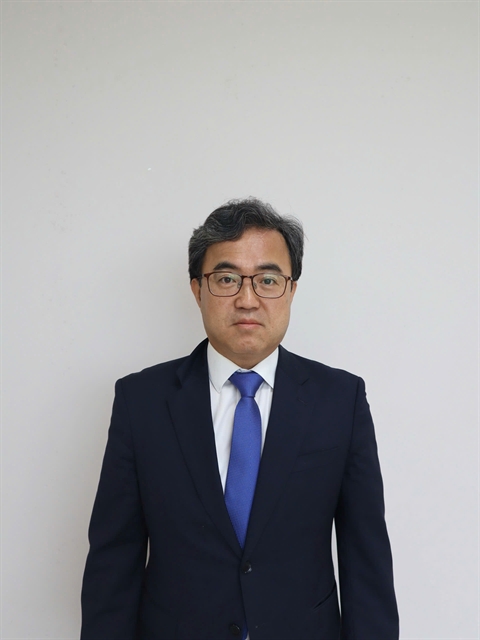
| Head of the Consulate General of the Republic of Korea (RoK) in Đà Nẵng, Han Jung-il. — Photo courtesy of Consulate General of the Republic of Korea in Đà Nẵng |
Businesses from the Republic of Korea are among the top foreign investors in Đà Nẵng City, while Korean tourists account for a large share of international visitors in the city.
Head of the Consulate General of the Republic of Korea (RoK) in Đà Nẵng, Han Jung-il discusses the current exchanges between Đà Nẵng and the RoK with Việt Nam News reporter Công Thành.
What are some of the cooperation achievements between the Republic of Korea and Đà Nẵng City and the entire central region of Việt Nam?
Cooperation has matured over the past several years. It has expanded beyond investment and economic cooperation into tourism, education, culture and people-to-people exchanges.
In the economic sphere, RoK companies have played an important role in industrial development and job creation in Đà Nẵng and the central region. As of December 2025, the RoK has 345 FDI projects in the city, with total invested capital of about US$1.5 billion.
What I find especially meaningful is that this co-operation is now expanding beyond simple manufacturing into future industries such as high-tech, AI and digital technology, science and technology, and startups. In this context, I visited the Republic of Korea last week with Chairman of the city’s People’s committee Nguyễn Mạnh Hùng to attend the ‘Đà Nẵng-Korea Future Cooperation Seminar’. I also held a roundtable meeting with Korean start-ups interested in expanding into Đà Nẵng.
I believe it is important to serve as a bridge so that competitive Korean companies in AI, digital technology and other future industries can find new business opportunities in the city and cooperate with local companies and institutions. We plan to keep expanding this practical business-to-business cooperation so that the RoK-Đà Nẵng economic ties extend further into future industries and innovation.
|
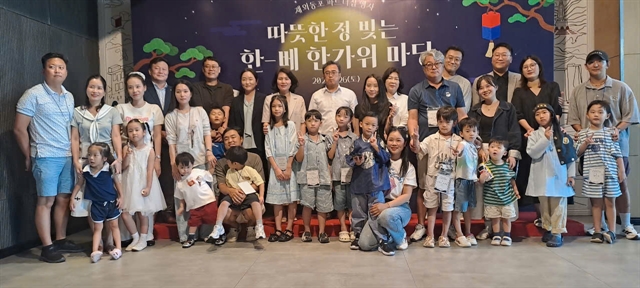
| Korean and Vietnamese families enjoy the Korean Middle Autumn Festival in Đà Nẵng City. The Republic of Korea has been boosting cooperation, investment and cultural exchanges with Đà Nẵng and central Việt Nam. — VNS Photo Công Thành |
Tourism and people-to-people exchanges are also key pillars connecting our two countries. The RoK is one of Đà Nẵng's most important international tourist markets, and I understand that more than 1.4 million Korean tourists had visited Đà Nẵng as of August 2026. Sister-city and friendship ties between Đà Nẵng and Korean governments are also growing. Currently, there are eight city-level partners, including Daegu Metropolitan City, Osan, Pyeongtaek, Yongin and Gwangyang. These local government exchanges help weave the two countries' relationship more closely together.
How do Korean investors promote progress in setting more long-term and sustainable growth investment projects in key sectors in central Việt Nam?
I believe one of the most important tasks for the RoK-Đà Nẵng economic cooperation going forward is to move from ‘quantitative expansion of investment’ to ‘deepening industrial ecosystems and technology cooperation’.
The RoK has world-class companies and technology ecosystems in advanced industries such as semiconductors, AI, electronics, auto parts and digital technology. Đà Nẵng, too, has recently been fostering semiconductors, AI and the digital industry as new growth engines, and is actively developing the related talent and infrastructure.
It would greatly benefit both sides if Korean companies went beyond building production facilities to establishing R&D centres, conducting joint research with universities, industry-academia cooperation, talent development, startup nurturing, and building supply chains with local companies. In addition, port facilities and a stable power supply, which support this production base, need to be further expanded.
Recent examples of expanded Korean investment include Samsung Heavy Industries' establishment of a subsidiary in Quảng Ngãi and HD Hyundai EcoVina's independent tank production plant project. A groundbreaking ceremony was held for HS Hyosung's new interior plant in the Tam Thăng Industrial Park on September 29. This project is not just about building production facilities. It establishes an integrated production system locally, from BCF (Bulk Continuous Filament) yarn for carpets to finished automotive carpets. Through it, I expect that experience in producing and controlling the quality of high-grade automotive materials will accumulate in Việt Nam, and that the capabilities of the related skilled workforce will improve.
If such investments continue in a way that combines the excellent workforce of central Việt Nam with Korean technology, I believe they can also help central Việt Nam develop into a hub for high-value-added manufacturing and global supply chains.
|
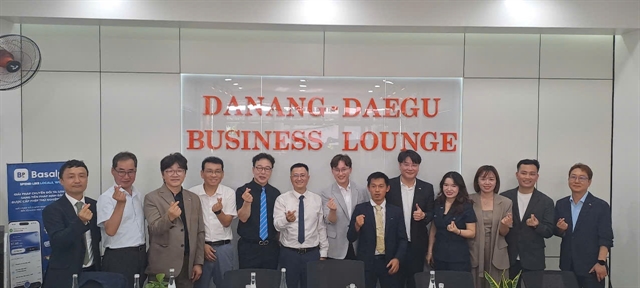
| The Daegu Digital Innovation Promotion Agency (DIP) from South Korea officially launches the Daegu Technology Demonstration and Innovation Space in Đà Nẵng City. — VNS Photo Công Thành |
What are the best support activities that both the RoK and local authorities could do for better growth in tourism in the future?
I believe tourism cooperation between the RoK and Đà Nẵng has already reached a fairly successful stage. Now is the time to develop it further, not only by increasing the number of tourists but by raising the quality and diversity of tourism.
Going forward, I think it is important to jointly develop high-value tourism products that extend length of stay and tourist spending, such as golf, MICE, wellness, gastronomy and cultural experiences.
Improving tourist satisfaction also requires continued improvement of tourism infrastructure, including transportation, safety, healthcare, tourist information and digital services. With so many visitors, accidents of various sizes occur frequently, and motorbike accidents are among them. Improving the traffic system to prevent such accidents, for example by installing more traffic lights, is also needed. It is also important to develop services and content that reflect the characteristics and needs of Korean tourists in greater detail.
What hurdles have Korean investors faced doing businesses in Đà Nẵng City and central Việt Nam?
Korean companies are paying attention to the growth potential and investment prospects of Đà Nẵng and central Việt Nam. In major industrial hubs such as Hà Nội and HCM City, where many Korean companies are already established, expanding production and investment have increased demand for labour, making it increasingly difficult to secure the workforce they need. Given this situation, I think Korean companies are likely to look beyond their existing investment areas to Đà Nẵng and central Việt Nam, diversifying production bases and seeking new growth opportunities.
However, to turn this investment potential into actual investment, I believe it is important to continue improving the business environment and addressing the practical difficulties companies face when doing business locally. For large-scale manufacturing and development projects in particular, the main challenges include land acquisition and site clearance, the predictability of permitting and administrative procedures, logistics infrastructure, and securing skilled professionals.
I understand that Đà Nẵng, recognising these challenges, has identified logistics infrastructure and site clearance as key priorities in its 2050 urban Master Plan. In addition, if Đà Nẵng and central Việt Nam are to actively attract advanced and high-value-added industries such as semiconductors and AI/digital, it is important to build a system that can reliably train and supply skilled technicians and professionals. Since Đà Nẵng is already pursuing industry-academia cooperation with universities and companies and developing highly skilled talent, I hope these efforts will lead to increased investment by Korean companies.
Our Consulate General will also actively listen to and address difficulties Korean companies are facing locally, and serve as a bridge between companies and the local government by facilitating communication with Đà Nẵng City and relevant agencies. We also plan to organise regular public-private meetings between Korean companies, the Consulate General and Đà Nẵng authorities. Ultimately, I believe that increased investment by Korean companies can contribute to Đà Nẵng's industrial development and creation of quality jobs, helping to build a mutually beneficial relationship in which Đà Nẵng and Korean companies grow together.
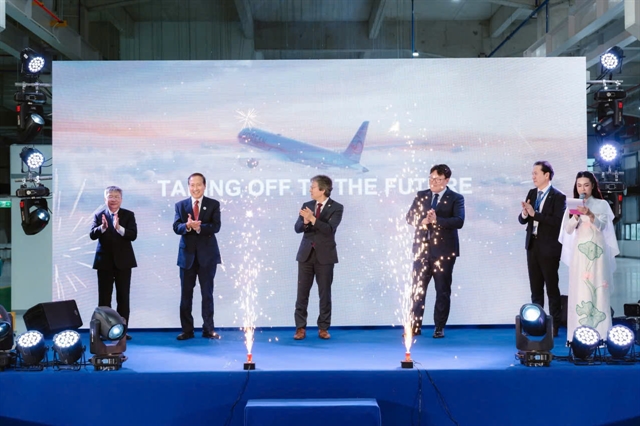
|
| The first delivery of aircraft spare parts and accessories is organised at the Korea-invested KP VINA factory in Đà Nẵng Hi-tech Park. Korean investment has been boosted in the city and central Việt Nam. — Photo courtesy of KP VINA |
Can you forecast the likely positive developments from Korean partners and Đà Nẵng City in the future?
I expect cooperation to become increasingly diverse, substantial, and mutually beneficial.
In particular, the 2025 administrative merger of Đà Nẵng and Quảng Nam has expanded Đà Nẵng's geographical and economic base. From the perspective of Korean companies, new opportunities are emerging to connect Đà Nẵng's existing service and IT industries with Quảng Nam's manufacturing base and industrial parks. Recent investments by Korean companies, including HS Hyosung and HD Hyundai EcoVina demonstrate the potential for stronger linkages between Korean businesses and the industrial ecosystem of central Việt Nam.
As Đà Nẵng promotes new growth engines such as free trade zones, logistics, semiconductors/AI and the International Financial Centre (VIFC), I also see new business opportunities emerging for Korean companies.
The RoK and Đà Nẵng have already built strong ties in tourism and economic cooperation. Building on this foundation of trust, I believe we can take our partnership to the next level by expanding people-to-people exchanges, strengthening business-to-business cooperation, and jointly creating technology and knowledge. In this way, the RoK and Đà Nẵng can become long-term, sustainable partners that contribute to each other's development.
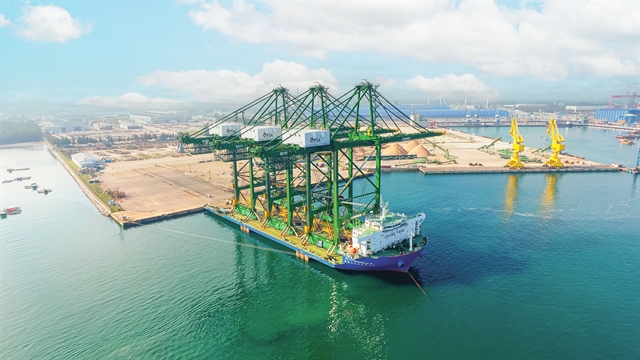
|
| Made-in-Việt Nam cranes by Korean HD Hyundai EcoVina in Quảng Ngãi province are shipped to global market. Korean investors have been contributing to the sustainable development and growth in central Việt Nam. — Photo courtesy of HD Hyundai EcoVina |
Furthermore, Đà Nẵng's leadership is actively pursuing a range of policies to support the city's next stage of economic development and is making significant efforts to attract foreign investment, including through incentives such as tax benefits. Against this backdrop, I believe there will be growing opportunities for Korean companies to invest and expand their presence in Đà Nẵng. — VNS
Talking Shop
 Talking Shop
 Talking Shop
 Talking Shop
 Talking Shop
 Talking Shop
 Talking Shop
 Talking Shop
 Talking Shop
 Talking Shop
 Talking Shop
 Talking Shop
 Talking Shop
 Talking Shop
 Talking Shop