 Talking Shop


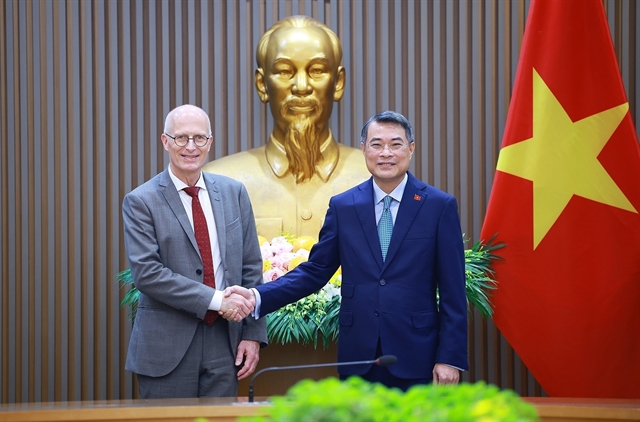
Top leader hosts Lao Deputy Prime Minister and Defence Minister
1.
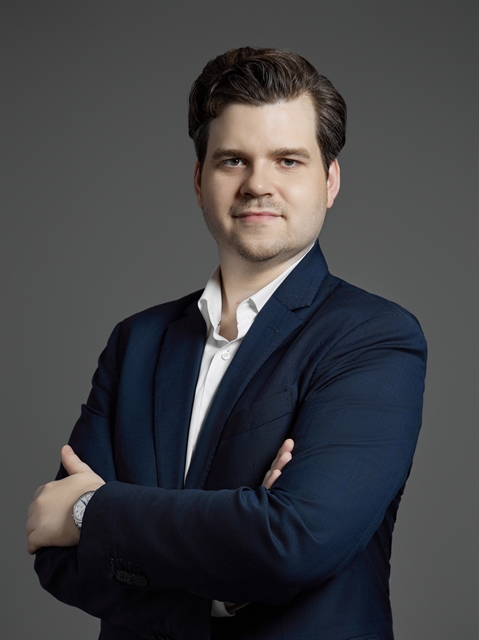 |
| Chairman of German Business Association, Alexander Ziehe. — Photo courtesy of GBA |
Cooperation between partners from Germany and Đà Nẵng are steadily improving with 28 projects worth US$671.4 million. Alexander Ziehe, chairman of German Business Association (GBA), explains to Việt Nam News why these figures have plenty of room to grow.
Why is German investment in Đà Nẵng and central Việt Nam still limited?
Đà Nẵng and central Việt Nam are increasingly attractive to German investors, with a strong and improving infrastructure base, a growing technology sector, leading universities, a strategic location, as well as ambitious plans around the Free Trade Zone, deep-sea ports, airports, semiconductors, the regional financial centre and AI.
However, German companies traditionally take a very long-term approach to investment and have only recently started exploring central Việt Nam. Before making a decision, they look not only at infrastructure, but also at the entire business ecosystem, including suppliers, skilled labour, supporting industries, logistics, regulatory clarity and potential local partners.
So, I would not say that German companies are not interested in Đà Nẵng. Rather, the investment pipeline and awareness of opportunities in central Việt Nam still need to be strengthened and promoted to potential investors from Germany.
What are the main barriers that make German businesses hesitate to invest?
In general, barriers are decreasing, but they still exist and need to be addressed.
First, awareness and information. Many German companies know HCM City and Hà Nội very well, but central Việt Nam is still less familiar to them. They may not yet have enough information about the investment opportunities, recent improvements and incentives available in Đà Nẵng.
Second, ecosystem and scale. For manufacturing and technology companies, investment decisions depend heavily on whether they can build a reliable local supply chain, find qualified employees and connect with complementary businesses. Some sectors have only recently developed enough local support, while others are still at an early stage in building the necessary ecosystem.
Third, connectivity. Although Đà Nẵng has made significant progress in infrastructure, international connectivity and logistics links remain important considerations, particularly for companies integrating Việt Nam into their European and global supply chains.
And finally, regulatory predictability and speed of implementation are important. German investors value transparency, consistency and a clear roadmap from investment approval to actual project implementation.
How can the GBA help address the slow investment situation in Đà Nẵng and central Việt Nam?
I think GBA is playing an important role as a bridge between German businesses, the local government, and the business communities in Đà Nẵng and central Việt Nam.
A very good example of this is the dialogue with Đà Nẵng City authorities that we held recently in August. We brought together the Đà Nẵng City leadership, relevant departments, the German Consul General and German businesses to have a direct and open discussion about the opportunities and challenges for investment in the region. We also agreed on specific follow-ups to improve investment promotion.
But what is important about such a dialogue is that it goes beyond simply promoting Đà Nẵng as an investment destination. German companies were able to raise very concrete issues and recommendations, including administrative procedures, access to skilled talent, infrastructure, regional supply chains, and cooperation with universities and vocational institutions.
We also want to make sure that these discussions lead to tangible opportunities. During the dialogue, GBA signed a Memorandum of Understanding with the Đà Nẵng Hi-Tech Park and Industrial Zones Authority, creating a framework for closer co-operation in investment promotion, business development, and connecting German companies with opportunities in the region.
So, for GBA, our role is not simply to tell German companies that Đà Nẵng is attractive. Our role is to create the connections, facilitate the dialogue, and help turn those discussions into concrete business and investment opportunities.
And I think this is something we should continue and expand by bringing more German companies to Đà Nẵng, connecting them with local partners, and following up on the opportunities identified through these dialogues.
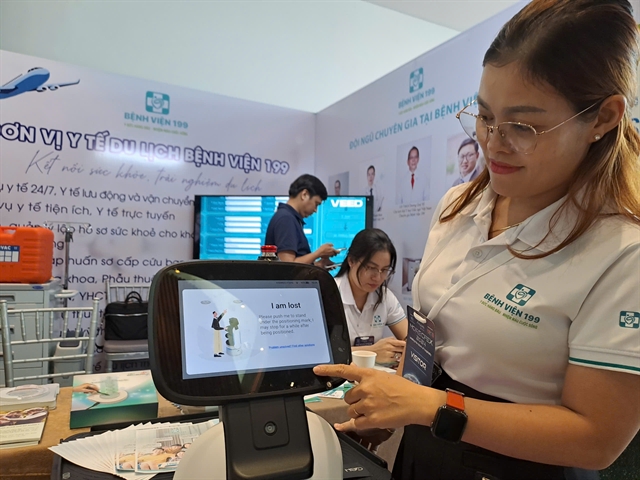 |
| Medical service introduced at a technology exhibition in Đà Nẵng City. — VNS Photo Công Thành |
What recommendations could GBA make to support faster German and European Union investment into Đà Nẵng?
I would recommend moving from general investment promotion towards a more targeted, ecosystem-and project-based approach.
For example, Đà Nẵng could work together with GBA to develop a German Investment Pipeline for central Việt Nam. This could be a portfolio of concrete, investment-ready projects with clear information on land, infrastructure, incentives, regulations, timelines and local partners.
We could also organise sector-specific investment missions rather than general business delegations. For example, one mission could focus on semiconductors and electronics, another on green technology and renewable energy, and another on logistics and advanced manufacturing.
And importantly, we should involve the private sector from the beginning. German companies want to understand not only what the government plans to develop, but also who their potential customers, suppliers and business partners will be.
If we can create that level of visibility and certainty, I believe investment decisions can become significantly faster.
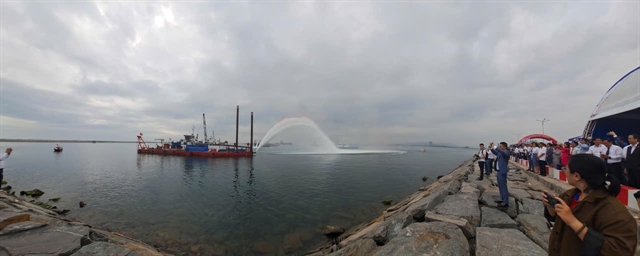 |
| Construction of the Liên Chiểu deep-sea port is underway. The port plays as an important role in boosting economic growth for Đà Nẵng City in next decades. — VNS Photo Công Thành |
In what sectors could German businesses accelerate partnerships with local companies?
I see several very promising areas.
Advanced manufacturing and supporting industries are obvious. German companies have strong expertise in precision engineering, automation, machinery and industrial technologies, which can help Vietnamese companies move further up the value chain.
Semiconductors, electronics and chip design are also highly relevant, particularly because Đà Nẵng is positioning itself as a technology hub. German companies may not necessarily come only to build large semiconductor factories; there are also opportunities in engineering, equipment, automation, testing, software and specialised services.
Green technology and energy efficiency are another major opportunity. German companies have significant expertise in renewable energy, energy management, waste management, water technology and sustainable production.
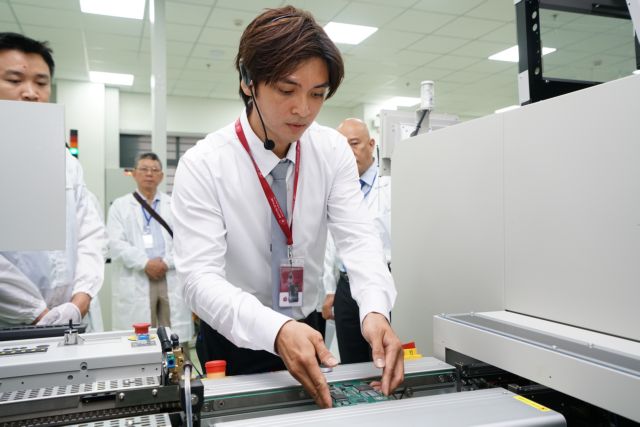 |
| An engineer checks an electronic product at a factory in Đà Nẵng Hi-tech Park. — Photo courtesy of Quang Huy |
I would also mention logistics and smart infrastructure, particularly given Đà Nẵng's ambitions around its airport, seaport and Free Trade Zone.
And finally, digitalisation, AI, and industrial software could create strong partnerships between German technology providers and Vietnamese companies.
So, the opportunity is not necessarily about German companies coming to Đà Nẵng alone. It is about German technology, know-how, and capital combined with Vietnamese talent, market knowledge, and entrepreneurship. That is where I see the biggest potential for central Việt Nam. — VNS
Talking Shop
 Talking Shop
 Talking Shop
 Talking Shop
 Talking Shop
 Talking Shop
 Talking Shop
 Talking Shop
 Talking Shop
 Talking Shop
 Talking Shop
 Talking Shop
 Talking Shop
 Talking Shop
 Talking Shop