 Economy


Korean folk art meets digital media in Hà Nội
1.
 |
| Võ Trí Thành |
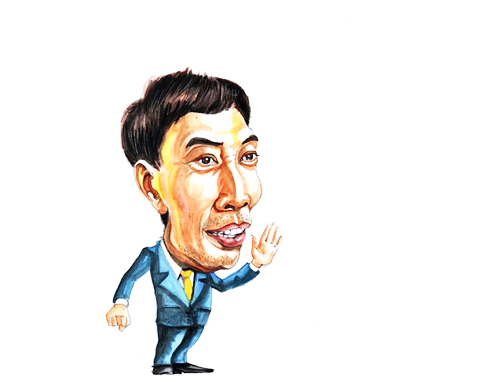
*Võ Trí Thành
In an increasingly uncertain world, economic security is becoming inseparable from national security. For Việt Nam, it is no longer enough to pursue high growth. We also need to ensure that the economy can withstand external shocks, adapt quickly and maintain room for policy choices. This is where strategic autonomy becomes essential.
The COVID-19 pandemic, the conflict in Ukraine and more recent instability in the Middle East have demonstrated how quickly geopolitical developments can become economic problems.
Disruptions to energy supplies and transport routes can raise production and logistics costs, fuel inflation and weaken the competitiveness of businesses. Disruptions in global supply chains can expose the vulnerabilities created by excessive dependence on particular markets, suppliers or technologies.
This makes resilience a central part of strategic autonomy.
Two areas are particularly important: supply chains and energy security.
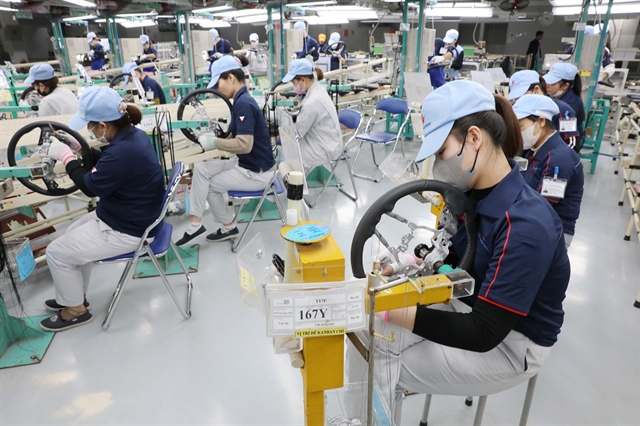
Supply-chain resilience does not mean trying to produce everything domestically. It means diversifying suppliers and markets, strengthening domestic capabilities in strategically important areas and ensuring that businesses have alternatives when external disruptions occur.
Energy security should be viewed in the same way. It is not simply a question of having sufficient energy at a particular point in time. Energy prices, transport routes, fuel supplies and the availability of key inputs can all affect production and inflation.
Recent geopolitical shocks have made this increasingly clear. A disruption in a major energy route can affect not only oil and gas but also petrochemicals, fertilisers, logistics, agriculture and manufacturing.
Energy security is therefore an important pillar of economic security.
At the same time, excessive 'securitisation' of economic relations can create new risks. When trade, investment and technology are increasingly used as instruments of geopolitical competition, economic interdependence can itself be viewed as a vulnerability.
Trade restrictions, technology controls and investment screening may be necessary in certain strategic circumstances, but if applied excessively they can fragment markets and reduce the benefits of international economic cooperation.
Having more choices
For a mid-sized economy such as Việt Nam, strategic autonomy does not mean isolation or retreat from the global economy. Trade, foreign investment, technology and global production networks remain essential to growth.
The priority is to safeguard national interests within a rules-based multilateral trading system while diversifying markets, partners and supply chains to strengthen resilience and maintain room for manoeuvre. That requires multilateralisation and diversification of external relations.
The principle is straightforward: maintain good relations with countries around the world, deepen cooperation with different economic centres and avoid excessive dependence on any single partner. Strategic autonomy means having more choices, not fewer.
The diplomatic developments of 2026 demonstrate the importance of this approach.
During Party General Secretary and President Tô Lâm's official visits to Thailand, Singapore and the Philippines from May 27 to June 1, Việt Nam signed 71 cooperation documents with the three ASEAN countries.
The relationship with Thailand was further implemented under the Comprehensive Strategic Partnership through a 2026–31 action programme, while Việt Nam and the Philippines upgraded their relationship to an Enhanced Strategic Partnership. The agreements covered areas including defence, digital transformation, tourism, education and economic cooperation.
These developments are important not simply because of their diplomatic significance. Stronger economic links within ASEAN can improve regional connectivity, diversify markets and strengthen supply-chain resilience.
The same logic can be seen in Việt Nam's relations with major partners outside Southeast Asia.
During the September visit to France, the two sides advanced cooperation under the Comprehensive Strategic Partnership, including in strategic areas such as energy, critical minerals, railways, aviation, AI and space. Vietnamese and French companies also signed agreements in high-tech aviation, digital technology, AI and cybersecurity.
In the United States, the September working trip produced cooperation agreements involving digital transformation, high technology, AI, aviation, green energy, healthcare and telecommunications. Discussions also focused on technology, innovation, industrial competitiveness, energy transition, infrastructure and high-quality investment.
The State visit to Canada later that month marked another significant step, with Việt Nam and Canada upgrading their relationship to a Strategic Partnership. The new framework covers trade and investment, transport and supply-chain management, infrastructure, digital transformation and AI, advanced technologies and innovation, energy security and food security.
Taken together, these developments show how foreign relations can contribute directly to economic resilience. A broader network of partners provides access to different markets, sources of capital, technologies, energy and strategic resources.
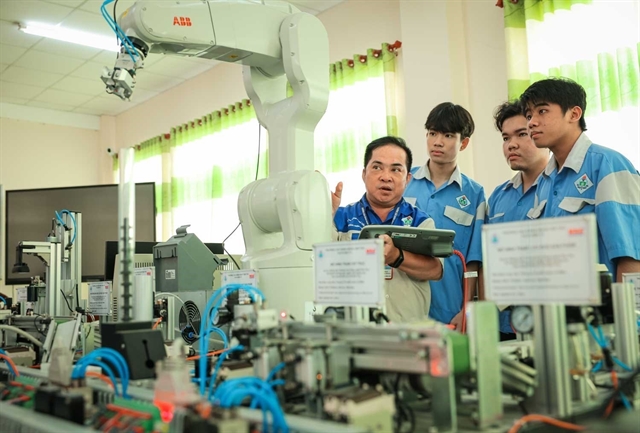 |
| A lecturer at a electronic college in Đà Nẵng City guides students in operating a robotic arm, highlighting the role of skills and technology in strengthening strategic autonomy. VNA/VNS Photo |
Domestic strength
But external partnerships alone cannot create strategic autonomy. The foundation must be a stronger and more resilient domestic economy.
Việt Nam is pursuing ambitious goals – becoming a modern industrialised country by 2030 and a high-income developed country by 2045, while moving towards net-zero emissions. Achieving these goals requires sustained high growth over many years.
High growth, however, must go together with macroeconomic stability, efficient use of capital and greater resilience.
This is where structural reform becomes critical.
The priority is institutional reform.
Efforts to reduce administrative procedures and business conditions have already generated significant savings for enterprises. But reform should not stop at reducing paperwork. It must improve the quality of implementation, clarify responsibilities and strengthen coordination between different levels and sectors.
A modern economy needs institutions that can respond quickly to shocks and policies that businesses can understand and predict.
It also needs public officials who are willing to act, capable of acting and accountable for results.
The second priority is innovation.
Strategic autonomy does not mean developing every technology independently. But Việt Nam needs domestic capabilities in technologies and industries that are critical to its future competitiveness.
This is increasingly reflected in the country’s development strategy, which places science, technology, innovation and digital transformation at the centre of efforts to build a more productive and competitive economy.
Resolution No. 57-NQ/TW has given this direction a stronger strategic foundation, calling for breakthroughs in science, technology, innovation and national digital transformation. The emphasis is not simply on adopting new technologies, but on building the capacity to create, absorb and apply them effectively.
That requires stronger research and development, closer links between universities and businesses, better commercialisation of research and investment in high-quality human resources.
International cooperation remains essential. The objective should be to move from simply accessing foreign technologies towards learning, adapting and developing domestic capabilities – so that external cooperation strengthens Việt Nam’s own technological capacity.
The third priority is strategic infrastructure.
Transport, logistics, energy and digital infrastructure are no longer simply instruments of economic development. They are also part of economic security.
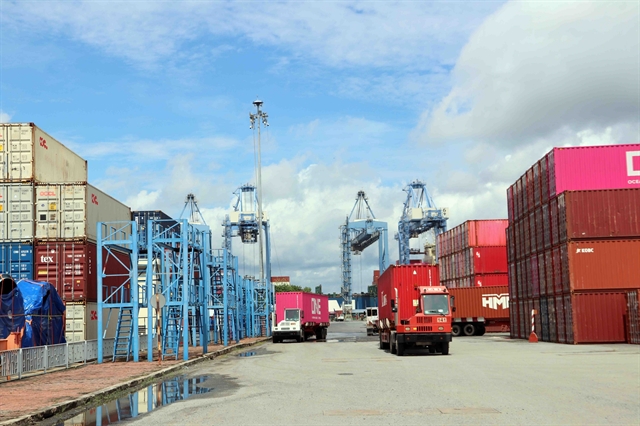
Reliable energy networks, modern ports, efficient logistics, secure digital infrastructure and better regional connectivity can determine how quickly an economy responds to external shocks.
Recent discussions with international partners reflect this broader understanding. In the United States, for example, cooperation discussions have included energy and power grids, digital infrastructure and data centres, aviation, seaports, logistics and modern transport, alongside AI and green-transition technologies.
The three areas – institutions, innovation and strategic infrastructure – therefore need to be developed together.
Strategic autonomy means having the resilience to absorb shocks while maintaining the capacity to pursue long-term development. This requires balancing rapid growth with macroeconomic stability, deeper global integration with diversified markets and supply chains, and access to foreign capital and technology with stronger domestic capabilities.
* Võ Trí Thành is former vice president of the Central Institute for Economic Management and a member of the National Financial and Monetary Policy Advisory Council. With a doctorate in economics from the Australian National University, he focuses on macroeconomic policy, trade liberalisation and institutional reform.
Economy
 Economy
 Economy
 Economy
 Economy
 Economy
.jpg) Economy
Economy
 Economy
 Economy
 Economy
 Economy
 Economy
 Economy
 Economy
 Economy


.jpg)