 Economy



Philippines’ Day Two Honourees Champion Possibility at ACES Awards 2026
1.
|
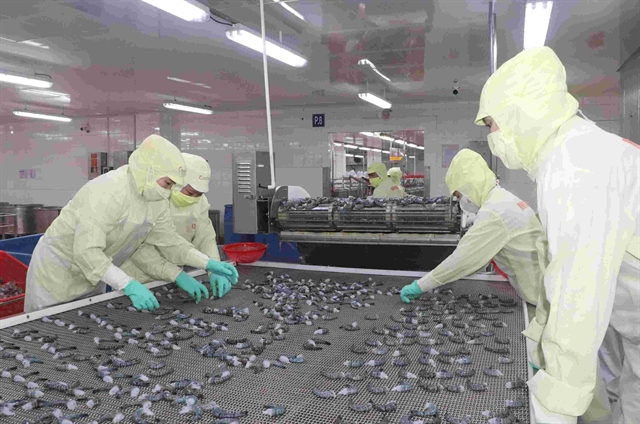
| Processing export shrimp at a factory in Cà Mau Province. Vietnamese eco-friendly shrimp has established a foothold in Switzerland in recent years. VNA/VNS Photo |
HÀ NỘI — The Vietnam-European Free Trade Association (EFTA) Free Trade Agreement (VEFTA) could help Việt Nam’s seafood industry expand export markets, specially the premium segment, diversify raw material supplies, and strengthen technology cooperation, according to the Vietnam Association of Seafood Exporters and Producers (VASEP).
Lê Hằng, VASEP’s deputy secretary-general, said Switzerland offered potential for Vietnamese seafood in the premium segment, supported by high consumer incomes and growing demand for quality, food safety, transparent sourcing and sustainable production.
Vietnamese eco-friendly shrimp, particularly shrimp raised in mangrove forests, has established a foothold in Switzerland in recent years, attracting interest from importers serving the premium market.
Mangrove shrimp has a competitive advantage not only because of its quality but also because its production is linked to mangrove conservation, environmental protection and local livelihoods, Hằng said. These characteristics could help Vietnamese exporters add value to their products and differentiate themselves in markets with stringent requirements.
However, businesses need to ensure transparency and consistency throughout the production chain, meet food safety, quality and sustainability standards, and maintain stable supplies to capitalise on the opportunity.
They must also factor in the costs of meeting standards, maintaining certifications, managing supply chains, storage and transportation when developing business strategies.
Exporters should identify their target customer segments and set appropriate prices rather than competing directly with mass-market products, Hằng said.
VEFTA could also create opportunities for Việt Nam to strengthen cooperation with Norway and Iceland, which have well-developed seafood industries, high-quality raw material supplies and modern harvesting, preservation and processing technologies.
Việt Nam has strengths in processing capacity and flexibility in meeting international customer demand, while Norway and Iceland have supplies of salmon, cod, mackerel, herring and other cold-water seafood.
Vietnamese businesses could make greater use of raw materials imported from the two countries for processing in Việt Nam, helping increase product value and develop complementary supply chains.
Cooperation could also give Vietnamese companies access to modern harvesting technologies, onboard preservation systems and fisheries management practices, contributing to greater efficiency and sustainability in the domestic marine fishing industry.
Advanced processing and the utilisation of seafood byproducts are other potential areas for cooperation.
Iceland has experience in making efficient use of seafood raw materials, including heads, bones, skin, viscera and other components with high biological value. Việt Nam also has scope to improve the utilisation of byproducts from shrimp, pangasius, tuna and other seafood processing activities.
Technology transfer, management expertise and the development of products from byproducts could help increase value, reduce waste and improve production efficiency.
To make the most of tariff preferences, businesses should carefully study tariff schedules, rules of origin and technical requirements in each market, Hằng said.
For raw materials imported from Norway and Iceland, processed in Việt Nam and then exported to third markets, companies must examine the applicable rules of origin, processing requirements and conditions for preferential treatment in the destination market.
Importing raw materials from VEFTA countries and processing them in Việt Nam does not automatically qualify the resulting products for tariff preferences in every market, she said.
VASEP said it would focus on providing market information and helping Vietnamese businesses connect with importers and distributors in Switzerland.
It would also promote trade and two-way cooperation with Norway and Iceland in raw materials, processing, harvesting technology, preservation and seafood byproduct utilisation.
Việt Nam’s seafood trade with EFTA markets remains modest, with exports concentrated mainly in Switzerland and Norway, according to VASEP.
In 2025, Việt Nam’s seafood exports to Switzerland reached US$34.123 million, up 15 per cent from 2024. Exports to Norway totalled $18.479 million, an increase of 95 per cent. VNS
Economy
 Economy
 Economy
 Economy
 Economy
 Economy
 Economy
 Economy
 Economy
 Economy
 Economy
 Economy
 Economy
 Economy
 Economy