 Economy



Weaving the unique heritage of the Thu Lao
1.
|
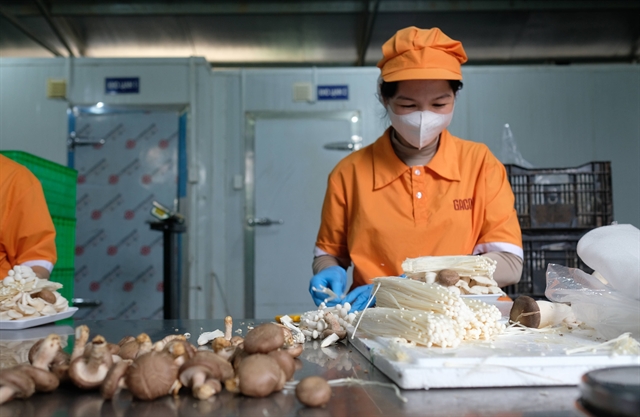
| Mushroom products being packed for export in Lâm Đồng Province. — VNA/VNS Photos |
HÀ NỘI — Food exporters are facing increasingly complex requirements on food safety, traceability, certification and environmental standards as overseas markets tighten import controls, raising the risk of higher costs and delays if shipments contain discrepancies.
Indonesia's recent move to strengthen controls on imported halal food highlights the growing compliance burden, with exporters required to ensure that physical shipments match accompanying data and documentation.
The Vietnam Trade Office in Indonesia said in early September that Indonesian Halal Product Assurance Agency (BPJPH) Decision No 4/2026, issued in August, tightened inspection and verification requirements for imported halal products, covering a range of food products exported from Việt Nam.
Shipments must have consistent information across documents including HS codes, invoices, packing lists, batch numbers, production dates and product labels. Discrepancies could prolong verification and add logistics and other costs, the trade office said.
The process also involves coordination among importers, BPJPH, inspection agencies, foreign halal certification bodies and the Indonesia National Single Window system, increasing the scope for delays if data or traceability records are incomplete.
Vietnamese products potentially affected include confectionery and grain-based products, processed fruits and vegetables, and processed seafood.
The trade office has advised exporters to work closely with importers to complete declarations and register halal compliance checks with BPJPH, while ensuring goods and documentation remain consistent throughout inspections.
The tighter requirements in Indonesia reflect a broader trend in global food markets, where exporters increasingly need to comply simultaneously with standards covering safety, traceability, certification, packaging, emissions and product data, trade experts said.
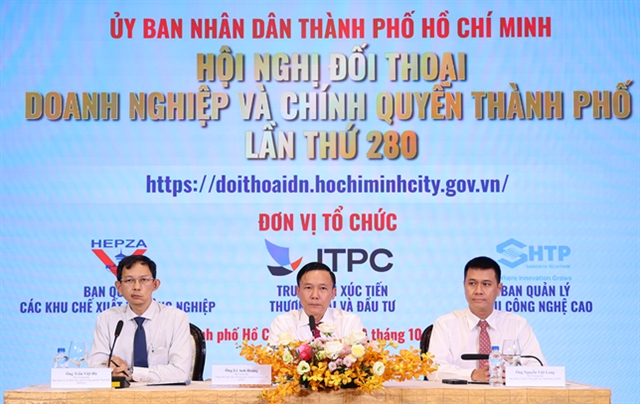
Lê Anh Hoàng, deputy director of the Investment and Trade Promotion Centre of Ho Chi Minh City (ITPC), said new-generation free trade agreements has created greater export opportunities for Vietnamese food products but also raised requirements for quality, traceability and sustainable development.
Competitive advantage is increasingly based on deep processing, branding and the ability to meet international standards rather than export volumes alone, Hoàng told vnbusiness.vn.
Hoàng said HCM City has regularly organised training programmes to develop a workforce with expertise in testing technologies, helping businesses improve their ability to meet standards and develop sustainable exports.
Investment in testing, traceability and data management should therefore be viewed as a core business capability rather than simply a compliance cost, he said.
As requirements become more sophisticated, pressure is also shifting from the finished product to the production process, said Nguyễn Thảo Hiền, deputy general director of the European-American Market Department under the Ministry of Industry and Trade.
International buyers are increasingly examining not only quality, price and delivery times but also production methods, resource use, environmental impact, labour practices and corporate governance, Hiền spoke to vnbusiness.vn.
Vietnamese food exporters therefore need to demonstrate how products are made, where raw materials come from and whether production processes comply with relevant standards, she said.
Data proves compliance
|
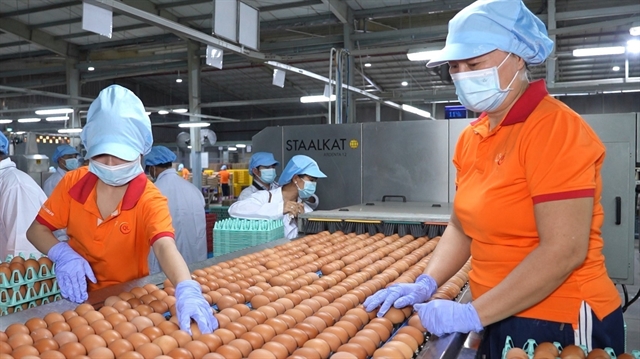
| An egg-packing facility at a factory in Tây Ninh. |
While Indonesia is tightening its halal requirements, developments in the European Union point to another emerging challenge for food exporters: increasingly stringent requirements on product data and environmental responsibility.
Nguyễn Thi, an expert in natural resources and the environment, said food exporters should pay close attention to the new EU rules covering packaging, eco-design and the Digital Product Passports (DPP).
For the DPP, the issue goes beyond whether a product can be considered green, Thi said, adding that businesses will need to provide product information in a prescribed format while ensuring traceability and data sharing across the supply chain.
The European Commission has indicated that the DPP Registry which was operational since July 2026, signaling a shift in product data requirements from policy frameworks to practical implementation, Thi said.
The market is therefore moving from simply requiring businesses to meet standards towards requiring them to provide data demonstrating compliance, he said.
Food businesses should prepare early by establishing integrated data systems covering raw materials, suppliers, production, testing, certification and individual shipments, Thi said. Products should be cross-checked against supporting documentation before export to ensure businesses could respond quickly to different requirements across markets.
Such systems should be designed for use across multiple markets, allowing companies to adapt more easily as regulations change, rather than building separate systems for individual destinations.
To contain compliance costs, a risk-based approach to controls should also be considered, according to the Vietnam Association of Seafood Exporters and Producers (VASEP).
In comments on a draft amended Law on Food Safety, VASEP proposed that the frequency of export certification inspections should be based on product risks, importing-country requirements and companies' compliance records.
Businesses operating management systems such as HACCP, ISO 22000, BRCGS or FSSC 22000 could be subject to fewer inspections and sampling checks, VASEP said.
Under such an approach, regulatory resources could be focused on higher-risk products while companies with strong compliance records face fewer controls. This could reduce costs while encouraging businesses to strengthen their management systems, it noted. — VNS
Economy
 Economy
 Economy
 Economy
 Economy
 Economy
 Economy
 Economy
 Economy
 Economy
 Economy
 Economy
 Economy
 Economy
 Economy