 Economy

SBV to curb property price inflation, enforce lending rate rules
1.
|
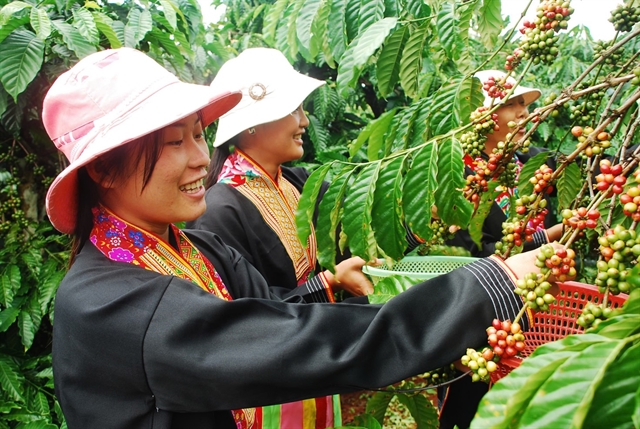
| Regenerative practices enhance crop resilience and ecosystem restoration. — Photo courtesy of RA |
HCM CITY — Sustained investment in farmer livelihoods and ecosystem restoration delivered substantial gains for certified farms across Việt Nam, according to the Rainforest Alliance's 2025 annual report, Regeneration Takes Root.
The Rainforest Alliance certifies a wide range of agricultural products in Việt Nam, including coffee, tea, black and white pepper, cashew, coconut, cinnamon, fruits and flowers.
In 2025, farms participating in the Rainforest Alliance Sustainable Agriculture Standard programme dedicated an estimated 1.2 million hectares to coffee cultivation, up 9 per cent from 2024. The Asia-Pacific region recorded the strongest global growth in certified coffee area, rising 18 per cent, driven largely by Việt Nam, where certified coffee land expanded from 90,000ha to 118,000ha.
An estimated 90,964 coffee farmers across 91,041 farms in Việt Nam participated in the Rainforest Alliance certification programme in 2025, a 69 per cent increase from 2024.
A key milestone in 2025 was the launch of the Rainforest Alliance Regenerative Agriculture Standard, a science-based, field-tested framework with 119 requirements covering soil health, water, biodiversity, crop resilience and social impacts. It charts a specialised path for farmers and companies to deepen their commitment to regenerative practices and actively restore the land they depend on.
Santiago Gowland, CEO of the Rainforest Alliance, said: “Last year showed us what's possible when farmers are supported and companies move beyond compliance toward regenerative investments. Accelerating regenerative agriculture comes down to trust, and trust is earned with credible, demonstrable evidence.
"Our new Regenerative Agriculture Standard ensures impact on soil, biodiversity, and livelihoods is measured and verified, not just claimed.”
He said the organisation's 2030 strategy aims to move beyond reducing environmental harm to restoring soils and tropical forest ecosystems that communities and food economies depend on.
Chandra Panjiwibowo, senior director for Asia-Pacific at the Rainforest Alliance, said: “Regenerative Agriculture in Asia-Pacific is increasingly being recognised as a strategic pathway to build a climate-resilient ecosystem. As the region faces mounting pressure from climate changes, biodiversity loss and shifting consumer demands, Việt Nam has a real opportunity to spearhead the transition from protecting to restoring our environment.”
In April, the Rainforest Alliance organised its first regenerative agriculture training course in Việt Nam for certified coffee companies, using interactive learning methods to strengthen participants' understanding of regenerative farming methods.
|
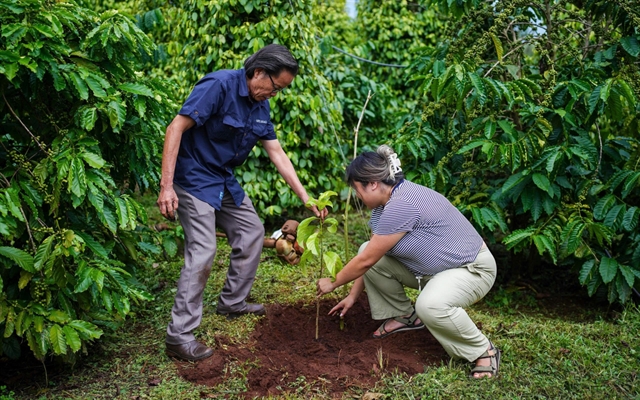
| Rainforest Alliance partners with farmers in the transition to sustainable farming practices. — Photo courtesy of RA |
Between 2022 and 2026, the organisation led the adoption of Integrated Pest Management (IPM) practices on 11,000 certified tea, coffee and pepper farms in Việt Nam. Demonstration farms recorded reductions in pesticide use of 82 per cent for tea, 79 per cent for coffee and 77 per cent for pepper.
Nguyễn Văn Thiết, Vietnam Country Director at the Rainforest Alliance, said more than half of the farmers participating in its IPM programme are now eligible to pursue regenerative agriculture certification.
“Regenerative practices help our farmers restore and address gaps in previous sustainable farming practices which helps unlock premium export markets and are significant to enhance Việt Nam’s position as a rising, global agricultural exporter,” he added.
Across 80 landscape and community programmes and its certification work in 64 countries, the Rainforest Alliance's 2025 results span five interconnected impact areas: ecosystems, biodiversity, livelihoods, climate resilience and human rights.
The Rainforest Alliance Certified seal now appears on 66,000 products across 172 countries.
The organisation said that although significant progress has been achieved, further collaboration from businesses, governments and investors will be essential to accelerate the adoption of regenerative agriculture and support farmers on the front lines of climate change. — VNS
Economy
 Economy
 Economy
 Economy
 Economy
 Economy
 Economy
 Economy
 Economy
 Economy
 Economy
 Economy
 Economy
 Economy
.jpg) Economy
Economy