 Economy

NA President sets June 2027 deadline for APEC projects, rules out delays, quality cuts and violations
1.
.jpg)
|
| Government officials, businesses and experts discuss ways to strengthen cooperation in developing high-tech agriculture and sustainable value chains at the conference. — VNS Photos |
HÀ NỘI — Regional cooperation is no longer an option, but a key driver for attracting investment, creating new development space and enhancing the value of agricultural supply chains as the country is transitioning towards green growth and circular economy models, Deputy Director of the Hà Nội Department of Finance Lê Trung Hiếu has said.
Hiếu made the remarks at an investment connectivity conference held on Tuesday in the capital and organised by Hanoi Support Centre for Enterprise and Investment Promotion (SCE) under the municipal finance department.
The conference was themed 'Strengthening regional links in smart agriculture and green economic development in Hà Nội, Bắc Ninh and Hưng Yên'. It brought together Government officials, businesses and experts to discuss ways to strengthen cooperation in developing high-tech agriculture and sustainable value chains.
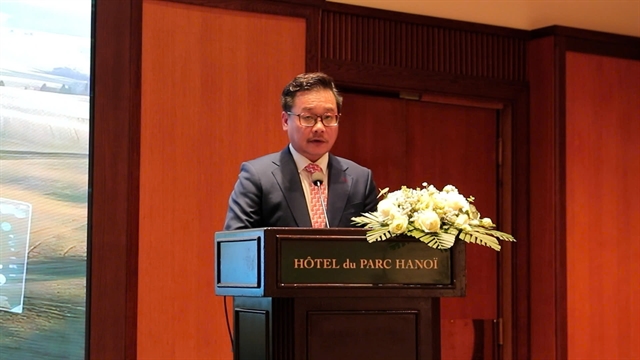
|
| Deputy Director of the Hà Nội Department of Finance Lê Trung Hiếu delivered a speech at the conference. |
According to Hiếu, rapid advances in digital technologies, AI, biotechnology and big data are transforming agricultural production, management and distribution worldwide, making regional cooperation increasingly important for sustainable growth.
He said that Hà Nội, Bắc Ninh and Hưng Yên possess complementary advantages that could together create a modern agricultural ecosystem spanning research, production, processing, logistics, distribution and exports.
Hà Nội is a centre for science, technology, finance, trade and consumption, supported by research institutes, universities, technology firms, wholesale markets and e-commerce platforms. Bắc Ninh has developed into a high-tech manufacturing hub, while Hưng Yên has strengths in commercial agriculture, fruit cultivation, livestock, food processing and raw material production.
"When these strengths are effectively connected, they will create an integrated agricultural ecosystem and provide a strong foundation for attracting high-quality foreign direct investment and advanced technologies," Hiếu said.
He added that the Hà Nội Department of Finance would continue working with ministries, local authorities and investment promotion agencies to introduce investment opportunities, connect businesses with partners and support projects throughout their implementation.
Hiếu also called for a shift in investment promotion, urging localities to market themselves as an integrated development space rather than as individual provinces.
Despite the opportunities, delegates acknowledged that major bottlenecks remain.
Đặng Thái Sơn, deputy director of the Investment Promotion and Business Support Centre under the Hưng Yên Department of Finance, said regional cooperation still faces challenges in planning, land use, infrastructure and logistics.
Although Hưng Yên and neighbouring provinces have fertile agricultural land, planning for inter-provincial high-tech agricultural zones remains fragmented, while legal barriers continue to slow land consolidation needed for large-scale investment.
Logistics infrastructure also lags behind demand. Fresh agricultural products require efficient cold-chain systems, yet the region still lacks refrigerated warehouses, quality inspection centres and logistics hubs connecting production areas with major consumer markets.
.jpg)
|
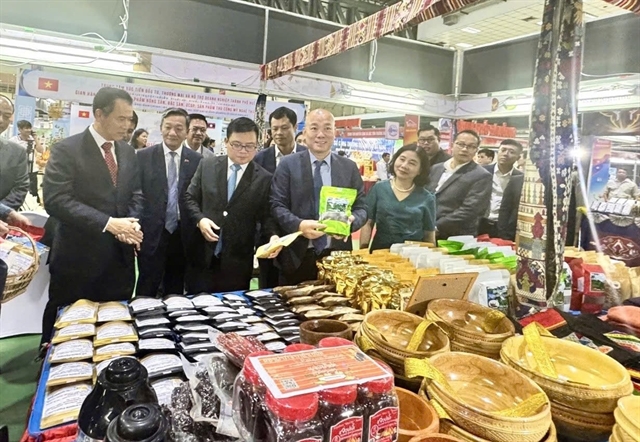
| A dedicated B2B networking area at the conference allows businesses to showcase their high-tech agricultural products and technologies, fostering partnerships while opening up new investment and market opportunities. |
Differences in agricultural standards further complicate trade. Certification systems such as VietGAP, GlobalGAP and organic standards are not yet fully recognised across provinces, making it difficult for products from Hưng Yên to enter supermarket chains, premium restaurants and export channels through Hà Nội.
Sơn said stronger collaboration is also needed between researchers, policymakers, businesses and farmers, while investment should focus more on deep processing instead of simply marketing raw agricultural products.
To address these bottlenecks, Hiếu proposed three priorities: infrastructure, finance and value-chain development.
He said transport networks, logistics facilities, cold storage, distribution centres and digital infrastructure should be planned on a regional basis. Hà Nội would continue using its special policy mechanisms to mobilise investment while working with neighbouring provinces to reduce logistics costs and improve supply chain efficiency.
Given the large capital requirements and long investment cycles of high-tech agriculture, financial cooperation among localities will also be essential, he added.
Hiếu called for building integrated agricultural value chains covering seed research, cultivation, processing, storage, distribution and exports to increase competitiveness and generate higher-value products.
Sơn proposed establishing common technical standards for agricultural products across the region through a 'one certification, multiple acceptance' mechanism, allowing products certified in one province to be recognised by others.
He also suggested applying blockchain technology to digitise product traceability from farms to consumers, improving transparency and boosting investor and consumer confidence.
Among Hưng Yên's proposals was the creation of a Technology Centre and Smart Farming model, under which Hà Nội would become a hub for biotechnology, seed development and advanced food processing technologies, while Hưng Yên would host concentrated high-tech agricultural zones applying those innovations on a commercial scale.
The province also proposed developing specialised agricultural logistics centres along Ring Road 4 and major expressways to establish a regional cold-chain logistics corridor linking production areas with wholesale markets, supermarkets and export gateways.
Representing Bắc Ninh, Nguyễn Mạnh Cường of the provincial Investment Promotion Centre said cooperation should focus on complementarity rather than competition.
He proposed creating a shared regional database covering production areas, planting codes, seasonal output, quality standards, processing facilities, cold storage and distribution networks. The data could help create a digital map of agricultural production to improve forecasting, supply-demand matching and investment promotion.
Cường also suggested developing common criteria for labelling 'Green Agricultural Products of the Capital Region' to strengthen consumer confidence and gradually establish a shared regional brand.
He said that localities should not compete by manufacturing the same products, but instead specialise according to their comparative advantages while remaining closely connected through regional value chains that prioritise higher added value, lower emissions and stable markets.
Delegates agreed that regional cooperation would only deliver tangible results if it moved beyond broad memoranda of understanding to concrete action plans with clear objectives, responsibilities and implementation schedules.
The conference also featured discussions on digital agriculture, AI, the Internet of Things, blockchain-based traceability, circular farming models and business-to-business networking aimed at connecting investors, technology providers and agricultural enterprises.
Organisers said the event is expected to pave the way for practical cooperation programmes and investment projects that strengthen the agricultural ecosystem of Hà Nội, Bắc Ninh and Hưng Yên while supporting greener and more competitive development across the Red River Delta. — VNS
Economy
 Economy
 Economy
 Economy
 Economy
 Economy
 Economy
 Economy
 Economy
 Economy
 Economy
 Economy
 Economy
.jpeg) Economy
Economy
 Economy