 Economy

SBV to curb property price inflation, enforce lending rate rules
1.
|
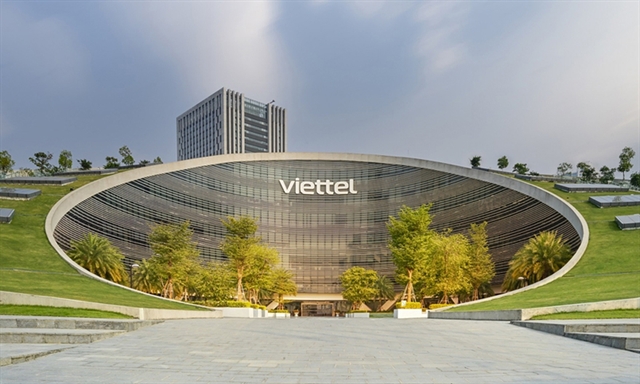
| The head office of Viettel Group in Hà Nội, a certified green building. Việt Nam is aiming to develop a greener construction industry toward the net zero target by 2050. — Photo baoxaydung.vn |
By Mai Linh
HÀ NỘI — Efforts to decarbonise Việt Nam's construction sector are gathering pace, with greater emphasis on low-carbon transport, energy-efficient buildings, sustainable materials and green finance to help the industry meet the country's 2050 net-zero target.
Speaking at the Vietnam Sustainable Construction Forum (VSCF) 2026 held by HCM City Construction and Building Material Association (SACA) on July 16 in Hà Nội, Deputy Minister of Construction Nguyễn Văn Sinh said the transition would require coordinated action across the entire construction value chain, from urban planning and infrastructure development to building materials, construction methods, waste management and resource recycling.
The Government was also working to strengthen policies and technical standards to accelerate the shift towards greener and more energy-efficient construction, he said
“The construction sector is among the largest consumers of energy and raw materials and a major source of greenhouse gas emissions, making it central to Việt Nam's low-carbon growth strategy,” Sinh said, adding that the green transition has begun to gather pace across several areas.
He cited figures that by the end of May, Việt Nam had nearly 372,000 electric road vehicles in operation, including almost 370,000 electric cars and more than 1,500 electric buses, while investment in charging infrastructure and other supporting facilities is also expanding.
The country has also surpassed its national target for green buildings, with more than 828 certified projects covering a combined floor area of around 20.8 million square metres, ranking eighth among 180 countries and territories in the number of certified green buildings.
The use of environmentally friendly construction materials has continued to grow. Around 2,900 manufacturers are producing non-fired building materials with a combined annual design capacity of 12.4 billion units, accounting for about 40 per cent of the country's total building-material production capacity.
Many kinds of energy-efficient materials are being developed and applied, including Low-E and Solar Control glass, alongside the use of industrial by-products such as ash, slag and gypsum in construction materials, helping reduce emissions, conserve resources and shift the sector towards a circular economy.
Despite the progress, Sinh said the transition remains constrained by high investment costs, limited access to green finance, incomplete technical standards and relatively weak policy incentives for businesses adopting low-carbon technologies.
Public awareness of the long-term benefits of green buildings also needs to improve, he added.
To accelerate the transition, Sinh said that the focus must be on raising solutions to further improve technical standards for green buildings, encouraging wider adoption of low-carbon materials and promoting circular economy practices.
In addition, it is critical to mobilise more green finance while strengthening cooperation among government agencies, businesses, research institutions and international partners.
Coordinated efforts
|
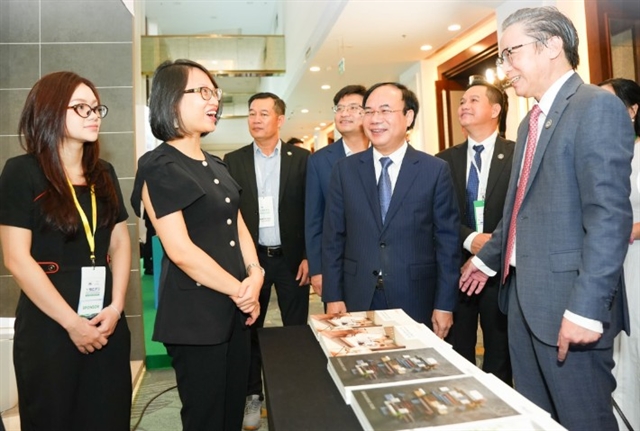
| Delegates at the Vietnam Sustainable Construction Forum. — Photo VSCF |
Nguyễn Quang Vinh, vice president of the Vietnam Chamber of Commerce and Industry (VCCI), said sustainable development had become a requirement for business competitiveness as export markets, investors and financial institutions paid greater attention to carbon footprints, energy efficiency and supply-chain transparency.
"Sustainability is no longer a voluntary choice but is becoming a condition of competitiveness," Vinh said.
He urged businesses to integrate environmental, social and governance (ESG) principles into their core strategies rather than treating them solely as compliance requirements.
Vinh said Việt Nam's net-zero commitment, along with the development of policies on circular economy, carbon markets, green growth and clean energy, would create new opportunities but also impose new requirements on enterprises.
“While the path towards Net Zero and sustainable development will not be easy, it provides Vietnamese businesses with an opportunity to transform their growth models, strengthen competitiveness and establish a new position in the global economy,” Vinh said.
For the construction sector, he said businesses needed to move from awareness to action by incorporating sustainability into investment decisions, product development, supplier selection, risk management and workforce development.
He also called for stronger cooperation across the value chain from material producers, designers, contractors, developers to certification organisations, financial institutions, technology companies and research bodies.
He added that large enterprises should support small- and medium-sized suppliers through technology transfer, training and sustainability standards to strengthen the competitiveness of the entire supply chain.
Đinh Hồng Kỳ, founder of VSCF and chairman of SACA, said the transition towards Net Zero could not be achieved by a single stakeholder but required coordinated efforts from the Government, businesses, research institutions and international organisations.
“The State plays the role of creating an enabling institutional framework, businesses are the driving force behind implementation, the scientific community provides knowledge and technology, while international organisations contribute experience and resources,” Kỳ said.
He urged the construction sector to move beyond individual projects and build a broader ecosystem involving policymakers, businesses, scientists, financial institutions and technology providers.
“We are not only building greener buildings. More importantly, together, we are creating a greener construction industry, a more sustainable economy and a more livable Việt Nam for future generations,” Kỳ added.
|
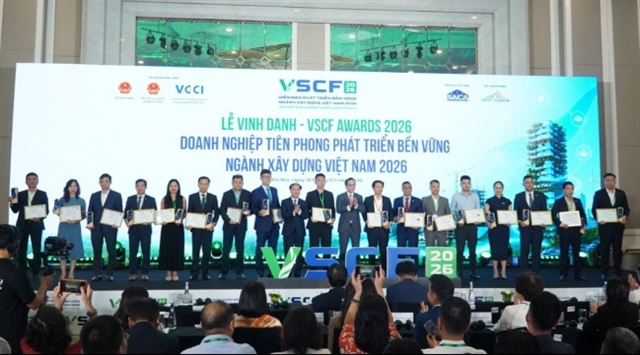
| VSCF Awards are handled to 17 pionnering sustainable construction enterprises. — VNS Photo |
At the event, 17 enterprises are honored with the Vietnam Sustainable Construction Pioneer Award for their efforts in innovation, creativity, and strong commitments to the green transition and carbon emission reduction.
The VSBF 2026 also launched the VSCF Incubator Awards (VIA) programme, which aims to identify, nurture and connect young students, engineers and architects with businesses.
The forum also witnessed the signing of cooperation agreements between Hanoi University of Civil Engineering and SACA, the HCM City Green Business Association, as well as between Saint-Gobain Vietnam and Hanoi University of Civil Engineering to promote research, technology transfer, advanced construction materials and high-quality human resource development for the green transition.
Launched as an annual platform to promote dialogue and cooperation among policymakers, businesses, experts and international partners, VSCF has been organised to support Việt Nam’s transition towards sustainable construction and a low-carbon economy. — VNS
Economy
 Economy
 Economy
 Economy
 Economy
 Economy
 Economy
 Economy
.jpg) Economy
Economy
 Economy
 Economy
 Economy
 Economy
 Economy
 Economy