 Economy



PM urges Hưng Yên to become dynamic growth hub by 2030
1.
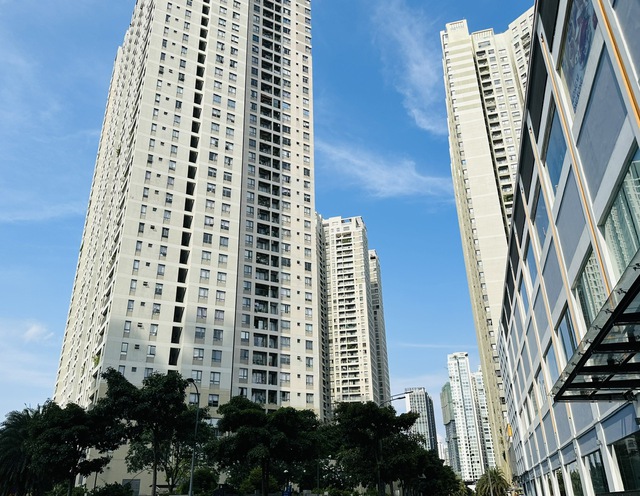 |
| In the first half of this year, a wave of project launches has lifted the number of homes brought to market to its highest level since 2020. — Photo chinhphu.vn |
HÀ NỘI — Housing supply in Hà Nội is entering its strongest expansion cycle in years, but demand is failing to keep pace as borrowing costs remain elevated, shifting the market to period of competition in price and buyer incentives.
The assessment was presented by property consultancy CBRE at a press briefing in Hà Nội on July 7, where the company released its latest report on the capital’s residential property market.
According to CBRE, after nearly two years of constrained supply and rapidly rising home prices, Hà Nội’s residential market is entering a new phase.
A wave of project launches has lifted the number of homes brought to market to its highest level since 2020.
However, contrary to expectations, transaction volumes have begun to slow as homebuyers adopt a more cautious approach in response to higher financing costs.
The shift suggests the market is moving beyond a supply shortage into a more selective phase, where sales will increasingly depend on pricing, financing and buyer confidence.
Despite a sharp rise in new supply, the market remains dominated by high-end apartments.
CBRE said about 16,600 new apartments were launched in Hà Nội in the first half of 2026, the highest first-half total in five years, with no new project priced below VNĐ60 million (US$2,290) per sq.m. for a second consecutive quarter.
Instead, new supply was concentrated in the premium segment, with apartments priced at VNĐ80–110 million per sq.m accounting for about 30 per cent of new launches and those priced above VNĐ120 million per sq.m making up 35 per cent.
In the second quarter alone, more than 3,000 apartments priced above VNĐ120 million per sq.m were launched in projects located in central and near-central wards, including Thanh Xuân, Tây Hồ and Đông Anh.
The concentration of new launches in inner-city areas pushed the average primary selling price to around VNĐ95 million per sq.m, up 12 per cent quarter-on-quarter and 21 per cent year-on-year.
Meanwhile, demand eased despite the influx of new projects, with more than 5,800 apartment transactions recorded in the second quarter, equivalent to about 68 per cent of newly launched units.
The absorption rate was well below levels seen over the previous two years, when take-up often exceeded 90 per cent and, in some cases, outpaced new launches.
CBRE attributed the slowdown mainly to persistently high lending rates. Nguyễn Hoài An, senior director of CBRE Hanoi, said buyers who had previously relied on mortgages to secure newly launched homes are now placing greater emphasis on cash flow.
The changing sentiment has also become evident in the secondary market. Average resale apartment prices in Hà Nội fell nearly 3 per cent from the previous quarter to around VNĐ60 million per sq.m, marking the first quarterly decline since late 2022.
Annual price growth also slowed to around 13 per cent, roughly half the pace recorded during the market's previous period of rapid appreciation.
The developments indicate the market is entering a period of adjustment following the recent strong growth.
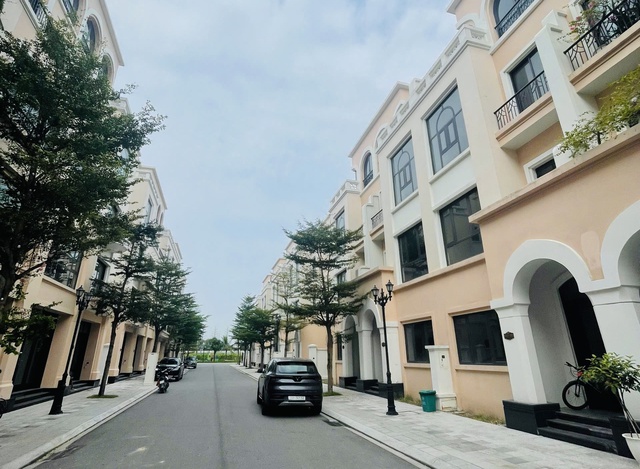 |
| New supply of landed homes reached nearly 2,100 units in the first half of the year, down 17 per cent from the same period a year earlier. — Photo chinhphu.vn |
Landed property
The slowdown has also extended to the landed property segment.
New supply of landed homes reached nearly 2,100 units in the first half of the year, down 17 per cent from the same period a year earlier.
More than 1,110 units were launched during the second quarter, with nearly 80 per cent located in large-scale township developments in Văn Giang Ward of Hưng Yên Province, highlighting the continued expansion of residential development into areas bordering Hà Nội.
Liquidity in the segment weakened even more sharply than in the apartment market. Only just over 660 landed properties were sold in the second quarter, down 30 per cent from the previous quarter and 74 per cent from a year earlier.
Prices also began to ease.
Average primary prices fell about 9 per cent quarter-on-quarter to approximately VNĐ209 million per sq.m of land.
In the secondary market, prices for villas and townhouses declined around 3 per cent from the previous quarter, while annual growth slowed to about 2 per cent.
CBRE said the decline in average primary prices reflected the fact that most new supply came from large suburban township developments, while elevated borrowing costs prompted many investors to delay purchases or lower their profit expectations.
Looking ahead, CBRE forecasts that new apartment launches in Hà Nội could reach nearly 39,000 units in 2026, surpassing the previous record set in 2019. Around 6,000 new landed homes are also expected to be launched during the year.
Despite a more selective market, Hà Nội's housing fundamentals remain strong, supported by the capital's 2045 master plan, which will drive urban expansion into areas such as Gia Lâm, Đông Anh, Hoài Đức and Văn Giang, and five new urban railway lines expected to boost connectivity and support transit-oriented development (TOD). — VNS
Economy
 Economy
 Economy
 Economy
 Economy
.jpg) Economy
Economy
 Economy
 Economy
 Economy
 Economy
 Economy
 Economy
 Economy
 Economy
 Economy