 Economy

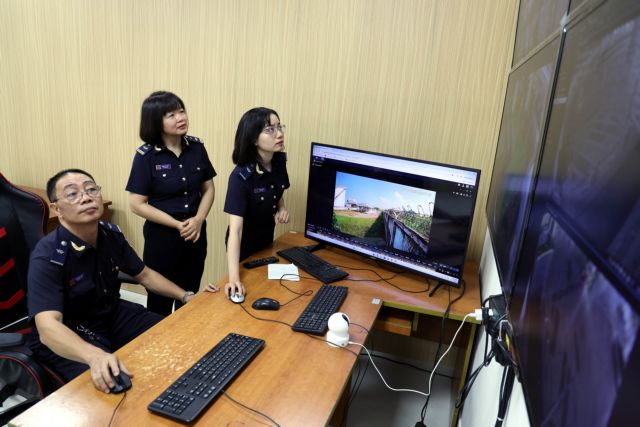
Digitalisation helps streamline cargo clearance
1.
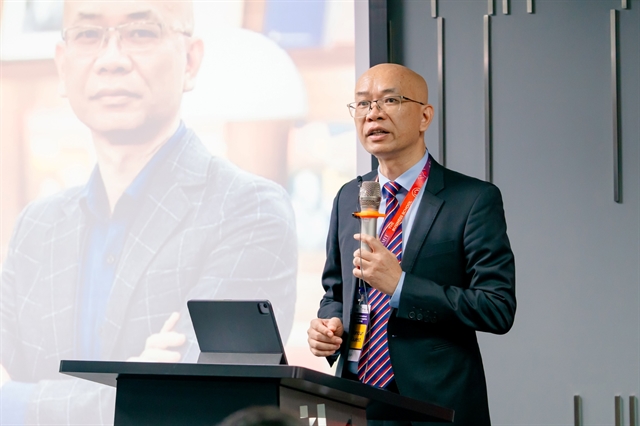 |
| Deputy Director General of the Agency of Foreign Trade under the Ministry of Industry and Trade, Trần Thanh Hải. Photos courtesy of RMIT Vietnam |
HÀ NỘI - Geopolitical tensions, climate change, and unexpected economic shifts have demonstrated one clear truth: a weak supply chain can hurt the whole economy, said Deputy Director General of the Agency of Foreign Trade under the Ministry of Industry and Trade, Trần Thanh Hải.
Addressing the 30th International Symposium on Logistics (ISL 2026), taking place in Hà Nội from July 5-8, Hải stressed that security in supply chains nowadays extends beyond protecting goods from theft or fraud. Instead, it requires making our supply chains resilient so that essential goods like food, medicine, and industrial materials can move across borders without stopping.
“To grow and stay strong, we must change the way we think and the way we work,” he said, calling for stronger collaboration between governments and businesses alongside investments in digitalisation and green logistics.
Co-hosted by RMIT University Vietnam, ISL 2026's theme “Regenerative Supply Chain Intelligence” reflects a growing recognition that future supply chains must also contribute positively to environmental and social outcomes while remaining agile and resilient.
The symposium, gathering more than 100 scholars, industry practitioners, and policymakers, provided a platform for global experts to discuss how supply chains can achieve resilience and efficiency while creating positive environmental, social, and economic outcomes.
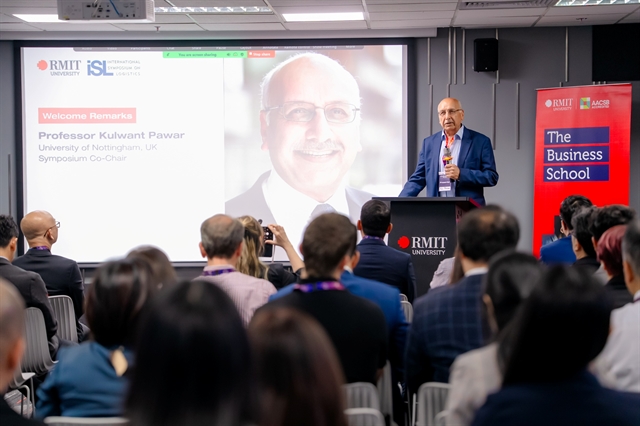 |
| Professor Kulwant Pawar from Nottingham University Business School, Chair of the International Symposium on Logistics. |
Professor Kulwant Pawar from Nottingham University Business School, Chair of the International Symposium on Logistics, explained that traditional supply chains were designed to minimise cost and maximise efficiency. Regenerative supply chains go further by actively creating positive environmental and social value in addition to economic benefits.
He added that building regenerative supply chains requires action from multiple stakeholders.
“Businesses need to invest in digital capabilities and sustainable operations. Policymakers need to create enabling frameworks and infrastructure. And universities play a vital role in developing the talent and research needed to support this transition,” said Prof. Pawar.
A key question discussed during the symposium was how organisations can build supply chains that are also intelligent and adaptable. Addressing this issue, Dr Đinh Hũu Thạnh, Co-founder, Chairman and CEO of Bee Logistics Corporation, highlighted how AI, data, and digital transformation are reshaping logistics and supply chain management.
According to Dr Thạnh, supply chain disruptions have become a constant rather than an exception. The disruptions have forced a fundamental rethink of what logistics is for – from a cost function to an intelligence-driven competitive capability.
He argued that organisations must move beyond traditional logistics models built primarily around cost reduction and operational scale. Instead, competitive advantage now depends more on the ability to transform data into predictive insights and automated action.
"Today's competitive edge belongs to companies that can see further, decide faster, and adapt continuously," he said.
For Việt Nam, the challenge is not simply adopting new technologies but ensuring that supply chains are sustainable and capable of generating long-term value.
“Vietnam has emerged as a critical hub in regional and global supply chains, supported by strong manufacturing growth and expanding international trade. This now creates an opportunity for the country to leapfrog towards regenerative supply chain models”, said Dr Nguyễn Mạnh Hùng, Senior Programme Manager for Logistics and Supply Chain Management at RMIT Vietnam.
He noted that achieving this transition will require more than infrastructure investment or operational efficiency.
“Success will depend on how effectively businesses and policymakers work together to embed sustainability, resilience, and digital intelligence across the supply chain ecosystem. Those that can do so will be better positioned to meet the expectations of global customers and investors,” Dr Hùng said. VNS
Economy
 Economy
 Economy
 Economy
 Economy
 Economy
 Economy
 Economy
 Economy
.jpg) Economy
Economy
 Economy
 Economy
 Economy
 Economy