 Economy

Việt Nam, Singapore promote cooperation through Party-to-Party channel
1.
|
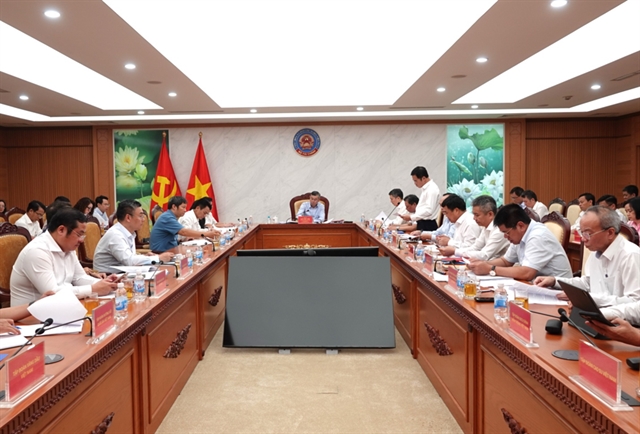
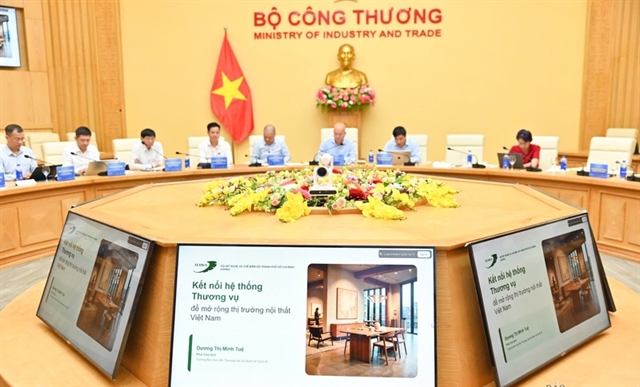
| An overview of the second-quarter trade promotion conference in Hà Nội on Tuesday. —Photos congthuong.vn |
HÀ NỘI — Business associations have called for closer coordination with the country's overseas trade offices, greater use of digital platforms and stronger market intelligence to help exporters navigate growing uncertainty in global trade.
A trade promotion conference on Tuesday was told that exporters are facing increasing pressure from shifting trade policies, stricter technical standards, sustainability requirements and changes in global supply chains, prompting calls for trade promotion to evolve into a broader support ecosystem for businesses.
The recommendations were made at the Ministry of Industry and Trade (MoIT)'s second-quarter trade promotion conference, attended by officials, representatives of Việt Nam's overseas trade offices, industry associations, businesses and local authorities.
Representatives from the logistics, supporting industries and e-commerce sectors urged the Government to strengthen information sharing, business matchmaking and early warning systems to improve exporters' ability to respond to market changes.
Trần Chí Dũng, a standing committee member of the Vietnam Logistics Business Association, said logistics firms were facing mounting requirements related to green logistics, digital transformation, product traceability and supply chain optimisation, in addition to volatility in international markets.
Dũng said logistics companies' international networks enabled them to identify market changes early, but many external risks remained beyond their control.
Business networking needs to expand
He proposed that the MoIT and overseas trade offices expand business networking activities and establish an official information portal to enable government agencies, industry associations and businesses to exchange market information more regularly.
He said better access to data would help companies optimise supply chains, lower costs and improve resilience against global trade disruptions.
Meanwhile, Phạm Hải Phong, vice president of the Vietnam Association for Supporting Industries, said trade promotion should move beyond traditional exhibitions, which are held only periodically, while businesses require continuous access to potential customers.
He said his association was developing an AI-enabled platform linking buyers and suppliers, allowing manufacturers to showcase production capacity through videos and three-dimensional factory images while facilitating online business-to-business meetings.
Phong said the association also planned to expand cooperation with purchasing delegations from the US, Europe, Japan and other markets, alongside its annual Factory Business Conference (FBC) exhibition, to create a continuous trade promotion ecosystem rather than relying on individual events.
Data-sharing mechanism proposed
|
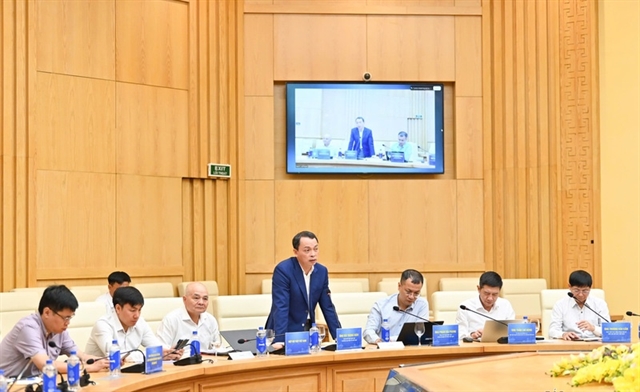
| Representatives of industry associations discuss measures to strengthen trade promotion at the conference. |
In the e-commerce sector, Bùi Trung Kiên, vice president of the Vietnam E-commerce Association, said cross-border e-commerce was creating significant opportunities for small and micro enterprises but requires stronger coordination between Government agencies, business associations and companies.
Kien said the association had worked with international partners to organise seminars on cross-border e-commerce this year and was preparing to publish an online export guide for small businesses and household enterprises.
He also proposed establishing a data-sharing mechanism between Việt Nam's overseas trade offices and industry associations to provide exporters with more timely information on consumer trends, market demand and export opportunities.
According to Kiên, consumer trend data on e-commerce platforms was very difficult to access. If there were a mechanism for regular information sharing, businesses would be more proactive in selecting markets and developing products.
For the textile and garment sector, trade barriers and policy changes in export markets remain the biggest concerns, said Trương Văn Cẩm, secretary general of the Vietnam Textile and Apparel Association.
Cẩm said that although the industry continued to record export growth, businesses were facing mounting pressure from global competitors, alongside trade remedy investigations, labour regulations, green transition requirements and new technical barriers.
He outlined trade investigations and changes in the policies of importing markets as the leading concerns of textile and garment firms, adding that businesses urgently needed timely information to prepare response plans.
He suggested overseas trade offices not only provide updates on new regulations but also analyse the reasons behind declining exports in individual markets and strengthen early warning systems to help businesses adjust their strategies.
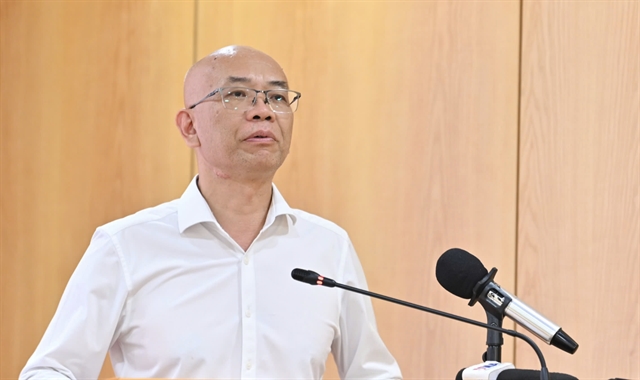
For his part, Vũ Bá Phú, director general of the MoIT's Vietnam Trade Promotion Agency, said Việt Nam overseas trade offices would continue to play a central role in developing export markets by connecting domestic businesses with foreign partners and providing timely market information to government agencies, local authorities, industry associations and companies.
Phú said the trade offices had worked closely with units under the MoIT, industry associations and businesses to organise hundreds of trade promotion activities, including trade fairs, exhibitions, business missions, market surveys, seminars, forums and both in-person and online business matching events.
They have also helped connect foreign business delegations, importers, industry associations and major international companies with Vietnamese firms through trade fairs and other promotional events, he said.
He said the ministry would step up efforts to receive overseas business delegations from 2026, while the trade offices would continue coordinating with domestic agencies to develop trade promotion programmes, verify business partners, connect Vietnamese exporters with major importers and retailers, and support sourcing of raw materials for domestic production.
He added that online trade promotion programmes had proved particularly effective for small and medium-sized enterprises by enabling them to reach overseas partners at relatively low cost and prepare for future in-person trade promotion activities.
Businesses that entered overseas markets with adequate market intelligence and pre-arranged contacts through Việt Nam's trade office network tended to achieve better results from trade promotion missions, Phú said.
He said stronger coordination between the MoIT and overseas trade offices would help businesses adapt to global market volatility, expand exports and support the country's 2026 growth objectives. — VNS
Economy
 Economy
 Economy
 Economy
 Economy
 Economy
 Economy
 Economy
.jpg) Economy
Economy
 Economy
 Economy
 Economy
 Economy
 Economy
 Economy