 Economy


HCM City honours fallen soldiers with solemn musical tribute
1.
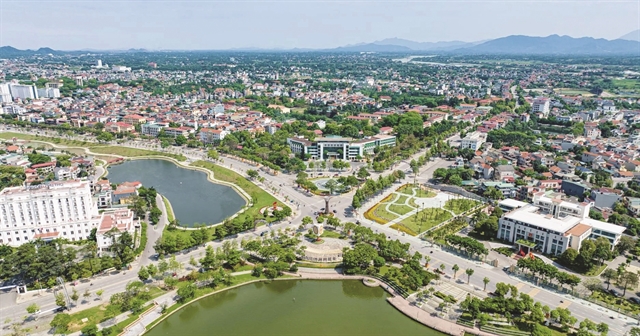 |
| Việt Trì City, the administrative and political centre of the newly established Phú Thọ Province. — Photo baophutho.vn |
By Trần Như & Hoàng Hà
HÀ NỘI — One year after adopting its two-tier local government model, Phú Thọ Province is beginning to reap the benefits of a leaner administrative system, using governance reform, digital transformation and a more transparent investment environment to strengthen competitiveness and position itself as a new growth pole in northern Việt Nam.
The initial results have not only enhanced the quality of public services for local residents and businesses, but have also laid the foundation for the northern province’s ambition to become a major growth pole near the nation's capital.
According to Nguyễn Trung Tình, deputy director of the Phú Thọ Department of Home Affairs, following the completion of administrative restructuring and the successful operation of the two-tier local government system, the province is now well positioned to capitalise on its larger economic scale, expanded population and broader development space.
During the first six months of 2026, Phú Thọ maintained strong socio-economic growth, with Gross Regional Domestic Product (GRDP) estimated to have increased by at least 10 per cent.
State budget revenue reached around VNĐ33.3 trillion (US$1,265 million), nearly 20 per cent higher than the same period last year. Foreign direct investment totalled US$1.32 billion, 3.6 times higher than in the first half of 2025, while the industrial production index rose by nearly 25 per cent.
These achievements stem from the province’s persistent efforts to improve the investment environment and implement a "green lane" mechanism for administrative procedures. It also maintains the Entrepreneurs' Coffee, a regular dialogue forum between authorities and entrepreneurs, to proactively resolve business challenges and accelerate key investment projects.
"In the next few years, the province will continue shifting from a management mindset to a creator mindset, placing citizens and businesses at the centre of public services. Practical effectiveness and public satisfaction will serve as key benchmarks for evaluating the performance of authorities," Tình said.
He added that during the second half of the year, Phú Thọ would prioritise institutional reforms and remove bottlenecks relating to planning, land management and site clearance.
The province would accelerate transport infrastructure, logistics, industrial parks and digital infrastructure projects, while further promoting private sector development, attracting high-tech investment and strengthening connectivity with Hà Nội and neighbouring provinces.
Governance reform
According to Tình, one year after the merger of Phú Thọ, Vĩnh Phúc and Hòa Bình provinces to form single Phú Thọ Province, the newly established administrative system has largely stabilised without disrupting services for residents or businesses.
Administrative procedures can now be processed more quickly and transparently due to the reduction of administrative units, greater decentralisation and the wider application of information technology.
The Department of Home Affairs has advised the province on developing a unified performance evaluation system covering provincial agencies as well as all 148 communes and wards.
It has also integrated nearly 89,000 personnel records of civil servants and public employees into the national database, while piloting a digital Key Performance Indicator (KPI)-based performance evaluation system for civil servants.
These reforms have strengthened accountability and improved administrative efficiency.
Progress is also reflected in the province’s administrative reform indicators. In 2025, Phú Thọ scored nearly 91 points on Việt Nam's Public Administration Reform Index, exceeding the national average, while the Satisfaction Index of Public Administration Services reached 82.7 per cent.
By the end of the first quarter of 2026, the province scored 95.1 out of 100 under the National Public Service Portal's service quality index for citizens and businesses.
"The most important lesson is that streamlining the administrative apparatus must go hand in hand with governance reform. Simply merging organisations without digitising data, standardising procedures and establishing measurable accountability is unlikely to produce meaningful improvements," Tình said.
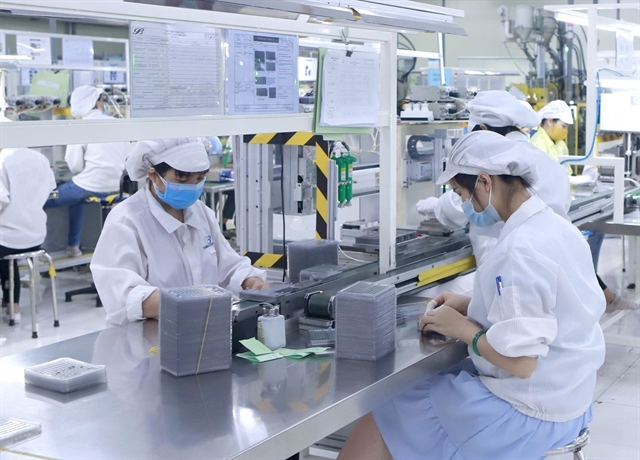 |
| Workers manufacture electronic components at Star Engineers Vietnam Company in Bình Xuyên I Industrial Park, Phú Thọ Province. — VNA/VNS Photo |
Investment appeal
The business community has also responded positively to the province's reform efforts.
According to Đường Trọng Khang, head of the Phú Thọ Business Association's Legal Affairs Board, the most noticeable change has been a more proactive approach from local authorities in supporting businesses.
Regular dialogue mechanisms and timely resolution of business concerns have given enterprises greater confidence to expand production and their operations.
At the same time, the province has continued investing in transport infrastructure, industrial parks, logistics facilities and ready-to-use industrial land, making it easier for investors to access essential development resources.
"Phú Thọ's position among the top five provinces in the 2025 Provincial Competitiveness Index (PCI) demonstrates that its reform agenda is moving in the right direction," Khang said.
"What businesses expect is not only faster administrative procedures, but also a transparent, stable investment environment where authorities remain a long-term development partner."
At the PCI 2025 Report released in May 2026 by the Việt Nam Chamber of Commerce and Industry, Phú Thọ's inclusion among the country's five best-performing provinces, alongside Bắc Ninh, Đà Nẵng, Hải Phòng and Quảng Ninh, represented a major achievement.
A common characteristic of these leading localities is strong governance performance, with at least five of the nine PCI sub-indices ranking among the nation's top 10.
For Phú Thọ, the key factors behind this success are three strategic pillars: removing bottlenecks in access to development resources, building a proactive and service-oriented government, and effectively controlling informal costs.
While many localities continue struggling with these issues, Phú Thọ ranked second nationwide in the Resource Access Index, reflecting significant breakthroughs in helping businesses gain access to land, capital and other production inputs, while reducing opportunity costs.
The province also ranked fifth nationwide in the Proactive Government Index, demonstrating a strong transition from a traditional regulatory approach toward a service-oriented administration.
This commitment is further evidenced by its inclusion among the country's top 10 provinces for business support policies.
Phú Thọ has also distinguished itself by ranking among the top 10 provinces in controlling informal costs.
This achievement is particularly significant because, according to the 2025 PCI Report, unofficial costs associated with obtaining business licences remain nearly three times the regional average in some localities.
Reducing such costs has made Phú Thọ's investment environment more transparent and attractive to both foreign investors and major domestic enterprises.
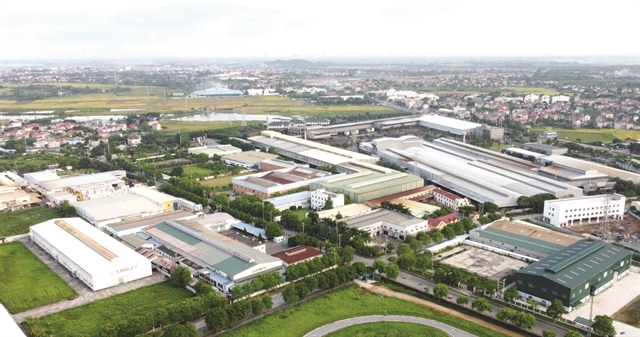 |
| Phú Thọ Province has 28 industrial parks, 17 of which are operational, with an occupancy rate of 70.2 per cent. — VNA/VNS Photo |
Digital momentum
Alongside institutional reform and improvements to the investment climate, Phú Thọ has identified science, technology, innovation and digital transformation as key drivers of future economic growth.
According to Hoàng Mạnh Du, deputy director of the Phú Thọ Department of Science and Technology, the province is applying science and technology not only to public administration, but also to improving production performance, business development and corporate competitiveness.
In addition to investing in digital infrastructure and digital data systems, the province is promoting research and technology transfer in sectors with comparative advantages. These sectors include high-tech agriculture, biotechnology, natural resource management, heritage conservation and tourism development.
Businesses are also receiving support to upgrade technologies, develop intellectual property assets and commercialise innovative products, contributing to the emergence of a local innovation ecosystem.
One of the province's most significant achievements has been the development of its digital infrastructure.
Fibre-optic broadband now covers 100 per cent of communes and wards. Fourth-generation (4G) mobile networks cover approximately 98 per cent of the province's land area, while fifth-generation (5G) services reach around 61 per cent of the population.
The province has also eliminated all mobile coverage "dead zones" under the criteria established by the Ministry of Science and Technology.
This provides a solid foundation for developing digital government, a digital economy and a digital society.
In administrative reform, the province has established a unified administrative procedure processing system connecting all levels of government with national databases, from the provincial level down to communes.
A special campaign to clear overdue administrative applications has virtually eliminated backlogged cases, while comprehensive electronic document processing and effective use of digital data have significantly improved service quality for both citizens and businesses.
The digital economy has also become an increasingly important growth engine. It now accounts for about 22.7 per cent of the province's GRDP, placing Phú Thọ among the country's leading localities in digital economic development.
Numerous technology companies and electronics manufacturers have expanded rapidly, making substantial contributions to both economic growth and export revenues.
Meanwhile, cashless payment systems, e-commerce, and digital transformation initiatives continue to expand across the province.
Many digital transformation indicators have also delivered positive results. More than 90 per cent of administrative records are now processed online, digitised and supported through data reuse.
Furthermore, all administrative procedures under the authority of provincial and local governments can now be handled regardless of administrative boundaries anywhere within the province.
"Science and technology should not only support public administration, but also become a direct driver of economic growth," Du said.
"The province will therefore continue investing in digital infrastructure and shared data platforms, encourage businesses to adopt new technologies, strengthen the local innovation ecosystem and develop the provincial innovation centre into a hub connecting enterprises, universities, research institutes and investors."
With governance reform, digital transformation and investment promotion advancing in parallel, Phú Thọ is seeking to transform administrative efficiency into a long-term competitive advantage. Sustaining that momentum will be critical as the province works to attract higher-quality investment, strengthen regional connectivity and establish itself as one of northern Việt Nam's leading growth centres. — VNS
Economy
 Economy
 Economy
 Economy
 Economy
 Economy
 Economy
 Economy
 Economy
 Economy
 Economy
 Economy
 Economy
 Economy
 Economy