 Economy



84 individuals investigated for transnational online frauds
1.
|
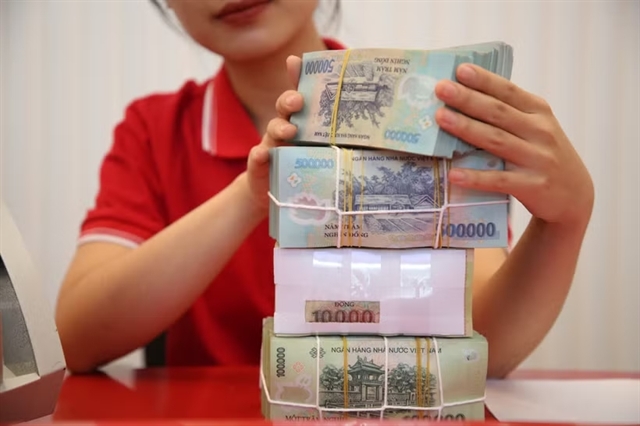
| The amendments are based on the policies and resolutions of the Party and the Government, aiming to promote high economic growth during the 2026-2030 period. — VNA/VNS Photo |
HÀ NỘI — The State Bank of Vietnam (SBV) has proposed raising the maximum ratio of short-term capital used for medium and long-term lending by credit institutions from the current 30 per cent to 40 per cent.
If approved, the new regulation would give credit institutions more room to provide capital to businesses and investment projects to help promote high economic growth in the next few years, while increasing flexibility in the SBV’s monetary policy management.
The proposal has been made under a draft circular amending and supplementing several articles of Circular 22/2019/TT-NHNN, which focuses on limits and safety ratios in the operations of banks and branches of foreign banks in Việt Nam. Public comment is being sought on the proposed draft.
According to the roadmap stipulated in Circular 22, the maximum ratio of short-term capital used for medium and long-term lending reduced from 40 per cent to 30 per cent from October 1, 2023, to control maturity risk and ensure liquidity safety for the banking system.
However, amid increasing demand for medium and long-term capital in the economy, the SBV said that adjusting the ratio back to 40 per cent would help credit institutions be more proactive in using short-term funds to provide credit to businesses and investment projects.
According to the SBV, the amendments are based on the policies and resolutions of the Party and the Government, aiming to promote high economic growth during the 2026-2030 period.
If enacted, the new regulations will expand the banking system's capital supply capacity, thus contributing to meeting the medium and long-term capital needs of the economy.
In addition to relaxing the short-term capital use ratio, the draft also amends the regulation on how to determine total deposits when calculating the loan-to-deposit ratio.
Under current regulations, when determining total deposits, credit institutions must exclude all demand deposits of the State treasury and exclude 80 per cent of the treasury's time deposits.
The new draft circular retains the exclusion of demand deposits from the State treasury, but adds a more flexible mechanism for time deposits. In addition to the current 80 per cent exclusion rate, the SBV’s governor can decide to apply a different rate depending on market developments in each period.
According to the SBV, this amendment aims to create additional tools for managing monetary policy, helping the central bank be more proactive in balancing liquidity and supporting credit growth when necessary.
Both amendments aim to increase the operating space for credit institutions while still ensuring system safety.
Increasing the ratio of short-term capital used for medium and long-term lending will help banks retain more resources to meet the investment capital needs of businesses, especially as many manufacturing, infrastructure and real estate sectors require more long-term capital.
Meanwhile, adjusting the method of calculating total deposits will help the regulatory authority be more flexible in managing safety ratios, in line with developments in the money market and economic growth goals.
The draft also stipulates that after the new circular takes effect, some related provisions in Circular 08/2020/TT-NHNN and Circular 08/2026/TT-NHNN will be repealed to ensure the consistency of the legal system.
If enacted, these amendments are expected to create more room for credit in the banking system, improve businesses' access to medium- and long-term capital and enhance the SBV's role in managing monetary and credit policies, helping to support economic growth targets. — BIZHUB/VNS
Economy
 Economy
 Economy
 Economy
 Economy
 Economy
 Economy
 Economy
 Economy
 Economy
 Economy
 Economy
 Economy
 Economy
 Economy