 Economy



Sơn La holds second coffee festival, targeting stronger businesses in future
1.
|
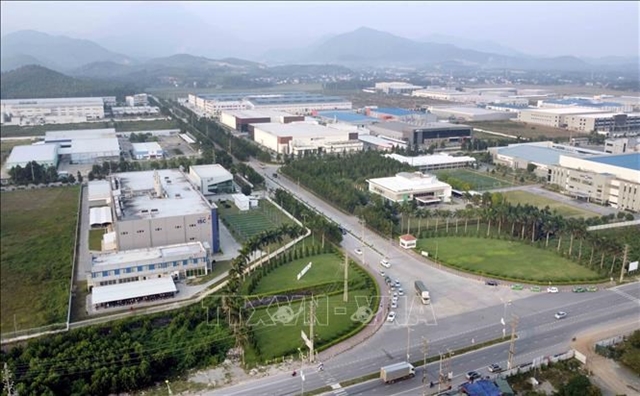
| A view of Bình Xuyên Industrial Park in the northern province of Phú Thọ. — VNA/VNS Photo |
PHÚ THỌ — Amid the ongoing global supply chain realignment, the northern province of Phú Thọ is stepping up efforts to attract new-generation foreign direct investments (FDI) characterised by advanced technology, environmental sustainability and high value-added production.
Following its merger with Vĩnh Phúc and Hòa Bình last year, Phú Thọ has become the largest province in the northern midland and mountainous region. Holding a strategic position in the Kunming (China) –Lào Cai–Hà Nội–Hải Phòng economic corridor, the province serves as a gateway linking the northwestern region with Hanoi and other major economic centres in northern Việt Nam.
The province has planned 58 industrial parks covering more than 14,000 hectares, of which 28 are already operational or under development. This extensive industrial land bank provides a strong foundation for attracting large-scale projects in electronics, semiconductors, electric vehicles (EVs), supporting industries and modern logistics.
Another competitive advantage lies with its workforce of more than 1.5 million people and labour costs that remain relatively competitive compared with other major industrial hubs in the northern region. These factors offer favourable conditions for the development of high-tech manufacturing, precision engineering, electronics and automation industries.
According to the provincial Industrial Zones Authority, Phú Thọ is currently home to 734 valid FDI projects with a combined registered capital of approximately US$12.8 billion from 27 countries and territories. The FDI sector contributes more than 45 per cent of the province’s GRDP growth, accounts for 55–60 per cent of industrial output and generates 70–75 per cent of export turnover.
For the 2026–30 period, Phú Thọ aims to attract between $7-8 billion in new FDI, with 60–70 per cent directed toward new-generation projects associated with high technology, innovation and green development.
The province targets a disbursement rate of over 80 per cent of registered investment capital, while around 80 per cent of newly licensed projects are expected to be concentrated in high-tech sectors, including electronics, semiconductors, automobiles, electric motorcycles, precision engineering, medical equipment, renewable energy and supporting industries.
It also aims to train a minimum of 20,000 highly skilled technical workers to meet the needs of advanced industries and plans to establish at least one high-tech industrial park, three supporting-industry parks, three specialised industrial ones and a regional innovation centre. In addition, at least 100 domestic enterprises are expected to join the supply chains of FDI companies.
According to Chairman of the provincial People’s Committee Trần Duy Đông, Phú Thọ will prioritise attracting multinational corporations and investors with strong financial capacity, advanced technologies, modern management expertise and long-term commitments.
Alongside investment attraction efforts, the province will continue to streamline administrative procedures, accelerate approvals related to investment, land, construction, environment and taxation, and expand digital governance and fully online public services to create a transparent and business-friendly environment.
Japan, the Republic of Korea, the US, European countries and Singapore have been identified as key target markets in its strategy to attract next-generation FDI.
At the same time, Phú Thọ is strengthening workforce development through closer cooperation between educational institutions and businesses, while encouraging FDI enterprises to participate in vocational training, skills development and technology transfer. The province is also supporting domestic enterprises in upgrading technology, improving product quality and meeting international standards, thereby increasing localisation rates and domestic value added. — VNS
Economy
 Economy
 Economy
 Economy
 Economy
 Economy
 Economy
 Economy
 Economy
 Economy
 Economy
 Economy
 Economy
 Economy
 Economy