 Economy



Understanding skin ageing key to more effective rejuvenation, dermatologist says
1.
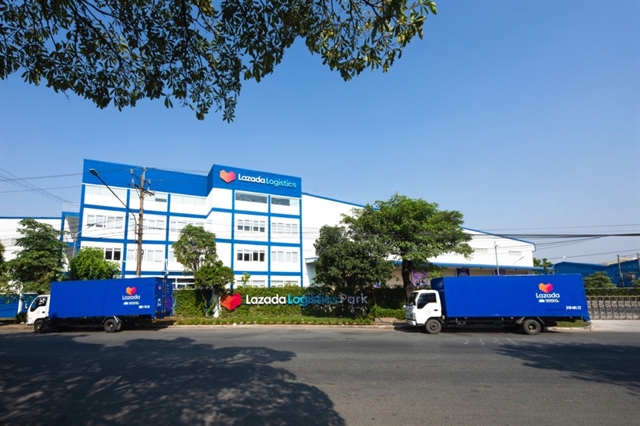 |
| Lazada Logistics Park in HCM City. — Photo vneconomy.vn |
HÀ NỘI — Behind Việt Nam’s rapid e-commerce growth lies mounting operational pressure on both platforms and online sellers, with logistics remaining one of the market’s biggest bottlenecks.
Although delivery times have improved significantly in recent years, warehousing and fulfilment costs remain high, particularly for small orders and deliveries to rural or mountainous areas.
This is why major platforms are accelerating the development of self-operated logistics ecosystems, such as SPX Express and Lazada Logistics, to gain greater control over supply chains and optimise costs.
Beyond logistics, rising platform-related expenses are also placing growing pressure on online merchants. During the early stages of development, e-commerce platforms attracted sellers through subsidies, fee reductions and aggressive promotional support. However, as the market shifts toward profit-driven competition, an increasing number of new fees have emerged.
Sellers are now required not only to pay platform commissions, but also to spend more on advertising, product visibility, promotional campaigns, livestream activities and engagement-boosting tools.
Many small merchants say operating costs are now significantly higher than in previous years, while dependence on platform algorithms and policies has reduced their ability to operate independently.
The pressure is particularly severe for small retailers. Without sufficient budgets for advertising or participation in major platform campaigns, their ability to reach customers declines sharply. This has widened the gap between professional branded sellers and small household businesses.
Data from Metric illustrates this trend. Although Shop Mall stores accounted for only around 2.47 per cent of all active stores, they generated as much as 32.4 per cent of total sales on Shopee, Lazada and TikTok Shop in the first quarter of this year.
While the number of Shop Mall stores declined by 13 per cent, revenue from the segment still surged by 53 per cent, indicating that sales are increasingly concentrated among larger brands with stronger operational capabilities and higher transparency standards.
According to SHS Research, Việt Nam’s e-commerce market could reach nearly US$50 billion by 2028 and approximately $70 billion by 2030 if annual growth of around 20 per cent is maintained.
Việt Nam would then become Southeast Asia’s third-largest online retail market.
Growth potential remains substantial as e-commerce expands beyond traditional sectors such as fashion, cosmetics and electronics. Fresh food, groceries and essential consumer goods are increasingly gaining momentum online.
The beauty segment continued to lead in revenue with VNĐ24.4 trillion ($933 billion) in the first quarter of this year, while women’s fashion recorded remarkable growth of nearly 75 per cent.
Domestic brands are also leveraging their strong understanding of the local market, rapid trend adaptation and digital content strategies to expand market share.
However, sustaining long-term growth will require more than simply attracting additional consumers. The market also needs a more transparent and balanced operating environment between platforms and sellers.
The National Assembly’s passage of the E-commerce Law is considered an important step toward establishing new “rules of the game” for the digital economy.
The law is expected to improve transparency, strengthen consumer protection, combat counterfeit goods and trade fraud, and provide a legal framework for cross-border e-commerce.
Việt Nam’s e-commerce market reached $31 billion last year, more than double the level recorded in 2020, according to SHS Research.
The sector now accounts for roughly 10 per cent of the country’s total retail sales and consumer service revenue, while contributing about two-thirds of the national digital economy.
With an annual growth rate of 20–25 per cent, Việt Nam remains among the world’s fastest-growing e-commerce markets and is steadily emerging as one of Southeast Asia’s most dynamic digital consumer hubs. — VNS
Economy
 Economy
 Economy
 Economy
 Economy
 Economy
 Economy
 Economy
 Economy
 Economy
 Economy
 Economy
 Economy
 Economy
 Economy