 Economy


Tighter controls on livestream sales
1.
 |
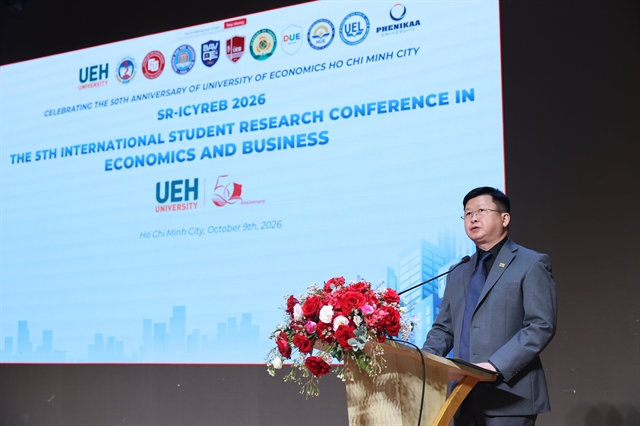
| A view of the World Financial Innovation Series 2026. — VNS Photo |
Thu Hà
HÀ NỘI — Việt Nam’s booming digital finance market is creating major opportunities for banks and fintech firms, but experts said that rising cyber threats and increasingly sophisticated artificial intelligence (AI)-powered attacks are putting growing pressure on security and risk management.
Speaking at the two-day World Financial Innovation Series (WFIS) in Hà Nội on Tuesday, experts said digital transformation and innovation were opening up tremendous development opportunities for the finance and banking sector as Việt Nam aims to become a digital-first economy by 2030. At the same time, the rapid shift was placing increasingly high demands on governance, system security and resilience in the digital environment.
Đào Minh Tú, Vice Chairman and Secretary General of the Vietnam Banks Association, said: “Việt Nam has emerged as one of the fastest-growing digital financial markets in Southeast Asia in recent years.
"The digital transformation in the banking sector is progressing rapidly, not only in expanding digital banking services and electronic payments, but also in profound changes to operational models, governance and customer experience.
“Besides, trends such as AI-powered banking, open banking, cloud computing and intelligent data governance are increasingly becoming strategic priorities for many financial institutions in Việt Nam. Areas such as AI applications in banking, modernisation of technological infrastructure, enhanced cybersecurity and fraud prevention are receiving particular attention.”
Tú cited data from the State Bank of Vietnam showing that more than 95 per cent of credit institutions have implemented or are implementing digital transformation strategies, while nearly 80 per cent of financial transactions in Việt Nam are conducted through digital channels.
The figures show that the finance and banking industry is gradually shifting from a service digitisation model to a smart banking model operating on data and comprehensive digital connectivity.
However, Tú warned that the rapid pace of digitalisation was also increasing exposure to cyber risks.
“Along with this rapid development comes increasing pressure on risk management and cybersecurity. In the finance and banking sector, the risks are becoming even more apparent as attack methods are increasingly focusing on data exploitation and identity impersonation in the digital environment,” he said.
According to Visa’s Asia-Pacific Cybersecurity Risk Report released in April 2026, AI-powered attacks are rapidly increasing in both scale and sophistication, while the expanding digital financial ecosystem is making cybersecurity risks more complex.
Meanwhile, the World Economic Forum’s 2026 Global Cybersecurity Outlook found that 65 per cent of large organisations now consider third-party and supply chain vulnerabilities to be the biggest challenge to their cybersecurity resilience.
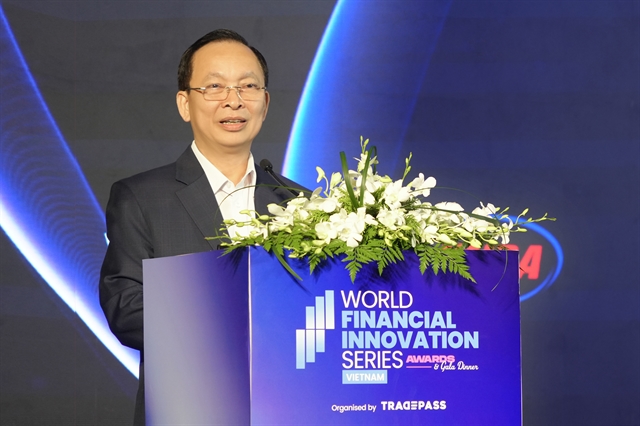 |
| Vice Chairman and Secretary General of the Vietnam Banks Association Đào Minh Tú speaks at the event. — VNS Photo |
As the financial and banking industry undergoes a profound transformation, Tú said Vietnamese banks would have a tremendous opportunity to accelerate modernisation, expand access to financial services, improve operational efficiency, optimise costs and gradually strengthen their position in the regional digital financial value chain.
Lê Anh Dũng, Deputy Director of the State Bank of Vietnam’s Payment Department, said the central bank would continue improving policy mechanisms and legal frameworks to promote digital transformation in the banking industry. This includes promulgating the Law on Payment Systems, amending and supplementing a decree on non-cash payments and implementing a decree on a fintech regulatory sandbox.
Regarding technological infrastructure serving e-commerce, Dũng said the connection between the banking digital ecosystem and other industries and sectors would also be upgraded and expanded.
“Coordination with ministries and sectors to upgrade technical infrastructure and standardise databases in each industry and field will be strengthened to facilitate integration, connection and information sharing with banks and payment service providers to expand the digital ecosystem and develop digital banking and payment services,” Dũng said.
The central bank has also developed plans for a shared data warehouse to promote national data connectivity and strengthen personal data protection.
Dũng added that preventing deepfake fraud and monitoring AI models in banking would also be priorities as AI applications continue to expand.
Financial reforms
Dr Cấn Văn Lực, a member of the National Fiscal and Monetary Advisory Council, told the event that reforming the financial sector would play a key role in Việt Nam’s new economic growth model. To achieve GDP growth of 10 per cent during the 2026-2030 period, Việt Nam would require total social investment capital of US$280 billion.
“Financial sector reforms need to address current constraints and facilitate its development to enable it to raise and allocate financial resources more effectively for the country’s development goals,” Lực noted.
According to Lực, reform priorities should include institutional reform, improving coordination between fiscal and monetary policies, addressing issues related to the size, structure and State ownership of financial institutions, accelerating digitalisation in the financial sector and developing green finance.
At the event, Anthony Morris, Chief Industry Transformation Officer at US-based financial technology company nCINO, spoke about unlocking credit potential by accelerating commercial and SME lending to support Việt Nam’s growth.
According to Morris, a single credit lifecycle platform, from prospecting to credit monitoring, combined with governed AI and high operational efficiency, can help lower the cost of originating loans for businesses.
He added that proactive credit monitoring could help manage risks, optimise portfolio performance and deepen customer relationships, while seamless digital experiences across all business lines would help deliver credit to borrowers more efficiently through AI-powered systems with built-in credit risk management.
WFIS 2026, organised by the Vietnam Banks Association (VNBA) and India’s TradePass, brought together more than 500 key decision-makers from leading banks, insurance firms, digital lenders and microfinance institutions to explore the future of Việt Nam’s digital finance sector. — BIZHUB/VNS
Economy
 Economy
 Economy
 Economy
 Economy
 Economy
 Economy
 Economy
.jpg) Economy
Economy
 Economy
 Economy
 Economy
 Economy
 Economy
 Economy