 Economy



LOAN Foundation awards scholarships to disadvantaged students on 10th anniversary
1.
|
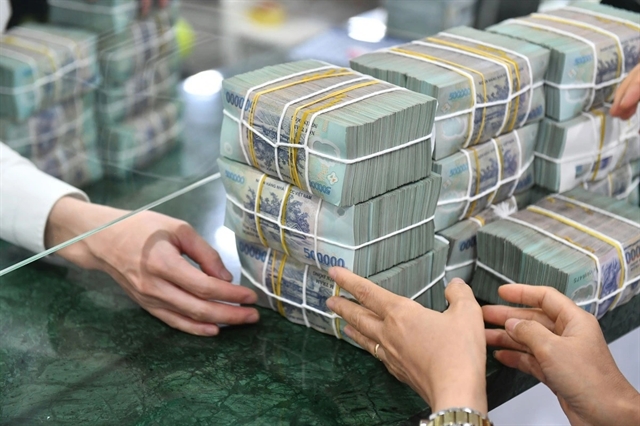
| For State-owned lenders, Treasury deposits provide an important liquidity buffer, easing reliance on funding from individuals and businesses during tighter monetary conditions. — Photo cafef.vn |
HÀ NỘI — The State Treasury deposited more than VNĐ650 trillion (US$21.3 billion) at State-owned commercial banks by the end of the first quarter of 2026, according to banks’ financial statements.
Consolidated first-quarter 2025 statements from Vietcombank, VietinBank and BIDV showed that the Treasury’s total deposit balance at the three lenders rose by nearly 39 per cent compared with the end of 2025. The sum represents a substantial and comparatively low-cost source of funding for the State-owned banking group.
Vietcombank held the largest balance. As of the end of the first quarter of 2026, the Treasury deposited nearly VNĐ189.2 trillion, up 39 per cent against the end of last year.
BIDV reported the Treasury’s deposit at the bank reached VNĐ188.6 trillion, including nearly VNĐ3.4 trillion in non-term funds. The value surged by 39 per cent against the end of 2025.
In practice, Treasury deposits tend to be seasonal and closely tied to the pace of public investment spending. When disbursement slows, funds accumulate in the banking system. When spending accelerates, balances can be drawn down quickly.
For State-owned lenders, Treasury deposits provide an important liquidity buffer, easing reliance on funding from individuals and businesses during tighter monetary conditions. They are also relatively inexpensive compared with many other funding channels.
Such sizeable balances can bolster key liquidity indicators, including liquidity reserve ratios and short-term solvency metrics. With a stable inflow of public funds, banks face less pressure to raise deposit rates to compete for retail money, helping keep funding costs in check and creating room to lower lending rates to support businesses.
However, Treasury funds are inherently linked to the timing of State budget revenues and expenditures as well as public investment plans. Balances can therefore fluctuate sharply over short periods. Banks cannot treat this as a permanently stable long-term funding source and must continue to manage liquidity prudently, align maturities carefully and deploy capital conservatively.
Notably, State-owned banks are under significant liquidity and loan-to-deposit ratio (LDR) pressure due to the regulatory exclusion of State Treasury deposits from the calculation of total deposits. Specifically, Circular No. 26/2022/TT-NHNN officially excludes State Treasury time deposits from total deposit calculations when determining the LDR from this year. — BIZHUB/VNS
Economy
 Economy
 Economy
 Economy
 Economy
 Economy
.JPG) Economy
Economy
 Economy
 Economy
 Economy
 Economy
 Economy
 Economy
 Economy
 Economy

.jpg)