 Economy



Vietnamese students place confidence in Việt Nam-China cooperation
1.

|
| Hoa Lư International Border Gate in Đồng Nai Province, connecting Việt Nam and Cambodia. — Photo vneconomy.vn |
HÀ NỘI — With Cambodia strictly tightening customs clearance procedures for imported goods from other countries since the beginning of May 2026, including Việt Nam, authorities said businesses need to proactively adapt the new regulations.
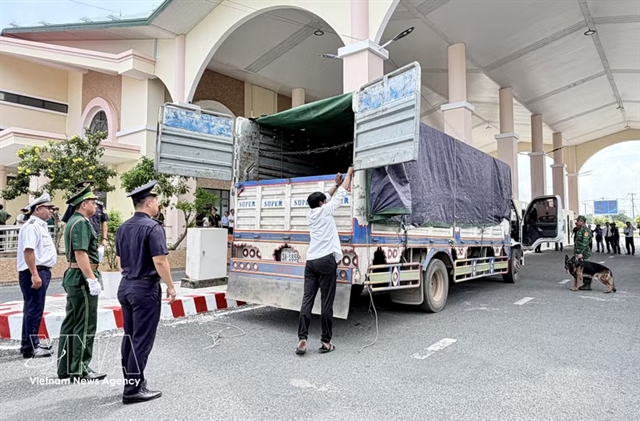
According to the Vietnam Trade Office in Cambodia, only shipments with complete and valid paperwork are allowed to pass through the Cambodian border. Mandatory paperwork includes certificates of origin, quarantine certificates and other specialised documents depending on each shipment.
Notably, control measures are not limited to Cambodian border checkpoints but extend inland. Currently, customs forces have been deployed to conduct rigorous inspections of vehicles that have completed customs clearance and are traveling into Cambodian territory.
In addition, Cambodian authorities have also tightened penalties for oversized and overloaded vehicles, which has caused many Cambodian transport partners to temporarily suspend contracts for transporting goods from Việt Nam because Cambodian importers haven’t yet adapted to the new tax and fee levels and stringent procedural requirements.
The Vietnam Trade Office in Cambodia said that this move not only prolongs customs clearance times but also poses significant challenges for goods exported from Việt Nam to the market.
Given this situation, the office advises localities, associations and businesses to proactively plan and closely monitor the border situation to adjust production and business plans accordingly.
Besides, exporters must ensure that exported goods have complete paperwork, and effectively control the quality and packaging of exported goods to avoid unnecessary losses.
In the long term, businesses need to shift their business methods from informal to formal trade, meeting the increasingly stringent management standards of importing countries for sustainable development. — BIZHUB/VNS
Economy
 Economy
 Economy
 Economy
 Economy
 Economy
 Economy
 Economy
 Economy
 Economy
 Economy
 Economy
 Economy
 Economy
 Economy