 Economy



Quy Nhơn Dialogue on Climate and Transition to provide platform for open discussion
1.
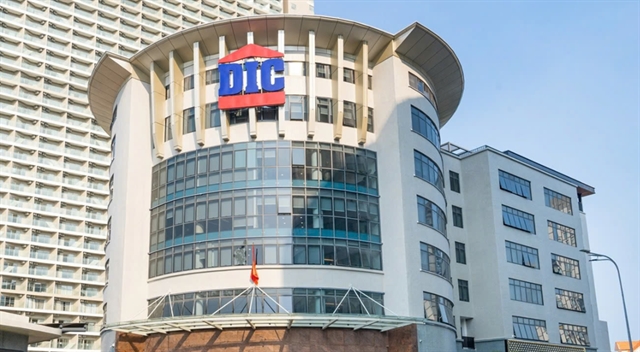 |
| DIC Corp's headquarters in HCM City. — Photo dic.vn |
HÀ NỘI — The real estate market in the first quarter of 2026 is showing a clear divergence between rising expectations of recovery and the financial reality faced by many developers, with losses, negative cash flows and tightening liquidity continuing to weigh on the sector.
A number of listed property companies reported weak or even negative earnings during the period, highlighting what analysts describe as a systemic slowdown rather than isolated cases. The lack of new project handovers and subdued market liquidity have significantly reduced revenue streams, while operating and financial costs remain elevated.
DIC Corp posted net revenue of nearly VNĐ145 billion (US$5.5 million) in the first quarter, down 5 per cent year-on-year, largely due to the absence of income from semi-finished property sales, which had contributed more than VNĐ26 billion in the same period last year.
Meanwhile, total financial, selling and administrative expenses rose by 11 per cent to nearly VNĐ85 billion, resulting in a net loss of almost VNĐ7 billion. Although the loss narrowed compared to more than VNĐ35 billion a year earlier, the company has revised its 2026 targets downward, setting consolidated revenue at VNĐ3 trillion and pre-tax profit at VNĐ600 billion.
The situation appears more severe at LDG Investment, where revenue turned negative at more than VNĐ9.8 billion due to deductions, compared with positive revenue of VNĐ77 billion a year earlier. The company reported a quarterly loss of over VNĐ16 billion, bringing accumulated losses to nearly VNĐ1.3 trillion, equivalent to 49 per cent of charter capital.
Operating cash flow at LDG also reversed sharply, recording a negative VNĐ1.6 trillion compared with a positive VNĐ183 billion in the same period last year. Total assets declined to over VNĐ8 trillion, with a large portion tied up in receivables and other short-term assets.
Even companies with revenue growth are not immune to profitability pressures.
Danang Housing Investment Development reported revenue of nearly VNĐ17 billion, up 241 per cent year on year, but still posted a net loss of VNĐ630 million, compared with a profit of nearly VNĐ45 billion a year earlier.
The decline was attributed mainly to increased provisions for securities investments, while operating cash flow was negative at VNĐ223 billion. Cash and cash equivalents dropped sharply by 77 per cent to just over VNĐ60 billion.
New strategies
Amid these challenges, some firms have turned to financial investments to support earnings.
Lideco recorded net revenue of just VNĐ4.5 billion, with real estate contributing less than VNĐ350 million. However, financial income of nearly VNĐ14 billion helped lift net profit to almost VNĐ15 billion, up 130 per cent year on year.
Lideco's trading securities portfolio had a cost value of about VNĐ576 billion, with a fair value of VNĐ644 billion at the end of the quarter, implying an unrealised gain of roughly 12 per cent. Its largest holding was in Hoang Huy Investment Financial Services' shares.
A similar trend has been seen at Danang Housing, where the company expanded its securities portfolio to over VNĐ600 billion, focusing on stocks such as Gelex Group (GEX), MBBank (MBB), VPBank (VPB) and Vinhomes (VHM), though this approach carries risks if financial markets turn volatile.
Overall, the first quarter reflects a deeply fragmented landscape, with only a small number of firms showing adaptability while the majority continued to face pressure from weak cash flows, high costs and inventory backlogs. This backdrop is seen as a key basis for assessing the outlook in the second quarter, often described as a pivotal period for the year.
According to Nguyễn Thị Kim Thoa, director of Business Development & Product at Dat Xanh Service, the housing market is expected to see more positive developments with an increase in new supply, although the extent of recovery will depend on multiple factors.
In an optimistic scenario, supply could rise by 40–50 per cent and prices by 10–15 per cent, with floating interest rates at 9–11 per cent and absorption rates reaching 50–60 per cent.
A more probable scenario suggests moderate growth, with supply increasing by 30–40 per cent, prices rising 2–5 per cent, interest rates at 10–12 per cent and absorption at 30–40 per cent.
Under a more challenging scenario, where capital costs remain high and monetary policy stays tight, supply growth may be limited to 20–30 per cent, prices could remain flat or decline slightly, interest rates may climb to 12–14 per cent and absorption could fall below 20 per cent.
From a market perspective, Đinh Minh Tuấn, Southern Regional director at PropertyGuru Vietnam, described the sector as being in a transitional state, neither declining further nor entering a phase of strong growth.
Buyer interest improved compared with the beginning of the year but remained lower than in the same period previously, he told vnbusiness.vn, noting that demand is now driven more by end-users and long-term investors rather than speculative capital. — BIZHUB/VNS
Economy
 Economy
 Economy
 Economy
 Economy
 Economy
 Economy
 Economy
 Economy
 Economy
 Economy
 Economy
 Economy
 Economy
 Economy