 Economy


NA must embody spirit of action, innovation, development: top legislator
1.

|
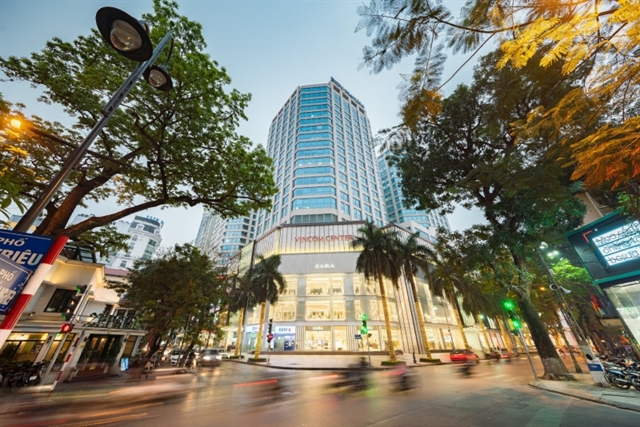
| A corner of Hà Nội. The city aims for over 10 per cent economic growth in the second quarter of this year. — VNA/VNS Photo Lê Đông |
HÀ NỘI — Chairman of the Hà Nội People’s Committee Vũ Đại Thắng chaired the committee’s regular meeting on May 5, during which he underlined the requirement for the city to achieve growth of over 10 per cent in the second quarter to fulfil the target of double-digit development for the whole of 2026.
Thắng called for the swift implementation of new mechanisms and policies, particularly the revised Capital Law, through detailed action plans, describing this as the key step to translate institutional advantages into tangible growth and help the capital achieve double-digit expansion for this year.
Despite favourable conditions, Hà Nội’s growth and economic restructuring have yet to meet expectations, he pointed out, calling for clearer accountability across sectors, particularly in production, urban development and construction.
He stressed that over 10 per cent growth in the second quarter is a target that will require more decisive and coordinated measures, especially in boosting public investment, developing processing industries, high technology and infrastructure.
The chairman also highlighted the need for strong administrative reform, reducing intermediary steps and moving towards a “single focal point, single process” mechanism to shorten project timelines.
For public investment projects, agencies should quickly address procedural, pricing, and contractual hurdles so that work can start once the land is ready, preventing delays even when construction conditions are in place.
Regarding the revised Capital Law, Hà Nội aims to finalise relevant resolutions and mechanisms by June 15 to enable enforcement when the law takes effect on July 1, 2026. The official affirmed that the city already has sufficient mechanisms and policies, and that decisive, coordinated execution will be key to achieving its growth targets.
At the meeting, the municipal People’s Committee reviewed and approved reports on socio-economic performance in April and the first four months of 2026, the enforcement of the revised Capital Law, and major proposals, including a low-emission zone plan within Ring Road 1 and adjustments to fees for the use of pavements and roadways.
Notably, participants examined a draft plan to pilot a “socialist commune/ward” model in Hà Nội for the 2026-30 period and beyond.
The municipal Department of Finance reported that state budget revenue as of April 28 reached VNĐ294.2 trillion (US$11.17 billion), fulfilling 45.3 per cent of the annual target and equivalent to 98.2 per cent of the same period last year. Domestic revenue totalled nearly VNĐ280 trillion, up 3.3 per cent, while collections from foreign trade reached VNĐ13.2 trillion, up 21 per cent.
The city is accelerating export support by addressing business bottlenecks related to markets and logistics, boosting trade promotion, and facilitating cross-border e-commerce. It is also rolling out immediate and longer-term growth promotion measures while intensifying efforts to resolve constraints in public investment disbursement, site clearance and construction materials, with agencies tasked to address project-specific issues on a rolling basis.
Major infrastructure projects such as ring roads, bridges over the Red River, key highways and flood-control systems, need dedicated inter-agency task forces to keep things running smoothly, with clear timelines for land handover, compensation, resettlement, work approval and capital disbursement, according to local officials. — VNA/VNS
Economy
 Economy
 Economy
 Economy
 Economy
 Economy
 Economy
 Economy
 Economy
 Economy
 Economy
 Economy
 Economy
 Economy
 Economy