 Economy



LANDMARK Launches ‘Destination CENTRAL’: A District-Wide Invitation to Explore the Dynamism, Luxury, and Soul of Central
1.
|
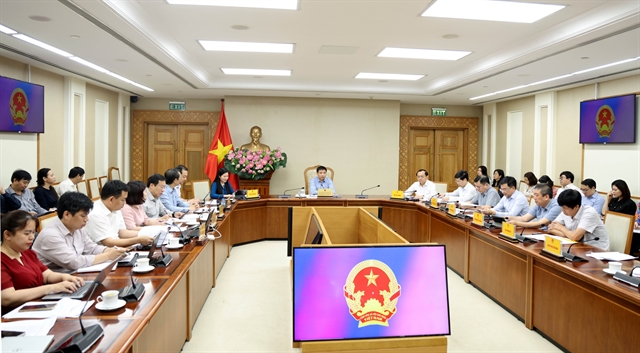
| Deputy Prime Minister Nguyễn Văn Thắng chaired the meeting on price management on the morning of April 23. — Photo baochinhphu.vn |
HÀ NỘI — The Vietnamese Government has stepped up efforts to stabilise prices this year, as global volatility and rising energy costs continue to exert pressure on the domestic economy.
At a price management steering committee meeting on April 23, Deputy Prime Minister Nguyễn Văn Thắng stressed the need to prevent businesses from taking advantage of cost fluctuations to raise prices unreasonably, while maintaining macro-economic stability.
According to Deputy Minister of Finance Lê Tấn Cận, global economic conditions have become more challenging, with geopolitical tensions and energy market disruptions adding to inflationary risks.
He said that the conflict in the Middle East has disrupted key shipping routes, triggering a surge in global oil prices and pushing up logistics costs.
These developments have fed into domestic price pressures, particularly for fuel, transportation and essential goods, raising concerns over imported inflation.
Inflation in 2026 is being closely monitored, with different scenarios placing it in a range of 4.5 per cent to 5.5 per cent, while the central bank estimates average inflation at around 5 per cent ±0.5 per cent.
In response, the Government has rolled out a series of fiscal and administrative measures aimed at supporting households and businesses while containing inflation.
These include extending a 2 per cent reduction in value-added tax, continuing exemptions and reductions for dozens of fees and charges, and allocating additional budget resources to support the petroleum price stabilisation fund.
Authorities have also implemented targeted interventions in key sectors. Ministries have been tasked with reviewing price declarations, strengthening inspections and encouraging service providers to reduce additional costs that are not directly linked to fuel price increases.
At the same time, price-regulated goods and services, such as education materials and maritime services, have seen adjustments to ease cost pressures.
Deputy PM Thắng emphasised the importance of tightening oversight in sectors most affected by input cost fluctuations, including transport, logistics, construction materials and food.
"Businesses must strictly comply with regulations on price declaration and listing, and must not take advantage of cost fluctuations to raise prices unreasonably," he said.
He called on ministries and local authorities to strengthen market surveillance, crack down on hoarding and price manipulation, and ensure transparency in pricing mechanisms.
Authorities were also instructed to closely monitor supply-demand dynamics, particularly for essential goods such as fuel, electricity and food, to avoid shortages that could trigger price spikes.
Ensuring stability and balance
Maintaining stable supply chains remains a key priority in the Government's price management strategy.
Officials stressed the need to ensure adequate supply of essential commodities across regions, while balancing domestic consumption needs with export activities.
Local governments have been asked to actively implement market stabilisation programmes tailored to local conditions, especially for essential goods that directly affect people's livelihoods.
At the same time, ministries are required to improve coordination and data sharing to better track price movements and respond promptly to market developments.
Looking ahead, the Government is expected to continue a proactive and flexible approach to price management, combining fiscal tools, regulatory oversight and market-based mechanisms.
Deputy PM Thắng urged agencies to build on past experience, particularly in handling unexpected shocks, and to enhance policy coordination to manage inflation risks effectively.
He also highlighted the importance of transparent communication to guide market expectations and maintain public confidence in price management efforts. — BIZHUB/VNS
Economy
 Economy
 Economy
 Economy
 Economy
 Economy
 Economy
 Economy
 Economy
 Economy
 Economy
 Economy
 Economy
 Economy
 Economy