 Economy



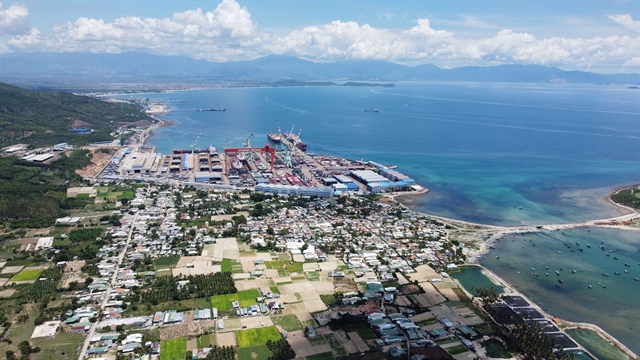
Quy Nhơn Dialogue on Climate and Transition to provide platform for open discussion
1.
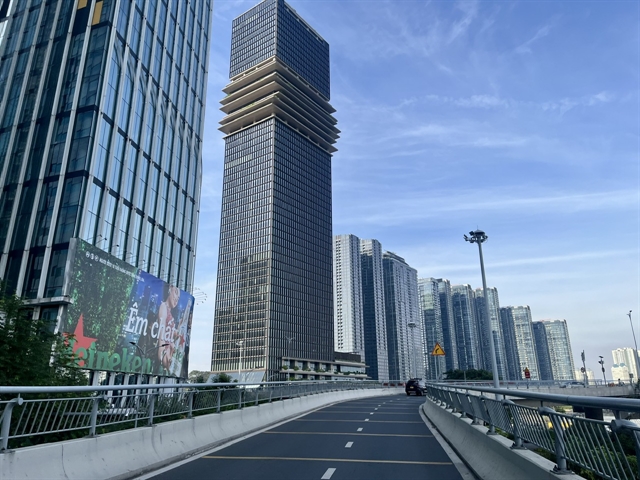 |
| Real estate development in downtown HCM City. Policymakers are weighing tighter credit controls against the need to sustain growth. — VNS Photo Bồ Xuân Hiệp |
HCM CITY — Việt Nam’s move to tighten oversight of real estate lending is aimed at managing risks rather than restricting credit, officials and industry executives said, as authorities seek to balance financial stability with growth.
The issue was discussed at a conference in HCM City last week, where policymakers and business leaders called for a more targeted approach to property financing.
The debate comes as Việt Nam’s economy grew 7.83 per cent year-on-year in the first quarter, its fastest pace in 16 years, although rising geopolitical tensions could cloud the outlook.
Real estate, which accounts for about 12 per cent of gross domestic product, remains a key driver of growth with strong links to construction and other sectors.
The State Bank of Vietnam (SBV) has set a credit growth target of around 15 per cent for 2026 and introduced a rule that real estate lending at banks must not expand faster than overall credit compared with end-2025 levels.
Officials say the policy is designed to contain risks in a sector prone to boom-bust cycles, while still allowing funding for viable projects.
“Credit is still available for legitimate needs, especially housing,” said Nguyễn Lê Nam, director of the Retail Banking Division at Asia Commercial Bank (ACB). “Banks are ready to lend to projects that are transparent and financially sound.”
Industry representatives warned that broad tightening could have unintended consequences.
Lê Hoàng Châu, chairman of the HCM City Real Estate Association, said housing supply, particularly social and affordable segments, remains constrained despite strong demand.
In HCM City, the country’s largest economic centre, only about 17,000 social housing units were completed in 2021-2025, well below a target of nearly 200,000 units for 2026-2030.
“Credit policy should support segments that meet real demand,” he said.
Executives also pointed to the sector’s heavy reliance on bank financing. Homebuyers typically borrow up to 70 per cent of a property’s value over 10-20 years, making the market sensitive to interest rate movements.
 |
| A bank staff handles Vietnamese đồng in HCM City. Credit policy is being calibrated to support the property sector’s growth while safeguarding macroeconomic stability. — VNS Photo Bồ Xuân Hiệp |
Nguyễn Thị Thanh Hương, CEO of Eras Land Real Estate Investment JSC, said tighter credit conditions and rate volatility have affected both developers and buyers, with knock-on effects on construction activity.
“Policy adjustments need to both manage risks and support stable market development,” she said.
Analysts and industry participants called for a more differentiated approach to credit allocation, noting that not all real estate segments carry the same level of risk.
Industrial and logistics properties, which support manufacturing and exports, should be prioritised, said Trần Việt Anh, general director of Saigon Construction Corporation Investment JSC.
He added that long-term projects require financing structures better aligned with their timelines.
Tourism-related developments, however, continue to face difficulties accessing bank loans due to their classification as higher-risk, despite a recovery in travel demand.
Regulators said credit will continue to be directed towards productive sectors, while lending to riskier areas remains under close supervision.
The SBV has kept policy rates unchanged, while about 29 banks have cut deposit rates by 0.1-0.5 percentage points, creating room for lower lending rates.
Under a government-backed housing programme, borrowing costs have fallen to around 6.1 per cent for developers and 5.6 per cent for homebuyers.
Economists say Việt Nam’s real estate market remains heavily dependent on bank credit, underscoring the need to develop alternative funding channels such as capital markets.
As Việt Nam targets an urbanisation rate of 50 per cent by 2030, demand for housing and infrastructure is expected to rise, increasing pressure on policymakers to ensure credit flows to viable projects without fuelling financial risks. — VNS
Economy
 Economy
 Economy
 Economy
 Economy
 Economy
 Economy
 Economy
 Economy
 Economy
 Economy
 Economy
 Economy
 Economy
 Economy