 Economy


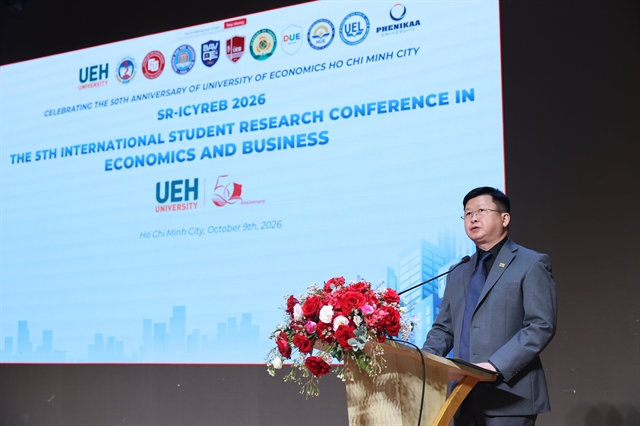
University of Economics HCM City hosts international student research conference
1.
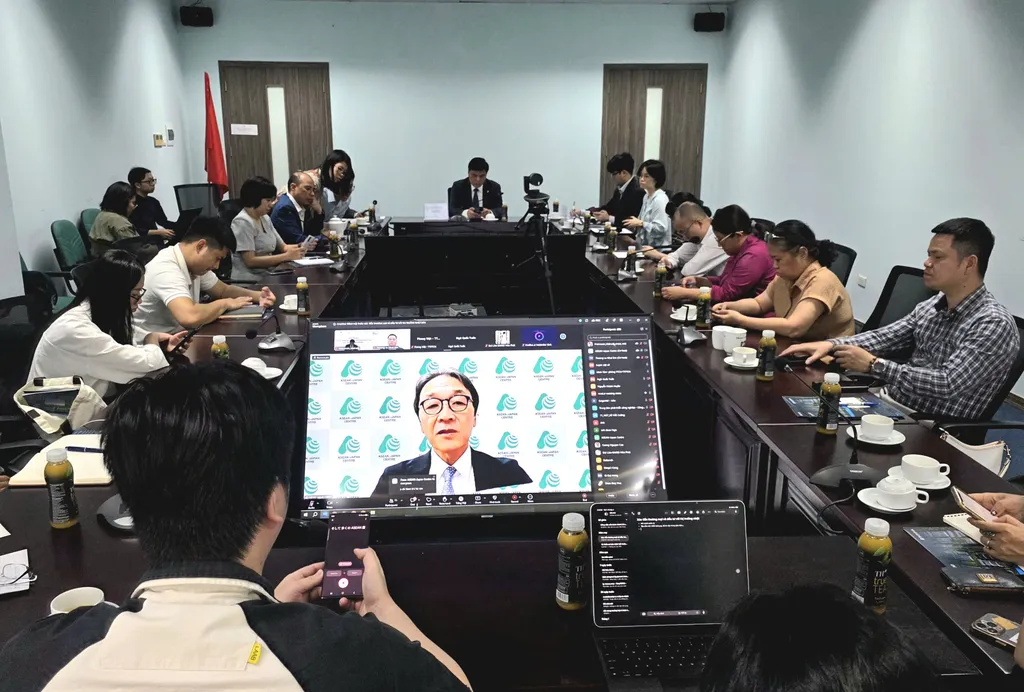 |
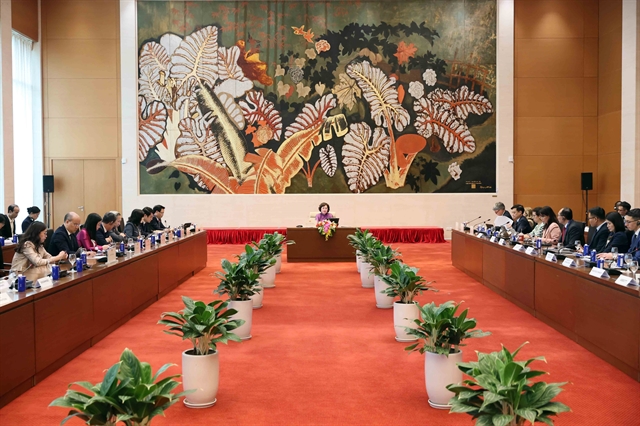
| Participants at the forum held by the Vietnam Trade Promotion Agency in Hà Nội on April 15. VNS Photo Ly Ly Cao |
HÀ NỘI — Việt Nam and Japan are entering a new phase of economic cooperation driven by strong trade growth, evolving investment trends and deepening supply chain integration, officials and experts said at a trade and investment promotion forum.
Speaking at the event held in Hà Nội on April 15, Lê Hoàng Tài, deputy director general of the Vietnam Trade Promotion Agency under the Ministry of Industry and Trade, said bilateral trade has maintained robust momentum despite global uncertainties.
According to data from Vietnam Customs, two-way trade surpassed US$50 billion for the first time in 2025, reaching more than $51.4 billion, up over 11 per cent year-on-year. Việt Nam’s exports were estimated at $26.8 billion while imports from Japan totalled nearly $24.7 billion, resulting in a trade surplus of more than $2 billion.
"The trade structure is highly complementary," Tài said, adding that Việt Nam mainly exports textiles, electronics and agricultural products while importing machinery, equipment and high technology from Japan.
He noted that free trade agreements such as the Comprehensive and Progressive Agreement for Trans-Pacific Partnership (CPTPP) and the Regional Comprehensive Economic Partnership (RCEP) have helped reduce tariffs and facilitate market access, particularly for Vietnamese goods entering Japan’s high-end consumer market.
Japan remains one of Việt Nam’s leading foreign investors, with 5,635 valid projects and total registered capital exceeding $79 billion, ranking third among foreign investors. In 2025 alone, Japanese investors registered about $1.62 billion in new capital, accounting for 9.4 per cent of total newly registered FDI.
Amid global supply chain restructuring, Việt Nam is increasingly seen as a reliable manufacturing hub supported by competitive labour costs, improving infrastructure, and a stable political environment, Tài said.
Funihiko Hirabayashi, secretary general of the ASEAN-Japan Centre (AJC), emphasised that the bilateral relationship is not only expanding in scale but also improving in quality.
"The relationship between Japan and Việt Nam has been supported by trust, common standards and a commitment to sustainable and stable cooperation," he said.
He described Japan as the most mature market and society in the world and highlighted its rapidly ageing population as both a challenge and an opportunity for innovation, particularly in health care, welfare and universal design.
Hirabayashi urged Vietnamese firms to focus on long-term capacity building, raising product quality and strengthening business credibility.
"It is very important to build a long-term relationship," he said, adding that trust is key to unlocking broader access to global markets.
From Tokyo, Trade Counsellor Tạ Đức Minh at the Vietnamese Embassy in Japan said bilateral ties have been elevated to a comprehensive strategic partnership, opening what he described as a "golden phase" for economic, trade and investment cooperation.
He noted that Japanese investment is shifting from standalone projects towards integrated supply chain ecosystems, with companies increasingly seeking local Vietnamese suppliers to reduce import dependence and enhance resilience.
"Việt Nam has become an important production and export base for Japanese corporations, especially in electronics and transport equipment," Minh said.
Emerging investment trends also include a stronger focus on green supply chains, digital transformation and high-tech industries such as semiconductors and clean energy, offering new opportunities for Vietnamese firms to move up the value chain.
In supporting industries, Japanese firms have strong demand for mechanical components, moulds, auto parts and electronic components.
Minh said Vietnamese companies could integrate more deeply into global supply chains if they improve production capabilities and adopt international quality management standards.
Agriculture and food processing also remain promising sectors. Japan imports 60–65 per cent of its food demand, with Vietnamese products such as seafood, coffee and tropical fruits gaining traction. However exporters must comply with strict requirements on food safety, traceability and packaging standards to sustain growth in the market.
All insiders highlighted the importance of trade promotion activities and direct market engagement. A trade delegation to Japan is scheduled for June 2026 providing businesses with opportunities to meet partners and explore market conditions first-hand.
"The forum is not only about sharing information but also about preparing for the next steps," Hirabayashi said, encouraging companies to actively participate in exchanges and deepen cooperation. — BIZHUB/VNS
Economy
 Economy
 Economy
 Economy
 Economy
 Economy
 Economy
.jpg) Economy
Economy
 Economy
 Economy
 Economy
 Economy
 Economy
 Economy
 Economy