 Economy

Sơn La holds second coffee festival, targeting stronger businesses in future
1.
by Thu Hằng
|
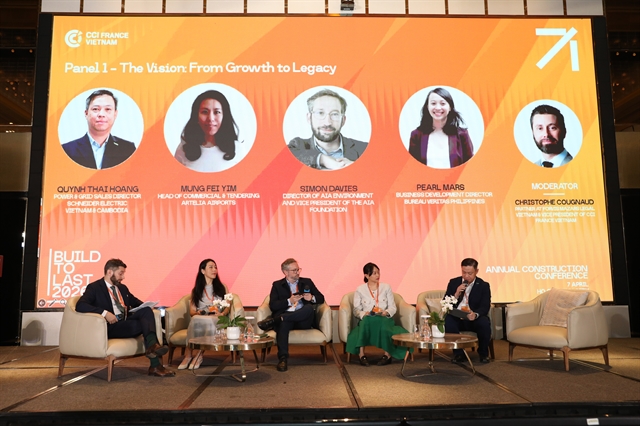
| Delegates discuss major transformations shaping the construction and urban development sectors at the Build to Last 2026 conference held in HCM City on April 7. —VNS Photo Thu Hằng |
HCM CITY — As Việt Nam undergoes one of the fastest urbanisation cycles in Asia, the demand for sustainable infrastructure, resilient urban planning, and green construction solutions continues to grow rapidly, experts said at the Build to Last 2026 conference held in HCM City on Tuesday.
The annual conference, organised by the French Chamber of Commerce and Industry in Việt Nam, brought together nearly 700 business leaders, international experts, developers, investors, and representatives from public institutions to discuss major transformations shaping the construction and urban development sectors.
The fourth edition of the Build to Last conference is part of the France – Việt Nam Year of Innovation.
It aims to create a platform for dialogue across the construction and urban development ecosystem, fostering knowledge sharing, innovation, and strategic partnerships.
Thibaut Giroux, Chairman of the French Chamber of Commerce and Industry in Việt Nam, said: "In a context of global uncertainty, supply chains are being reshaped and geopolitical balances are shifting. And yet, Việt Nam continues to stand out."
"Growth remains strong, foreign investment keeps flowing, and the country is increasingly positioning itself as a key destination for companies seeking both stability and dynamism in Southeast Asia,” Giroux said.
“In construction, energy, and materials, our expertise is directly aligned with Việt Nam’s ambitions: to build fast, but above all to build right and sustainably,” he said.
According to Olivier Brochet, French Ambassador to Việt Nam, the building sector plays a critical role in the fight against climate change.
It accounts for a significant share of global emissions, is highly vulnerable to climate impacts, and is economically vital, representing 11 per cent of global GDP and 7 per cent of global employment.
The transition towards more sustainable cities needs the involvement of all stakeholders such as governments and local authorities, which shape regulations, urban planning, public investment, professional networks that foster innovation, businesses and investors, which provide the tools, technologies, and capital needed to scale up green solutions.
The ambassador highlighted that this collective effort must also be underpinned by strong international cooperation.
Việt Nam and France are actively involved in the Global Alliance for Buildings and Construction (GlobalABC), launched at COP21 and hosted by the United Nations.
This alliance now has 290 members, including countries, international organisations and private-sector stakeholders working to decarbonise the building sector.
“In Việt Nam, the construction sector is a key pillar of the economy, accounting for 17 per cent of GDP. It grew by 9 per cent in 2025, and this strong momentum is expected to continue in the coming years, driven by the Government’s commitment to accelerating major infrastructure projects in cooperation with the private sector,” Brochet said.
“Responsible architecture, sustainable urban planning, public transport, and energy efficiency are key drivers of a more sustainable future and more liveable cities. France and Việt Nam are both deeply committed to achieving those objectives.”
“French companies are global leaders in the development of sustainable cities and resilient infrastructure, from engineering and construction to equipment supply,” he said.
Nguyễn Lộc Hà, Permanent Deputy Chairman of HCM City People’s Committee, said: “As the Comprehensive Strategic Partnership between Việt Nam and France continues to flourish, HCM City is proud to remain one of the country’s leading localities in advancing cooperation with France.”
Bilateral trade turnover between HCM City and France exceeded US$723 million in 2025. France currently has 433 investment projects in the city, with total registered capital surpassing US$2.2 billion.
The French business community had become an integral part of the city’s ecosystem for investment, innovation, high-quality services, and sustainable development, he said.
The Build to Last conference is another important cooperation initiative that offers a comprehensive and strategic perspective on sustainable urban development, fully aligned with the city’s direction: development driven by integrated thinking, cross-sectoral and regional coordination, and multi-stakeholder collaboration, according to Hà.
The city is focusing on finalising the draft Special Urban Law and the HCM City Master Plan. These are two major levers that will enable the city to shift from an implementation mindset to a proactive policy-shaping role, laying the foundation for breakthrough institutions and opening up new development space.
It is also accelerating its green transition with highly concrete targets.
HCM City has issued its 2026-2030 Air Pollution Control Action Plan, aiming for 100 per cent of public transport vehicles to use clean energy by 2030, while also working toward full control of major emission sources, greener building standards, and more efficient energy use.
Breakthroughs in transport and logistics infrastructure had been identified as a prerequisite for expanding development space and enhancing competitiveness in global supply chains, Hà said.
He emphasised that the city was advancing key infrastructure projects, including the urban railway network, seaports, and ring roads.
For the upcoming April 30 celebration, several major projects were expected to be commenced or completed, including Phase 2 of the Cái Mép Gemadept - Terminal Link Port Project, a shining example of maritime cooperation between Việt Nam and France, he said.
|
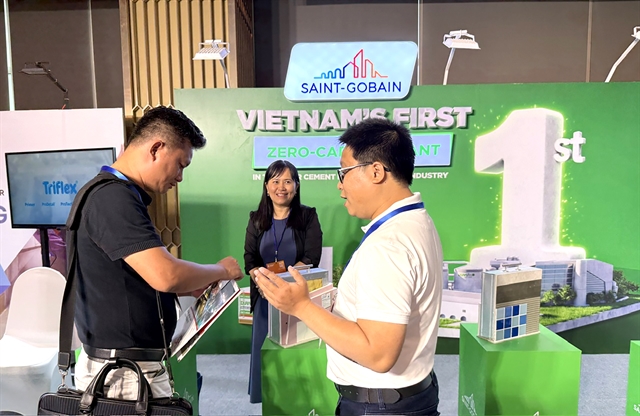
| Participants discover innovations, and connect with industry leaders at the Build to Last 2026 conference held in HCM City on April 7. —VNS Photo Thu Hằng |
The conference featured high-level roundtable discussions and thematic workshops covering sustainable urban development, transport and logistics infrastructure, and green energy and materials.
It also included an exhibition designed to enable participants to discover innovations, and connect with industry leaders. —VNS
Economy
 Economy
 Economy
 Economy
 Economy
 Economy
 Economy
 Economy
 Economy
 Economy
 Economy
 Economy
 Economy
 Economy
 Economy