 Economy


PM Hưng meets with Cambodian People's Party, Senate leader Hun Sen
1.
 |
| Võ Trí Thành |
*Võ Trí Thành
Việt Nam has entered 2026 with a bold ambition: sustaining double-digit economic growth as it moves into a new development phase. The target, endorsed at the 14th National Party Congress for the 2026–30 term, calls for average annual GDP growth of 10 per cent or more. It reflects a long-term vision of becoming a high-income economy by 2045.
The aspiration is not without foundation. Việt Nam’s political stability, deep integration into global trade and ongoing efforts to restructure its growth model provide a credible base. Yet, the external environment has rarely been more volatile.
Two powerful headwinds – escalating global trade tensions and a renewed energy shock linked to conflict in the Middle East – are converging at a critical moment.
The early data for 2026 show both promise and pressure.
GDP expanded by 7.83 per cent in the first quarter, up from 7.07 per cent a year earlier. Growth was broad-based. Industry and construction rose 8.92 per cent, contributing 44.08 per cent to overall expansion. Services increased 8.18 per cent, accounting for over half of growth.
On the demand side, investment remained a key driver. Total social investment reached VNĐ744.7 trillion (over $28 billion), up 10.7 per cent year-on-year. The private sector led with 54.1 per cent of total capital, followed by the State sector at 27.8 per cent and foreign-invested enterprises at 18.1 per cent. Public investment disbursement also accelerated, rising 12.1 per cent.
Foreign direct investment (FDI) inflows were particularly strong. Registered FDI surged 42.9 per cent to $15.2 billion in the first quarter, while disbursed FDI reached a five-year high of $5.41 billion, up 9.1 per cent year-on-year.
These figures suggest that Việt Nam’s growth engine remains intact. However, they also mask a more complex reality.
The first quarter largely reflected existing export orders placed before global disruptions intensified. The real test will come in subsequent quarters, when the full impact of external shocks feeds through.
The challenge is immediate.
According to the Government’s Resolution 01 issued early this year, GDP growth targets were set at 9.1 per cent for the first quarter and above 10 per cent for the remaining quarters. The shortfall in Q1 implies a steep acceleration is required – a difficult task under tightening global conditions.
Two external shocks stand out.
First, the United States has escalated trade tensions through new Section 301 investigations targeting 16 major trading partners, including Việt Nam. The move signals a shift toward more aggressive unilateral trade measures, with potential tariffs and restrictions aimed at addressing alleged excess industrial capacity. For an export-dependent economy like Việt Nam, such actions introduce significant uncertainty for manufacturing and trade flows.
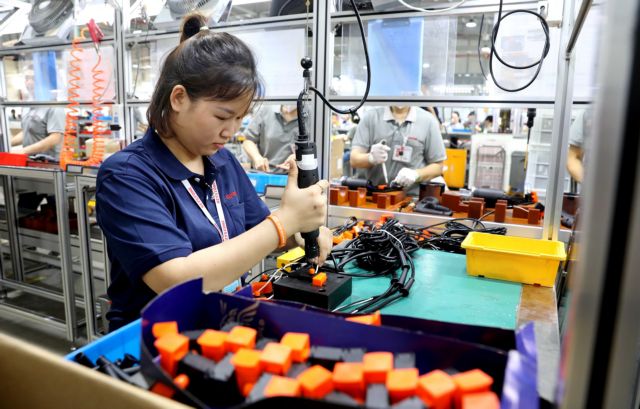 |
| A worker assembles electronic components at a factory in in Thái Bình Economic Zone. The country’s export-driven manufacturing sector remains a key growth engine but faces rising pressure from global headwinds. — VNA/VNS Photo Thế Duyệt |
Second, the conflict in the Middle East has triggered a sharp rise in energy prices and disrupted global supply chains. The Asian Development Bank (ADB) warns that the conflict is affecting Asia through higher energy costs, logistics disruptions and tighter financial conditions.
In its March report, ADB outlines three scenarios, with impacts depending on how long the conflict persists. If tensions ease quickly, the effects remain limited. But in a prolonged and severe scenario, growth in developing Asia could fall by up to 1.3 percentage points, with inflation rising sharply.
Southeast Asia, including Việt Nam, would be among the most affected, with cumulative growth potentially reduced by up to 2.3 percentage points over 2026–27.
The implications for Việt Nam are substantial.
As a net energy importer with a highly open economy, Việt Nam is particularly exposed to rising oil prices and global trade disruptions. Higher energy costs feed directly into inflation, production costs and transport expenses. At the same time, supply chain disruptions can delay exports and increase logistics costs.
Domestic indicators already reflect early signs of strain.
Inflation rose above 4 per cent in March, reaching 4.65 per cent. This has forced monetary policy to shift from an accommodative stance toward neutrality, limiting the scope for further stimulus.
Retail sales remained resilient in nominal terms, rising 12.1 per cent year-on-year in March. However, after adjusting for price increases, real growth was significantly lower, indicating weakening purchasing power.
Business sentiment is mixed. A survey of manufacturing firms shows that only 23.8 per cent reported improved conditions in Q1, while 30.1 per cent experienced difficulties. Although expectations for Q2 are more positive, uncertainty remains high.
Enterprise dynamics also point to a fragile recovery. Nearly 22,000 new firms were established in March, but the number of firms exiting or suspending operations remained elevated. The gap between business entry and exit is narrowing, reflecting ongoing structural pressures.
Against this backdrop, economic scenarios for 2026 highlight the scale of the challenge.
According to economist Cấn Văn Lực, under a baseline scenario, GDP growth could reach around 9 per cent, with inflation rising to 4–4.5 per cent. This assumes moderate energy price increases and limited escalation of global tensions.
A more adverse scenario, with prolonged conflict and higher oil prices, could reduce growth by up to 1.2 percentage points. In a severe scenario, where disruptions persist throughout the year, growth could fall 1.5 percentage points below target, while inflation could exceed 5 per cent.
These projections underline a critical point: achieving 10 per cent growth in 2026 is increasingly unlikely without a significant improvement in external conditions.
The policy dilemma is clear.
On one hand, authorities must support growth to meet ambitious targets. On the other, they must preserve macroeconomic stability, control inflation and maintain investor confidence.
This balance is particularly important in a context where external shocks are driving inflation.
ADB’s policy recommendations offer a useful framework. Policymakers should prioritise stability, allow partial pass-through of energy prices, and provide targeted fiscal support rather than broad subsidies. At the same time, central banks should focus on managing liquidity and anchoring inflation expectations.
For Việt Nam, the immediate priority is to sustain growth momentum while cushioning the impact of external shocks. This includes accelerating public investment, supporting businesses facing rising costs and maintaining stable financial conditions.
However, the longer-term challenge is more fundamental.
The current global environment underscores the need to shift toward a more resilient growth model. Reliance on exports and external demand, while a strength in past decades, also exposes the economy to global volatility.
Future growth will need to be driven increasingly by innovation, productivity gains and domestic demand. This requires deeper structural reforms, including improvements in the business environment, investment in technology and human capital, and stronger linkages between domestic firms and global value chains.
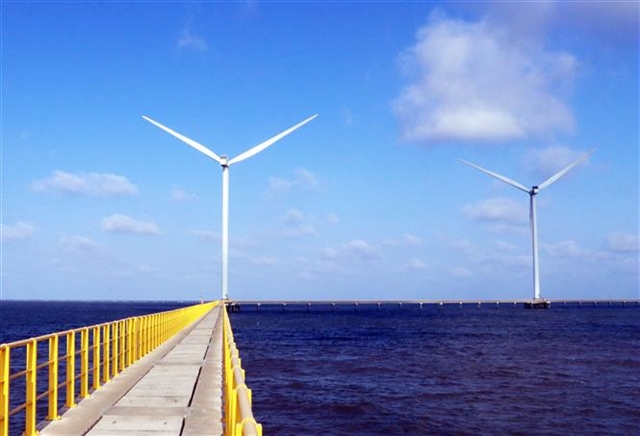 |
| A wnd farm in Vĩnh Long Province. Global energy volatility is pressuring the economy and accelerating the shift to alternative energy. — VNA Photo Phạm Minh Tuấn |
Energy security is another critical area. The recent shock highlights the risks associated with dependence on imported fossil fuels. Accelerating the transition to renewable energy and improving energy efficiency will be essential for long-term stability.
Risk management must also become a central pillar of economic policy. In a world of frequent and unpredictable shocks, the ability to anticipate, absorb and adapt to risks will determine economic resilience.
Việt Nam’s ambition of double-digit growth reflects confidence in its long-term potential. But 2026 will be a test of its ability to navigate a complex and uncertain global landscape.
Even growth below target, combined with macroeconomic stability, would be a solid outcome in the current environment. The path to sustained double-digit growth will likely be gradual rather than immediate.
The key is not only how fast the economy grows, but how sustainably it does so.
* Võ Trí Thành is former vice-president of the Central Institute for Economic Management (CIEM) and a member of the National Financial and Monetary Policy Advisory Council. With a doctorate in economics from the Australian National University, he focuses on macroeconomic policy, trade liberalisation and institutional reform.
Economy
 Economy
 Economy
 Economy
 Economy
 Economy
 Economy
 Economy
_med.jpg) Economy
Economy
 Economy
 Economy
 Economy
 Economy
 Economy
 Economy