 Economy


84 individuals investigated for transnational online frauds
1.
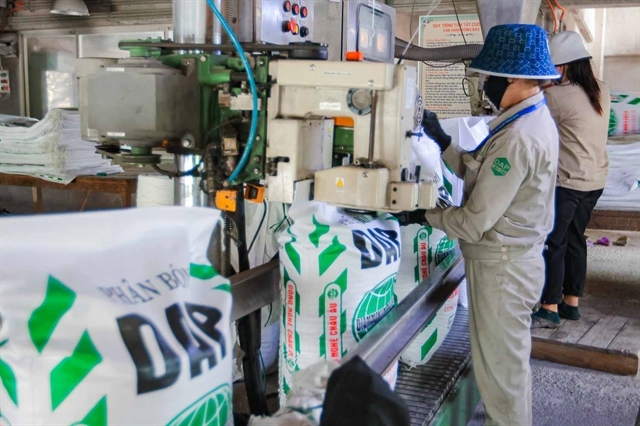 |
| A DAP fertiliser packaging line at Vinachem's Lào Cai DAP Fertiliser Plant in Lào Cai Province. — VNA/VNS Photo |
HÀ NỘI — Ensuring the stability of input material supply chains has become a key priority for the Việt Nam National Chemical Group (Vinachem), as escalating tensions in the Middle East disrupt global logistics and commodity markets.
According to Vinachem Chairman Phùng Quang Hiệp, the group and its member companies are focusing on maintaining a stable supply of raw materials for production.
The ongoing conflict in the Middle East has complicated the sourcing of inputs and created challenges in international freight transport.
As it holds more than 40 per cent of Việt Nam’s domestic fertiliser market share, Vinachem has been urged to take proactive steps to secure raw materials.
The group’s leadership has asked member companies to diversify supply sources and establish relationships with new suppliers beyond traditional partners located in regions affected by the Middle East conflict.
Hiệp also asked member units to closely monitor daily developments in the global economic and political landscape. Particular attention should be paid to factors that may affect raw material supply, transportation costs and market demand, the chairman said.
Vinachem’s leadership also called on its subsidiaries to urgently review the potential impact on their production and business activities and to develop appropriate response scenarios.
To minimise risks arising from potential disruptions to international maritime routes through the Strait of Hormuz, Vinachem has also instructed its units to prepare contingency transport plans, allowing them to adjust shipping routes or modes of transport if necessary.
In addition, each Vinachem subsidiary has been asked to formulate business strategies corresponding to different levels of geopolitical tension, ensuring that the group remains prepared and responsive under any circumstances.
According to the Việt Nam Fertiliser Association, the Middle East conflict is already affecting global supply chains, raw material prices and a wide range of commodities, including fertilisers. Transport disruptions in the Strait of Hormuz are considered a major factor behind rising fertiliser prices, as the waterway serves as a crucial shipping route for fertiliser-related materials.
If the strait were to be closed, supplies of sulphur and urea would be significantly affected. Each month, approximately 1.2–1.5 million tonnes of urea, 1.5–1.8 million tonnes of sulphur and around 400,000–500,000 tonnes of ammonia are transported through the route. The disruptions would directly impact fertiliser production and supply chains. VNS
Economy
 Economy
 Economy
 Economy
 Economy
 Economy
 Economy
 Economy
 Economy
 Economy
 Economy
 Economy
 Economy
 Economy
 Economy