 Economy

Lotte, Phát Đạt combine strengths in Thu Thiem project
1.
|
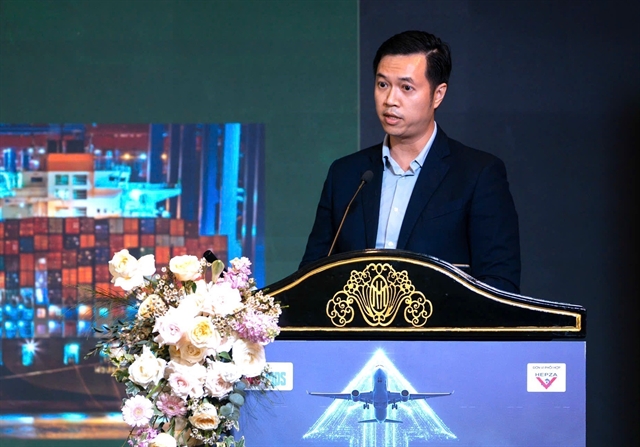
| Vũ Chí Kiên, deputy director of the HCM City Institute for Development Studies, speaks at a seminar on inter-regional connectivity and the development of free trade zones in the city. — VNA/VNS Photo |
HCM CITY — Within the evolving development space of HCM City, free trade zones (FTZs) are increasingly regarded as a new growth driver, helping reposition the city as an integrated logistics hub with stronger regional competitiveness.
Beyond their trade facilitation function, FTZs are now viewed as institutional instruments capable of reshaping production networks, logistics flows and value chains across the wider region.
However, the successful establishment and operation of FTZs also generate pressing demands for infrastructure connectivity, institutional coherence and effective inter-regional coordination.
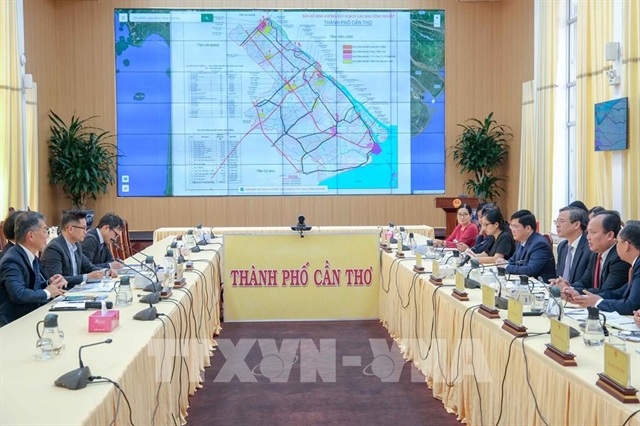
These issues were discussed at the seminar “Inter-regional Connectivity – A Driving Force for the Development of the city’s Free Trade Zones”, jointly organised by its Department of Industry and Trade, the city Export Processing and Industrial Zones Authority (HEPZA) and Tuổi Trẻ Newspaper on January 27 in HCM City.
Speaking at the seminar, Vũ Chí Kiên, deputy director of the city Institute for Development Studies, said the merger of three localities should not be viewed merely as an administrative adjustment.
Instead, it marks the emergence of a mega urban–industrial–logistics region with a historic opportunity to become a leading logistics centre in Southeast Asia.
According to Kiên, the city is undergoing a structural transformation from a traditional urban core into an integrated mega city encompassing industrial production, air and maritime logistics, and international financial services.
In this context, the Cái Mép Hạ free trade zone should not be understood as a conventional bonded area.
Rather, it represents a catalytic nucleus capable of reshaping the inter-regional value chain.
With its deep-water port advantages, capacity to accommodate large vessels and direct access to international shipping routes, Cái Mép Hạ provides a strategic foundation for the city to upgrade its role in regional and global logistics networks.
However, Kiên emphasised that the Cái Mép Hạ FTZ should not be treated as a standalone entity.
Its effectiveness depends on strong functional linkages with the Đồng Nai FTZ, which is closely associated with Long Thành International Airport.
This configuration allows goods from manufacturing centres in Bình Dương and Đồng Nai to be processed, packaged and inspected before being transferred to Cái Mép Hạ for export, while imported materials arriving via seaports can directly supply production facilities across the region.
Such integration helps optimise logistics costs, shorten cargo circulation times and enhance supply chain resilience.
Highlighting the role of infrastructure in shaping economic space, Đỗ Thiên Anh Tuấn, a lecturer at the Fulbright School of Public Policy and Management, noted that transport infrastructure should not be seen merely as a technical task.
Instead, it functions as a strategic tool for reorganising regional economic space, restructuring national value chains and enabling institutional innovation through mechanisms such as international financial centres and FTZs.
From this perspective, Thủ Thiêm, Long Thành and Cái Mép should be understood not as isolated development nodes, but as three functional poles shaped by strategic state-led investment decisions.
Thủ Thiêm is positioned as a financial and service centre concentrating capital transactions, financial services and fintech.
Long Thành serves as the international aviation gateway and air logistics hub connecting the region to global markets.
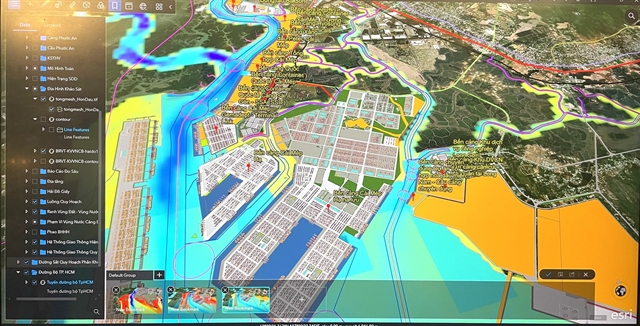
Meanwhile, the Cái Mép – Thị Vải port complex functions as a deep-water maritime gateway closely linked to the Cái Mép Hạ FTZ.
|
| Infographic showing an overview of free trade zones and key logistics hubs in HCM City.— VNA/VNS Photo |
If connected in a strategic and coordinated manner, these three poles could form an integrated economic structure linking finance, aviation, seaports and FTZs under a “Fin–Sea–Air” model. Such a structure would enhance regional competitiveness and reinforce the role of the HCM City region as a key growth engine for the national economy.
Despite these opportunities, a critical challenge remains the lack of an effective coordination mechanism.
A capable “conductor” with sufficient authority is needed to oversee transport and logistics infrastructure as a unified system.
Without such coordination, roads, railways, waterways, seaports and airports risk operating as parallel and disconnected components rather than mutually reinforcing elements of a coherent regional strategy.
From a governance perspective, Lê Văn Danh, deputy director of the city Department of Industry and Trade, said the city is prioritising the development of a synchronised, multimodal transport infrastructure system.
Strengthening connectivity among transport modes will create favourable conditions for industrial development, logistics services and port operations across the southeastern region.
In this context, FTZ development is expected to function as a growth engine not only for HCM City, but also for facilitating regional goods flows and supporting sustainable national growth.
As FTZs evolve into a new-generation model, their role will extend beyond boosting the city and the southeastern region, contributing to a more integrated, competitive and sustainable growth trajectory for the national economy. — VNS
Economy
 Economy
 Economy
 Economy
 Economy
 Economy
 Economy
 Economy
 Economy
 Economy
 Economy
 Economy
 Economy
 Economy
 Economy