 Economy

Project lays foundation for digital greenhouse gas emissions data management
1.
|
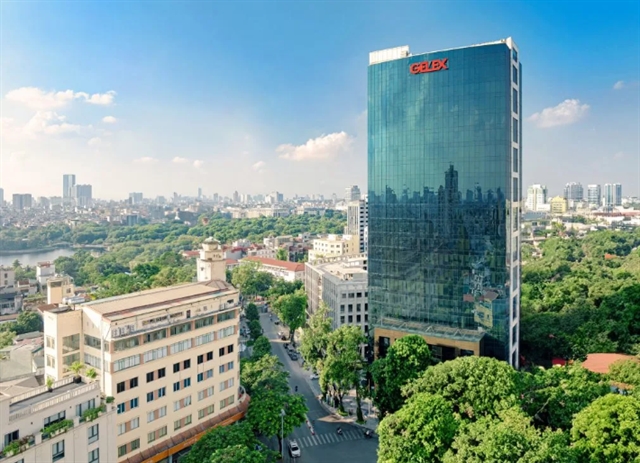
| Vietnamese businesses are pushing green transition and circular economy practices in 2026 through recycling and eco-design to meet sustainability standards and access wider markets. — Photo kinhtevadubao.vn |
HCM CITY — The circular economy is emerging as a key trend among Vietnamese businesses and has been identified as an important strategic orientation for 2026, as companies seek to meet global market integration requirements while supporting sustainable development and green consumption.
Green certifications not only recognise technical achievements, but also deliver tangible benefits to users and the wider community.
In HCM City, many businesses said they will focus on three main strategies in the coming period: accelerating green transition, expanding cooperation, and reaffirming commitments to sustainable development across their entire production and business ecosystems.
A growing number of circular economy models are being implemented through closed-loop processes, covering production, collection, recycling and decomposition.
Nguyễn Hồng Ngọc, communications representative of Daikin Air Conditioning – Vietnam (Daikin Vietnam), said sustainable development needs to be translated into concrete operational systems, rather than remaining a slogan.
She noted that Daikin Air Tower, the company’s headquarters in HCM City, has achieved the highest levels of green building certification, LEED Platinum and LOTUS Platinum.
Nguyễn Phương Nga, Business Director of Numerator Vietnam, said the biggest challenge facing businesses today is building lasting trust with customers, rather than competing on price alone.
Amid ongoing economic uncertainties, consumers tend to spend more cautiously and prioritise reputable brands, particularly those holding green certifications and pursuing sustainable development.
In practice, Việt Nam’s business community has shown a clear shift towards green growth and the circular economy.
However, the implementation of environmental policies, especially extended producer responsibility (EPR), continues to place high demands on science and technology foundations, data availability and technical solutions.
To address these needs, the Vietnam Waste Recycling Association (VWRA) has established the Recycling Science and Technology Institute, aiming to conduct research, provide consultancy services and facilitate technology transfer, thereby linking policies with businesses and the market.
The institute is expected to offer practical support for enterprises as they prepare to enter 2026.
Trần Việt Anh, Chairman of VWRA, said the institute will focus on researching and applying advanced recycling technologies, supporting businesses in fulfilling EPR obligations, training human resources in recycling and the circular economy, and strengthening international cooperation to access global expertise.
Hồ Kiên Trung, Deputy Director of the Environment Department under the Ministry of Agriculture and Environment, said there remains a gap between environmental policy requirements and businesses’ capacity for implementation.
He added that enterprises which proactively adopt and optimise recycling technologies, and integrate recycling into eco-design and product design from the outset, will have greater opportunities to enter both domestic and international markets, while helping embed circular economy practices across the full lifespan of products rather than focusing solely on end-of-life waste treatment. — VNS
Economy
 Economy
 Economy
 Economy
 Economy
 Economy
 Economy
 Economy
 Economy
 Economy
 Economy
 Economy
 Economy
 Economy
 Economy




